




 Neng Nana
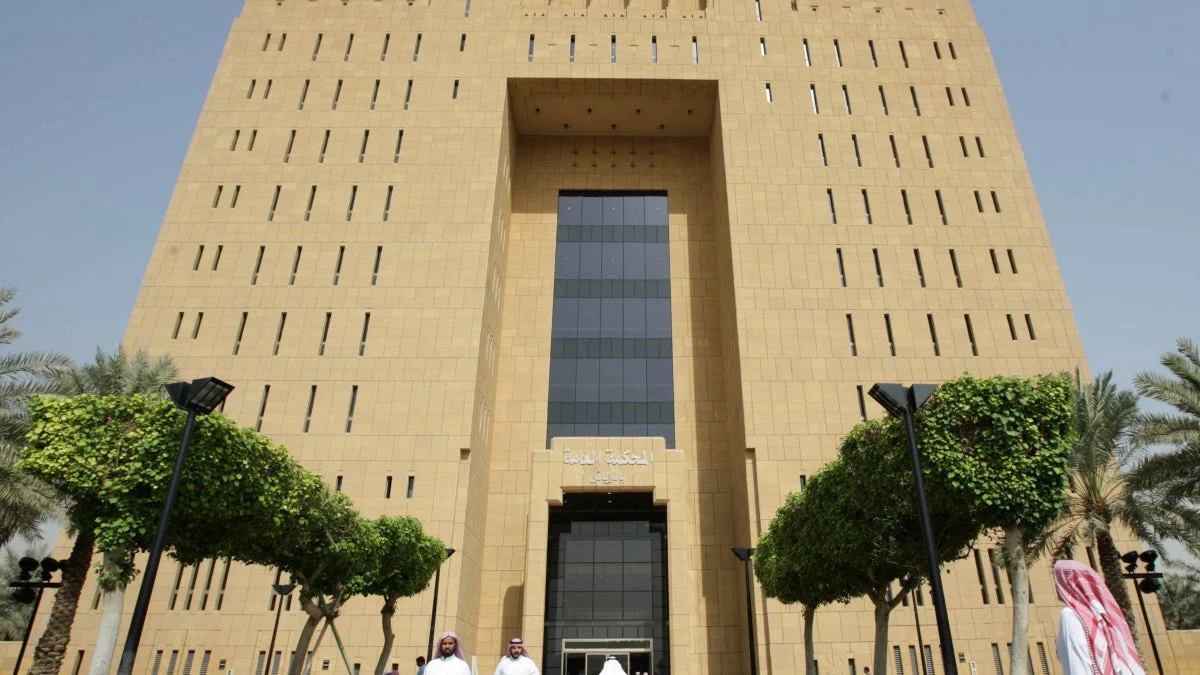
BEIRUT — The Saudi Arabian justice system has once again come under intense international fire following the execution of Hassan Zaki al-Faraj on October 17, 2026. Al-Faraj, who was convicted of crimes allegedly committed when he was just 14 years old, is the latest casualty in a persistent pattern of capital punishment being applied to individuals for offenses dating back to their childhood.
Human Rights Watch (HRW) and other international monitoring bodies have characterized the execution as "unconscionable," citing a litany of due process violations, including the reliance on torture-tainted confessions and prolonged periods of pre-trial solitary confinement. The execution comes amidst an already record-breaking year for Saudi Arabia’s use of the death penalty, casting a shadow over the Kingdom’s stated commitments to legal reform.
The Case of Hassan Zaki al-Faraj: A Failure of Due Process
Hassan Zaki al-Faraj was arrested by Saudi authorities on November 27, 2017. Following his arrest, he was held in solitary confinement for six months—a period during which his defense alleges he was subjected to physical and psychological abuse. According to court documents reviewed by human rights investigators, al-Faraj was forced to sign a confession that became the primary pillar of the prosecution’s case against him.
The charges brought against al-Faraj under Saudi Arabia’s broad counterterrorism laws included meeting and developing friendships with individuals deemed "wanted" by the state—alleged activities that occurred when he was only 14. On November 3, 2022, the Specialized Criminal Court (SCC) handed down the death sentence, a ruling that was finalized despite the clear timeline indicating his juvenile status at the time of the alleged offenses. His execution serves as a grim indicator that the Saudi judiciary continues to prioritize "national security" convictions over the protections afforded to children under international law.
A Looming Crisis: Yousef al-Manasif and Others on Death Row
The tragedy of al-Faraj is not an isolated incident; it is part of a systemic crisis. The European Saudi Organisation for Human Rights (ESOHR) has confirmed that the Supreme Court has upheld the death sentence of Yousef al-Manasif, who now faces imminent execution. Like al-Faraj, al-Manasif was convicted for acts allegedly committed when he was 15 and 16 years old.
The Vulnerable List
Court records and human rights reports indicate that at least three other men remain on death row for crimes committed as minors:
- Ali al-Mabyook: Arrested for participating in funeral processions before he turned 18.
- Jawad Qureiris: Convicted for alleged offenses at the ages of 15 and 17, following a 270-day stint in solitary confinement.
- Mahdi al-Mohsen: Also facing death for alleged terrorism-related activities during his youth.
The cases of these individuals follow a disturbing, identical trajectory: arrest, prolonged isolation, forced confessions obtained under duress, and a trial process that ignores their age at the time of the alleged conduct.
Chronology of Institutionalized Repression
The current surge in executions is the culmination of years of legislative maneuvering and judicial overreach.
- 2017–2018: The implementation of aggressive counterterrorism laws provided a broad legal framework for the state to classify dissent, including protest participation, as "terrorism."
- 2020: Saudi authorities announced a Juvenile Law intended to limit the death penalty for minors. However, these protections were effectively neutralized by an executive order that excluded cases prosecuted under the 2017 counterterrorism law.
- 2022: The Specialized Criminal Court issued a wave of death sentences against multiple individuals, including al-Manasif, al-Faraj, and others, for alleged crimes committed in their youth.
- 2025: A year of "unprecedented" executions saw the deaths of Jalal al-Labbad and Abdullah al-Derazi, both of whom were accused of juvenile offenses.
- April 2026: Ali al-Subaiti was executed for crimes—including attending a demonstration—that he allegedly committed at the age of 12.
Supporting Data: The Illusion of Reform
Saudi Arabia has frequently pointed to its 2018 Juvenile Law as evidence of progress. However, the practical application of this law reveals a stark reality: when it comes to political or counterterrorism charges, the "juvenile" status of the defendant is routinely dismissed.
Data provided by the United Nations Working Group on Arbitrary Detention (WGAD) suggests that the detentions of these men were not based on genuine criminal activity, but rather on the exercise of fundamental human rights. Specifically, many of those sentenced to death were targeted for protesting the state’s discriminatory treatment of its Shia minority.
The reliance on confessions is another critical data point. In the vast majority of these cases, the prosecution presented no physical evidence, instead relying solely on signed statements obtained during months of incommunicado detention. Defense lawyers have consistently reported that their clients were denied access to counsel during interrogation, rendering the subsequent trials fundamentally unfair by any international standard.
Official Responses and International Obligations
The international community, led by UN experts and various NGOs, has repeatedly called for a moratorium on these executions. In April 2025, UN experts issued an urgent plea for the release of child offenders, warning that the Saudi government was in direct violation of the Convention on the Rights of the Child, to which the Kingdom is a signatory.
Despite these calls, the Saudi government maintains that its judicial processes are sovereign and compliant with its own interpretation of Sharia law, which it applies through its counterterrorism statutes. There has been little to no engagement with international bodies regarding the specific allegations of torture that underpin these convictions.
Implications: The High Cost of Silence
The implications of these executions extend far beyond the loss of individual lives. By continuing to execute individuals for acts committed as children, Saudi Arabia is signaling a rejection of global human rights norms.
1. Erosion of International Credibility
The Kingdom’s desire to rebrand itself as a modern, reforming state—often highlighted by its "Vision 2030" agenda—is deeply undermined by these actions. Global investors and diplomatic partners are increasingly finding it difficult to reconcile the economic modernization of the state with the medieval nature of its criminal justice system.
2. The Normalization of Torture
The use of forced, torture-tainted confessions as a primary basis for death sentences creates a dangerous precedent. It signals to lower-level security apparatuses that abuse is an acceptable, and even encouraged, method of investigation.
3. A Call to Action
Joey Shea, a senior researcher at Human Rights Watch, emphasized the urgency of the situation: "Saudi Arabia’s execution spree, particularly for offenses by children, shows no signs of slowing down in 2026. This underscores the urgent need for the international community to press the Saudi government to immediately halt executions and abolish the death penalty once and for all."
The international community now faces a moral crossroads. Continued silence in the face of these state-sanctioned killings risks emboldening the Saudi authorities to continue their path, leaving those currently on death row—such as Yousef al-Manasif—in a state of constant, lethal jeopardy. The global consensus is clear: a justice system that relies on the execution of its youth for the "crime" of dissent is one that has failed its fundamental duty to its citizens.


 Iffa Jayyana

 Ammar Sabilarrohman




