

 Nila Kartika Wati
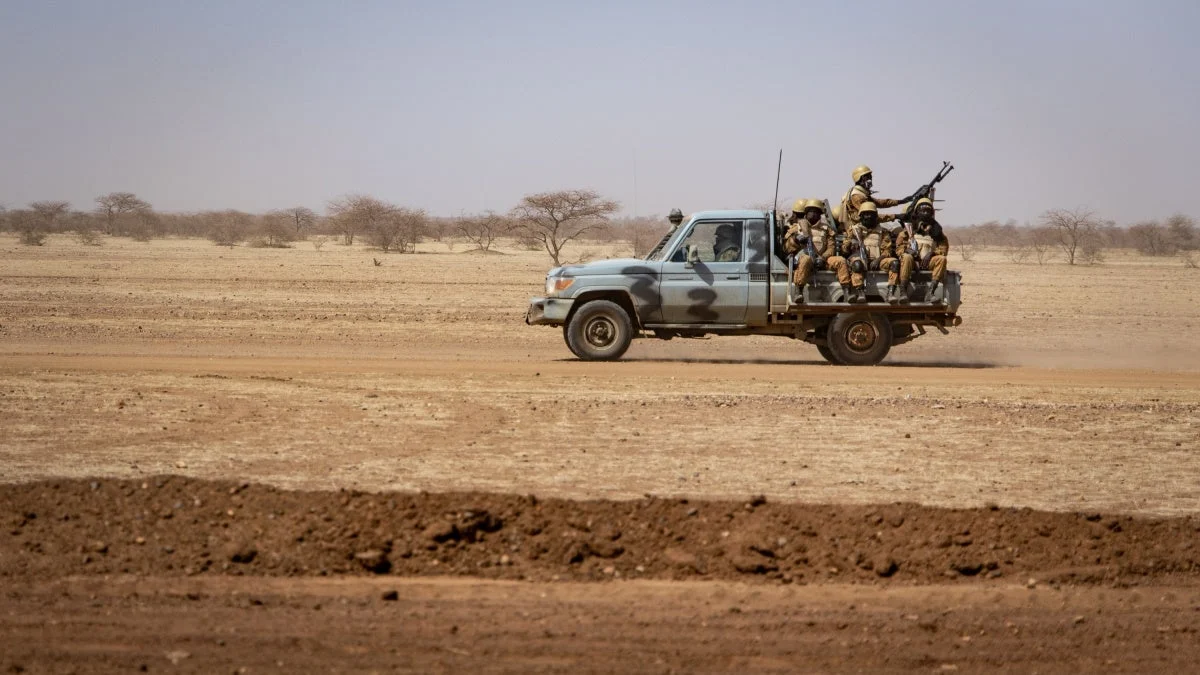
In a move that has sent shockwaves through the international human rights community, Burkina Faso’s unelected transitional parliament has unanimously adopted a new penal code that effectively restores the death penalty. This legislative reversal marks a dark chapter in the West African nation’s history, overturning a hard-won victory for civil liberties achieved in 2018, when the country formally abolished capital punishment for ordinary crimes.
The new code mandates the death penalty for a wide array of offenses, including high treason, terrorism, acts of espionage, parricide, and—in a controversial expansion—the importation of expired or prohibited products. As the nation grapples with a brutal, decade-long insurgency, the military junta, led by Captain Ibrahim Traoré, has framed the return of the gallows as a vital tool for national security. However, critics, legal experts, and international observers warn that this policy is less about combating insecurity and more about institutionalizing a mechanism for state-sanctioned repression.
A Legacy of Abolition and a Sudden Reversal
To understand the gravity of the current situation, one must look at the trajectory of Burkina Faso’s judicial evolution. In 2018, following years of advocacy by domestic and international human rights groups, Burkina Faso joined the growing global movement to end capital punishment. At that time, the move was celebrated as a milestone for a nation seeking to distance itself from its colonial-era penal history. It had been decades since the state last carried out a judicial execution, with the last recorded instance occurring in 1988.
The transition from a state that had rejected the death penalty to one that has now codified it into law reflects the rapid consolidation of power by the military junta following the September 2022 coup. The coup, which unseated the elected government, served as the catalyst for a systemic dismantling of democratic norms. For three years, the ruling junta has steadily tightened its grip, moving from suspending the constitution to systematically purging the civic space.
Chronology of Democratic Erosion (2022–2026)
- September 2022: A military coup removes President Paul-Henri Sandaogo Damiba, bringing Captain Ibrahim Traoré to power and initiating a period of rule by decree.
- 2023–2024: The junta begins a systematic crackdown on independent media, shuttering prominent news outlets and silencing critical voices.
- Early 2025: The military government mandates the conscription of political activists, journalists, and civil society members, effectively neutralizing opposition through forced mobilization.
- May 2026: The junta accelerates its assault on civil society by suspending the country’s largest student unions and banning organizations that challenge the official narrative of the security crisis.
- June 2026: Reports emerge of the enforced disappearance of high-profile journalists, signaling that the regime has moved beyond censorship into direct physical intimidation.
- October 2026: The transitional parliament unanimously adopts the new penal code, formally reinstating the death penalty, a move that provides the legal framework for the state to execute political dissidents under the guise of "national security."
The Justification: State Security vs. Judicial Fairness
Justice Minister Edasso Rodrigue Bayala has been the primary architect and defender of the new penal code. During the legislative sessions, he argued that the previous legal framework had become a "hollow threat" that armed groups exploited to their advantage. According to Bayala, insurgents were actively recruiting members by promising that the maximum penalty for terrorism—life imprisonment—was a manageable risk, essentially viewing it as a temporary setback rather than a deterrent.
"We must speak the language that these terrorists understand," proponents of the bill argued. By introducing the threat of death, the state claims it is reclaiming its authority and signaling a "zero-tolerance" policy toward those who threaten the survival of the state.
However, this rhetoric stands in stark contrast to the reality of the country’s judicial apparatus. The Specialized Judicial Unit Against Terrorism-Related Crimes, the body tasked with adjudicating these high-stakes cases, has been widely criticized for its lack of transparency, procedural failures, and susceptibility to executive influence.
The Mirage of Due Process: A System in Crisis
The fundamental problem with the death penalty in any jurisdiction is the potential for irreversible error. In the context of Burkina Faso, where the rule of law has been severely compromised, this danger is exponentially higher. Human Rights Watch (HRW) and other monitors have documented a pattern of "slow-walked" investigations, where defendants are held for years without access to adequate legal counsel or fair trial proceedings.
The systemic rot within the judiciary has created a grim, paradoxical dilemma for the few remaining judges operating within the system. One former judge, speaking on the condition of anonymity, described a scenario where magistrates were forced to keep individuals in detention even when evidence was insufficient. The reasoning was chilling: the judiciary feared that if they released the suspects, the military would bypass the court entirely and perform a summary execution. In this environment, the judge explained, the decision to keep an innocent or under-charged person in prison was framed as "violating the right to liberty to preserve the right to life."
With the formal reinstatement of the death penalty, this tenuous safeguard vanishes. The judiciary is no longer an entity that holds the power of life and death through independent review, but rather a rubber stamp for a military regime that has already demonstrated a propensity for torture, enforced disappearances, and the arbitrary detention of its critics.
International Implications and Human Rights Standards
The global community has reacted with significant alarm. The United Nations General Assembly and the African Commission on Human and Peoples’ Rights have long advocated for a global moratorium on executions. The trend over the last several decades has been one of progress: a shift toward recognizing that the death penalty is not only a violation of the right to life but also a cruel, inhuman, and degrading punishment that fails to deter crime.
By swimming against this international tide, Burkina Faso risks further isolation. The move not only violates international human rights instruments to which the country is a signatory but also undermines the legitimacy of its own judicial system in the eyes of foreign partners and international observers. When a government opts for the ultimate, irreversible punishment in a system where trial rights are systematically denied, it loses the moral standing to participate in the global community of rights-respecting nations.
Implications: A Tool for Suppression
The most dangerous implication of this new law is its potential to be weaponized against political opponents. Under the guise of charging individuals with "high treason" or "espionage," the junta can now remove its most effective critics from the public sphere permanently. Given the regime’s history of targeting journalists, activists, and union leaders, the death penalty serves as an ultimate deterrent to any form of dissent.
The inclusion of "importation of expired or prohibited products" as a capital offense is particularly revealing. It allows the state to cast a wide net, potentially targeting business owners or individuals who may have run afoul of the military leadership, justifying their execution under the thin veil of economic crime.
Conclusion
The reinstatement of the death penalty in Burkina Faso is a regressive step that mirrors the nation’s broader descent into authoritarianism. While the junta promises security, it delivers only fear. A nation that cannot guarantee a fair trial to its citizens cannot be trusted with the power to take their lives.
As the international community watches this development, the question remains whether the global community will exert enough pressure to reverse this path. Without a return to the rule of law and an abandonment of these draconian measures, Burkina Faso is likely to descend further into a state of institutionalized violence, where the law serves not as a shield for the innocent, but as a sword for the powerful. The return of the gallows is a warning signal—not for terrorists, but for the fundamental human rights of every citizen living under the junta’s rule.


 Iffa Jayyana

 Ammar Sabilarrohman




