



 Ammar Sabilarrohman
For decades, meteorologists and emergency management officials have grappled with a persistent, life-threatening psychological hurdle: the "invisibility" of storm surge. While wind speeds and barometric pressure are easily conveyed through data-driven forecasts, the visceral, catastrophic reality of a wall of ocean water encroaching upon a community is often lost on the public.
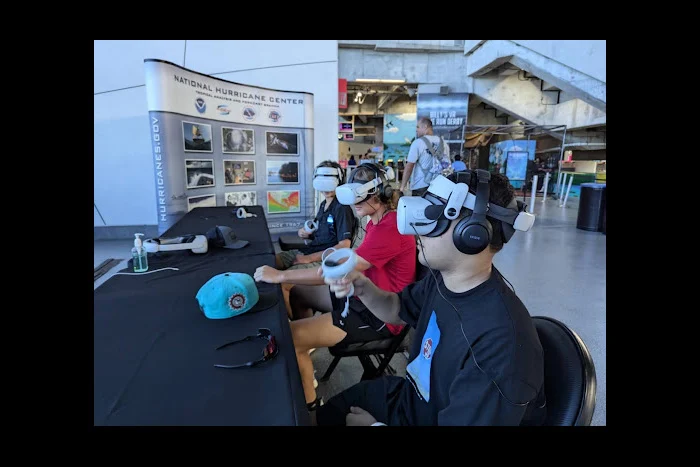
To bridge this gap, a multi-institutional research coalition has launched "Weather the Storm," a cutting-edge virtual reality (VR) simulation designed to translate abstract weather warnings into immediate, undeniable visual evidence. Funded by the National Oceanic and Atmospheric Administration’s (NOAA) Weather Program Office, this initiative represents a paradigm shift in how coastal residents are educated on the necessity of evacuation orders.
The Genesis of "Weather the Storm"
The "Weather the Storm" project is the result of a synergistic partnership between the University of Georgia, Clemson University, Georgia Sea Grant, and South Carolina Sea Grant. The initiative operates on the fundamental psychological principle that "seeing is believing." By immersing users in a simulated coastal environment during a tropical cyclone, researchers hope to replace complacency with a sense of urgency.
"The goal is not merely to show people a storm," says the research team, "but to demonstrate the specific, lethal mechanics of storm surge in a way that maps, charts, and televised warnings simply cannot achieve."
The simulation allows participants to experience the rising water levels, the soundscape of a high-intensity storm, and the logistical challenges of a flooded environment. By gamifying the evacuation decision-making process, researchers are collecting vital behavioral data to understand why residents choose to stay despite mandatory evacuation orders—a phenomenon often fueled by the "normalcy bias" or a misunderstanding of the physics of water displacement.
Chronology of a Deadly Threat: Historical Context
To understand the necessity of this technology, one must look at the tragic history of storm surge fatalities in the United States.
- 1963–2012: The Era of High Vulnerability: During this 50-year period, storm surge was the leading killer in tropical cyclones, accounting for nearly half (49%) of all direct deaths. In this era, public awareness of surge—the involuntary movement of the ocean onto land caused by wind stress—was significantly lower, and evacuation protocols were often reactionary rather than predictive.
- 2013–2022: A Shift in the Data: Recent data indicates a positive trend. From 2013 to 2022, the percentage of direct deaths attributable to storm surge dropped to 11%. This 38-point decline is widely attributed to three factors: advanced satellite forecasting, more precise inland flood modeling, and aggressive, localized public outreach campaigns.
- 2022: A Grim Reminder: Despite the statistical progress, the threat remains acute. Hurricane Ian, which devastated parts of Florida in 2022, claimed 41 lives specifically due to storm surge. These deaths served as a catalyst for the "Weather the Storm" project, proving that even with modern warnings, the public’s perception of "water" versus "wind" remains dangerously skewed.
Supporting Data: Why Perception Must Change
The challenge for emergency managers lies in the public’s tendency to focus on "Category" ratings for hurricanes. A Category 1 or 2 hurricane is often perceived as "manageable," yet a slow-moving storm with high surge can be far more lethal than a fast-moving, high-wind Category 4 storm.
The Physics of the Surge
Storm surge is not a tidal wave; it is a gradual, relentless rise in sea level that can move inland for miles. Because it is often preceded by heavy rainfall and high winds, residents frequently underestimate the depth of the water until escape routes are already submerged.
Behavioral Analytics
Data gathered by the NOAA-funded project suggests that human behavior during an evacuation is dictated by "thresholds of fear." When an individual cannot visualize the water, they are less likely to abandon their property. By using VR, the research team is testing whether individuals who undergo the simulation are statistically more likely to identify the danger threshold—the moment the water becomes life-threatening—than those who simply read a printed evacuation guide.
Official Responses and Scientific Consensus
The integration of VR into emergency management is being watched closely by the National Weather Service (NWS) and the Federal Emergency Management Agency (FEMA).

"We are moving past the era of the static weather map," notes a spokesperson for the Weather Program Office. "We are moving toward ‘impact-based decision support.’ If we can show a resident exactly what their street looks like with three feet of surge, we eliminate the ambiguity of the forecast. Ambiguity is the enemy of safety."
University researchers involved in the project emphasize that this is not about scaring the public, but about empowering them. By lowering the cognitive load required to understand a storm’s potential impact, citizens can make faster, more rational decisions. The partnership between the University of Georgia and Clemson University, in particular, has focused on the social science aspect: how human perception of risk changes when the threat is moved from a two-dimensional screen to a three-dimensional, immersive environment.
The Implications for Future Disaster Resilience
The launch of "Weather the Storm" carries significant implications for the future of disaster resilience in a warming climate. As global sea levels rise, the "base level" for potential storm surge increases, making even moderate storms more dangerous than they were in previous decades.
1. Training for Emergency Responders
Beyond public education, the simulation technology is being explored as a training tool for first responders. By experiencing the virtual surge, personnel can better map out "no-go" zones and identify where floodwater will trap civilians, allowing for more efficient search-and-rescue operations.
2. Urban Planning and Policy
The VR tool also serves as a diagnostic instrument for urban planners. By simulating different surge levels in specific municipal zones, city councils can better visualize which infrastructure projects—such as sea walls, raised roads, or drainage improvements—are most critical for long-term community survival.
3. Closing the Knowledge Gap
The most profound implication is the potential for closing the "knowledge gap" between professional meteorologists and the general public. Historically, there has been a disconnect between the technical language of the NWS and the daily life of a resident. VR acts as a universal language. It does not require a degree in atmospheric science to understand that a virtual room filling with water is a signal to leave.
Conclusion: A New Standard for Safety
The "Weather the Storm" initiative is a testament to the power of interdisciplinary collaboration. By combining the rigorous meteorological data of NOAA with the cutting-edge visualization capabilities of virtual reality, researchers are providing the public with something they have lacked for far too long: a true sense of the threat.
As the Atlantic hurricane season approaches, the project serves as a timely reminder that technology is only as effective as the human decision-making it informs. If "Weather the Storm" can convince even a small percentage of residents to evacuate earlier, it will have succeeded in its primary mission: preserving human life in the face of nature’s most overwhelming force.
For coastal communities, the future of survival may very well be found in the virtual world, ensuring that when the next storm arrives, the public is finally prepared for the reality of the surge.


 Siti Muinah

 Nila Kartika Wati





