




 Muslim
By Climate News Desk
In a historic move that could redefine the global approach to climate justice, the board of the Fund for Responding to Loss and Damage (FRLD) is set to convene for its first-ever extraordinary meeting this Thursday, October 22. At the center of the agenda is a landmark proposal: the provisional allocation of $20 million to assist Nepal in the wake of the catastrophic, climate-driven flooding that decimated parts of the Himalayan nation this past August.
The motion, which has been reviewed by Climate Home News, represents a rare moment of consensus among board members representing both developed and developing nations. As the international community watches closely, this decision is widely expected to pass, signaling the FRLD’s transition from a bureaucratic construct to an active financial lifeline for the world’s most vulnerable populations.
The Core Facts: A $20 Million Precedent
The proposed $20 million is not a direct grant disbursement, but rather a "provisionally set aside" fund. Under the drafted motion, the government of Nepal would be invited to formalize a project proposal outlining exactly how the capital would be utilized to address the specific damages incurred by the August floods. Once submitted, the proposal would be subject to a final review and approval process by the FRLD board at a subsequent regular meeting.
This procedural nuance is critical. By creating a provisional set-aside, the board aims to provide immediate financial certainty to a country currently struggling to rebuild, while maintaining the necessary fiduciary oversight required for international climate financing. For Nepal, a nation already grappling with high debt and limited fiscal space, this $20 million serves as both a material contribution to recovery and a symbolic validation of the Loss and Damage fund’s purpose.
Chronology: From COP27 to the Himalayan Crisis
The journey to this extraordinary meeting began years before the first raindrop fell in the August deluge.
- November 2022 (COP27): Following decades of advocacy by climate-vulnerable nations, parties at the UN climate summit in Sharm el-Sheikh agreed to establish a dedicated Loss and Damage Fund.
- December 2023 (COP28): The fund was officially operationalized, with several nations pledging initial capital to kickstart its mandate.
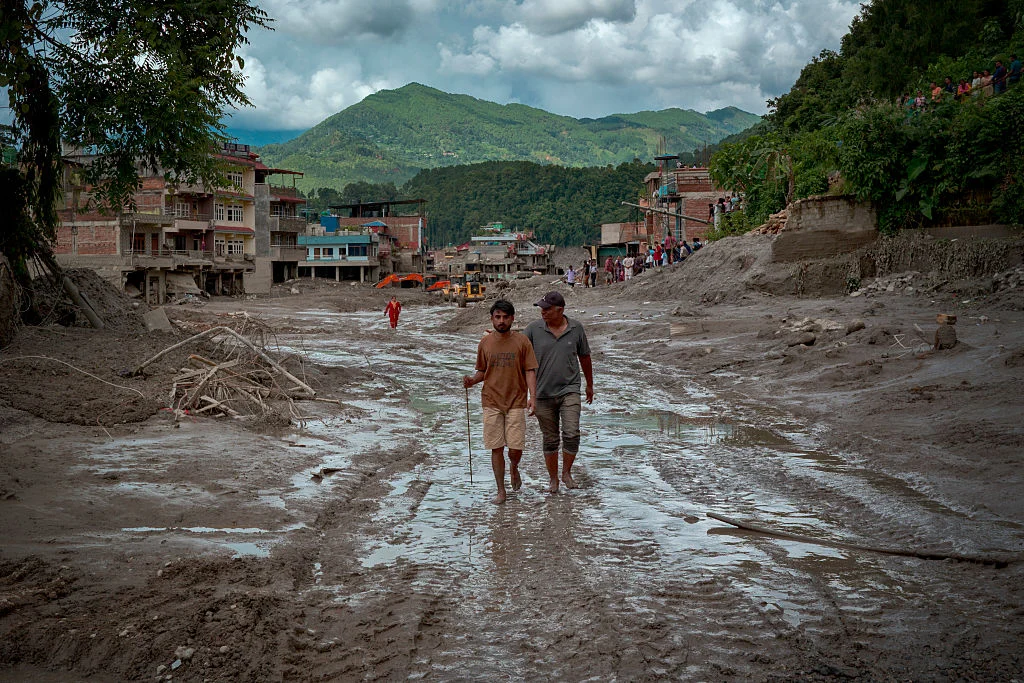
- August 2024: Nepal experienced extreme, climate-driven rainfall. The resulting floods and landslides devastated infrastructure, agriculture, and housing, leading to a significant loss of life and property. Scientists noted that the intensity of the event far exceeded the local capacity for adaptation.
- October 2024: Recognizing the urgency, a cross-regional coalition of FRLD board members drafted the motion to support Nepal’s recovery, leading to the scheduling of the fund’s first extraordinary meeting.
This chronology illustrates the rapid shift from policy negotiation to crisis response. The August floods served as a "stress test" for the FRLD, proving that the fund must be agile enough to pivot toward real-time disasters rather than remaining confined to long-term adaptation projects.
Supporting Data: The Scale of Destruction
The destruction in Nepal is a stark reminder of the limits of adaptation. According to preliminary reports from the Nepalese Ministry of Home Affairs, the August flooding events resulted in the loss of over 100 lives and caused billions of rupees in damage to critical infrastructure.
Economic Impact Assessment
- Agricultural Ruin: Thousands of hectares of paddy fields were submerged, threatening food security for the coming year.
- Infrastructure Collapse: Dozens of bridges and hundreds of kilometers of road were washed away, isolating remote communities in the Himalayan foothills.
- Housing and Displacement: Over 10,000 families were rendered homeless, necessitating emergency shelter and long-term reconstruction efforts.
Climate scientists emphasize that the rainfall patterns observed in August were anomalous, directly linked to a shifting monsoon cycle exacerbated by global warming. The data suggests that Nepal’s geographic vulnerability—characterized by steep terrain and glacial-fed rivers—makes it a "ground zero" for climate-induced disaster. Without external support, the financial burden of these "slow-onset" and "extreme" events threatens to derail the country’s development progress for the next decade.
Official Responses: A New Diplomatic Consensus
The motion’s success is largely attributed to the unified front presented by a coalition of board members from the Global North and Global South.
"This is not just about the money; it is about the principle of solidarity," said a senior delegate from a European contributor nation, speaking on condition of anonymity. "The FRLD was created because the world acknowledged that some climate impacts are beyond the reach of adaptation. Nepal is the proof of that necessity."
Conversely, representatives from the G77 and China have hailed the move as a crucial step toward "climate reparations." In a joint statement expected to be released following Thursday’s meeting, several board members are likely to emphasize that this $20 million is only the "down payment" on a much larger commitment required to address the global climate crisis.
From the Nepalese perspective, the mood is one of cautious optimism. Government officials in Kathmandu have expressed gratitude for the initiative but remain focused on the bureaucratic requirements. "We have the data, we have the assessments, and we are ready to submit a robust proposal," noted a representative from the Ministry of Finance. "We hope the board recognizes that for our people, every day of delay translates into increased hardship."
Implications: The FRLD as a Global Benchmark
The decision to provisionally allocate $20 million carries profound implications for the future of international climate finance.
1. The "Speed vs. Scrutiny" Dilemma
The FRLD is balancing the need for rapid response with the requirement for rigorous oversight. If the Nepal proposal is approved quickly, it will set a precedent for "fast-track" funding. However, if the process bogs down in technicalities, it may reinforce criticisms that international climate funds are too slow to reach the people who need them most.
2. Redefining "Loss and Damage"
For years, the definition of Loss and Damage was a point of contention. Some developed nations feared it would lead to open-ended legal liabilities. By focusing on a specific, climate-attributed disaster, the FRLD is effectively defining Loss and Damage as "immediate, acute financial support for climate-driven catastrophe." This provides a clearer mandate for future funding cycles.
3. Encouraging Future Pledges
The effectiveness of this disbursement will be watched closely by donor nations. If the FRLD can demonstrate that the money is used efficiently and that it produces measurable results in Nepal, it will likely unlock further capital. Conversely, any perception of mismanagement could cause donors to retreat, stifling the fund’s growth in its infancy.
4. Setting the Stage for COP30
The extraordinary meeting serves as a precursor to upcoming climate summits. The success or failure of the Nepal initiative will become a primary talking point in future negotiations, shaping the dialogue around how much the world’s wealthiest nations owe to those currently bearing the brunt of climate change.
Conclusion: A Test of Global Will
As the board gathers this Thursday, they carry the weight of a world watching to see if international institutions can finally deliver on the promises made in the halls of COP. The $20 million for Nepal is a significant sum, but its value transcends the currency. It is a signal of accountability.
If the board approves the motion, it will confirm that the Loss and Damage fund is not merely an abstract accounting exercise, but a living, breathing mechanism designed to cushion the blows of an increasingly volatile climate. As the meeting concludes, the international community will have its first real answer to the question that has defined the climate justice movement for decades: Does the world care enough to pay for the damage that can no longer be avoided?
The people of Nepal, and the millions facing similar risks across the globe, are waiting for the answer.


 Siti Muinah

 Nila Kartika Wati





