




 Azzam Bilal Chamdy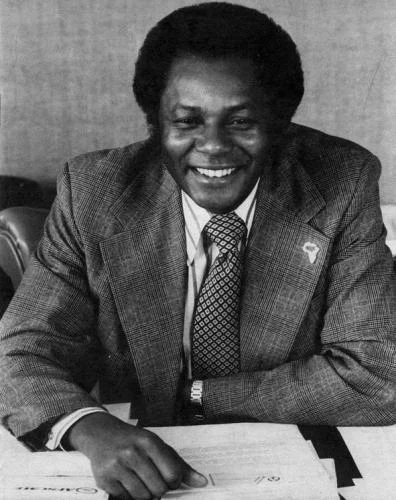
The global labor movement and the American civil rights struggle are mourning the loss of a foundational pillar. William “Bill” Lucy, a visionary strategist who spent over seven decades fighting at the intersection of economic justice and racial equality, passed away in Washington, D.C., at the age of 90.
Lucy’s death marks the end of an era for the American labor movement. As a key architect of modern trade unionism and a tireless advocate for the marginalized, his influence transcended borders, reaching from the sanitation workers’ strikes in Memphis to the anti-apartheid struggle in South Africa. The Legal Defense Fund (LDF), a leading civil rights organization, led the tributes to a man whose life was defined by the relentless pursuit of human dignity.
A Legacy of Unyielding Advocacy: The Life of Bill Lucy
Born into an era of deep systemic inequality, Bill Lucy’s life trajectory was defined by his commitment to the principle that economic rights are inextricably linked to civil rights. His career was not merely one of professional success but of moral urgency. As the secretary-treasurer of the American Federation of State, County and Municipal Employees (AFSCME)—the nation’s largest public employee union—for nearly 40 years, Lucy transformed the landscape of public sector employment, turning a bureaucratic role into a platform for profound social change.
Lucy’s approach to leadership was rooted in the streets rather than the boardroom. Whether he was organizing alongside Dr. Martin Luther King Jr. during the 1968 Memphis sanitation strike or leading international campaigns against global oppression, Lucy remained a "frontline" leader. His ability to bridge the gap between labor unions and the civil rights movement provided the muscle necessary to advance the rights of Black workers across the United States.
Chronology of a Crusader: Key Milestones
To understand the scope of Bill Lucy’s impact, one must look at the historical trajectory of his activism, which spanned more than 70 years:
- The 1960s – The Memphis Crucible: During the 1968 Memphis sanitation strike, Lucy worked closely with Dr. Martin Luther King Jr. and local organizers. This period was pivotal; it was here that Lucy demonstrated the power of organized labor to secure dignity for the most vulnerable. He understood early on that "I AM A MAN" was both a labor slogan and a fundamental civil rights declaration.
- 1972 – Founding the CBTU: Recognizing that Black workers faced unique challenges—both within their unions and in the broader economy—Lucy co-founded the Coalition of Black Trade Unionists (CBTU). This organization became a critical vehicle for ensuring that the voices of Black union members were heard at the highest levels of organized labor.
- 1984 – The Free South Africa Movement (FSAM): Perhaps his most significant international achievement was co-founding the FSAM. At a time when many Western nations were hesitant to act against the South African apartheid regime, Lucy helped mobilize American public opinion and economic pressure. This movement was instrumental in shifting U.S. foreign policy and accelerating the end of apartheid.
- International Leadership: Lucy’s vision was never limited by borders. He served as the first African American president of Public Services International (PSI), a global federation of unions. In this role, he advocated for the rights of public sector workers worldwide, proving that economic justice was a universal human necessity.
- The LDF Partnership: Throughout his career, Lucy maintained a close relationship with the Legal Defense Fund. He was an instrumental ally in LDF’s efforts to defend desegregation and ensure that Black communities had the legal and political tools to participate in the democratic process.
Supporting Data and Historical Context
The impact of Bill Lucy’s work is best understood through the structural changes he helped implement within the American labor sector. During his tenure at AFSCME, the union saw unprecedented growth in membership, particularly among women and people of color.
- Union Expansion: Under his stewardship, AFSCME grew from a modest organization into a powerhouse of over 1.6 million members. This expansion provided the financial and political base for many of the legislative victories of the late 20th century.
- The Anti-Apartheid Impact: The Free South Africa Movement, which Lucy helped ignite in 1984, was a primary catalyst for the Comprehensive Anti-Apartheid Act of 1986. This federal law imposed sanctions on South Africa, bypassing a presidential veto and representing a landmark victory for grassroots political pressure in the U.S.
- Public Sector Stability: By advocating for collective bargaining rights for public employees, Lucy ensured that millions of teachers, nurses, and sanitation workers could secure fair wages and safe working conditions, thereby stabilizing the middle class for decades.
Official Responses and Reflections
The outpouring of grief from national leaders and civil rights organizations underscores the scale of Lucy’s contribution.
Janai Nelson, President and Director-Counsel of the Legal Defense Fund, issued a moving statement reflecting on his character and reach:
"We mourn the loss of William Lucy, an ardent champion for labor, civil, and human rights, and extend our deepest condolences to his loved ones and to the countless lives he touched. Over more than seven decades, Mr. Lucy was a fearless and transformative leader on the frontlines of the labor and civil rights movements who untiringly advanced initiatives to uplift vulnerable communities and advocate for justice, equity, and freedom."
Nelson further highlighted his specific role in the fight for desegregation, noting: "As we reflect on Mr. Lucy’s life and his innumerable contributions to our nation and the world, we recognize his enduring legacy. His selfless dedication in the relentless pursuit of equality and justice will continue to inspire and shape future generations."
Fellow labor leaders have characterized Lucy as a "servant leader"—one who rarely sought the spotlight but always stood at the center of the storm when the cause of justice was at stake.
The Broader Implications: What Remains of His Legacy
Bill Lucy’s passing forces a reckoning with the current state of the movements he helped build. As the American labor movement faces renewed challenges—including declining union density and the widening wealth gap—Lucy’s career serves as a blueprint for modern activism.
1. The Intersectional Approach
Lucy was a pioneer of intersectionality long before the term was popularized. He understood that you could not separate the fight for a fair wage from the fight against systemic racism. For today’s organizers, his legacy suggests that the most effective advocacy happens when labor, civil rights, and social justice groups coalesce around shared goals.
2. Global Solidarity
His work with the Free South Africa Movement remains a masterclass in global solidarity. In an increasingly globalized economy, Lucy’s model of international cooperation—ensuring that labor rights in one country support the fight for human rights in another—is more relevant than ever.
3. Institutional Resilience
By building organizations like the CBTU and strengthening the structures of AFSCME, Lucy ensured that his work would outlive him. His focus was not on individual glory but on creating durable institutions that could withstand political shifts and continue the work of justice for generations to come.
Conclusion: A Torch Passed
The death of Bill Lucy is not just the loss of a historical figure; it is a call to action for those who continue to work in the fields of labor and civil rights. He leaves behind a nation transformed by his commitment to equality. Whether it was on the picket lines of Memphis or in the halls of international power, Lucy’s voice remained consistent: that every worker deserves dignity, and every citizen deserves a seat at the table of democracy.
As the LDF and other organizations continue their work, the memory of Bill Lucy will serve as both a reminder of the progress made and a guide for the work that remains. His life reminds us that history is not a static set of events, but a living process shaped by the courage of those willing to step forward.
About the Legal Defense Fund (LDF)
Founded in 1940, the Legal Defense Fund (LDF) is the nation’s first civil rights law organization. LDF’s Thurgood Marshall Institute is a multi-disciplinary and collaborative hub within LDF that launches targeted campaigns and undertakes innovative research to shape the civil rights narrative. In media attributions, please refer to the organization as the Legal Defense Fund or LDF. Please note that LDF has been completely separate from the National Association for the Advancement of Colored People (NAACP) since 1957—although LDF was originally founded by the NAACP and shares its commitment to equal rights.


 Basiran
 Laily UPN