




 Ammar Sabilarrohman

In the world of personal finance, the focus is almost exclusively on the quantification of success: net worth, debt-to-income ratios, and compound interest growth. However, a growing movement suggests that the "rich life" is not merely a collection of assets, but a deliberate construction of purpose. Recently, Designing Your Life—the seminal work by Stanford design professors Bill Burnett and Dave Evans—has emerged as a blueprint for those seeking to apply engineering and design principles to the human experience.
By shifting the focus from fiscal management to life management, readers are encouraged to approach their personal futures with the same rigor used to prototype new products. This article explores the initial phases of this journey, documenting a collaborative experiment between peers as they attempt to architect their lives through structured introspection.
The Genesis of the Experiment: A New Approach to Purpose
The impetus for this deep dive into life design began with a simple, albeit profound, realization: many individuals reach adulthood without a clear "user manual" for their own existence. Burnett and Evans argue that life is not a problem to be solved, but a project to be designed.
To test this theory, a cohort of three—the author, his partner Kim, and a college classmate named Craig—embarked on a multi-month project to systematically work through the exercises outlined in the book. By treating their lives as an ongoing design project, the group aimed to move beyond vague aspirations and toward a concrete, actionable framework for living. To maintain the integrity of the authors’ intellectual property, the group has adopted a strategy of sharing their personal reflections and the outcomes of these exercises rather than reproducing the curriculum itself.
Starting Where You Are: The Baseline Assessment
The foundational principle of design thinking is "Start Where You Are." In professional design, you cannot build a solution without understanding the current constraints and parameters of the problem. In life design, this requires a rigorous, honest self-assessment.
The authors suggest evaluating four primary pillars of existence: Health, Love, Play, and Work. This is not a search for an immediate "fix," but rather a diagnostic snapshot. Much like calculating one’s net worth provides a baseline for financial planning, this assessment provides a map of one’s current reality.
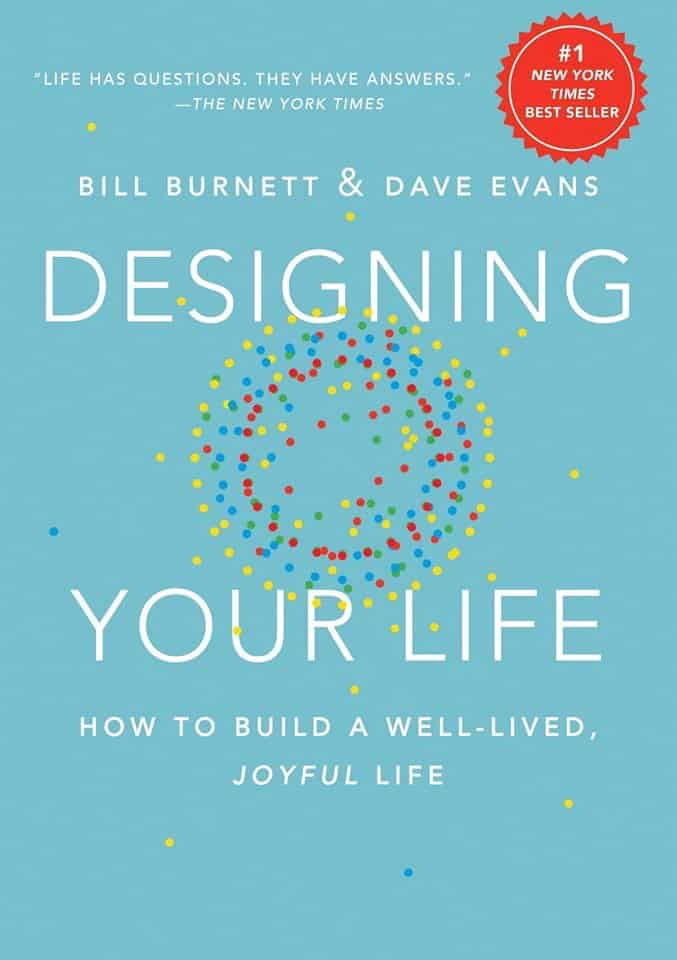
Participants are tasked with rating each category and drafting a brief narrative description of their current status. The exercise is intentionally non-actionable in the short term. The goal is to move from a state of vague unease or unexamined contentment to a state of clarity. Once the current coordinates are established, the individual can begin to calibrate a metaphorical compass, which will guide future decision-making when life presents inevitable forks in the road.
Building a Compass: The Workview and Lifeview
The second stage of the design process involves the construction of a personal compass, manifested through two critical mini-essays: the Workview and the Lifeview. These documents serve as foundational mission statements, defining not just what an individual does, but why they do it.
The Philosophy of Work
The Workview forces an individual to confront the role of labor in their life. For many, work is a source of identity, a means of survival, or a vehicle for social contribution. The exercise demands that one articulate what they value in their professional life—whether it is financial compensation, personal growth, or societal impact.
In a recent session, the divergence and convergence of philosophies between participants became apparent. Craig, a proponent of the "right livelihood" concept, emphasized the necessity of work that supports natural systems and produces tangible, beneficial tools. His perspective is deeply rooted in the idea that work should avoid doing harm and, ideally, foster abundance.
Conversely, the author’s Workview centers on the concept of ikigai—a Japanese term for one’s "reason for being." By aligning professional goals with the desire to provide value to others, the author aims to transform his platform into an accessible resource for financial and personal literacy. Both participants, however, shared a critical commonality: they reject the notion that work is merely a transactional exchange of time for money. Instead, they demand that their professional efforts provide a net benefit to the world at large.
Defining the Lifeview
The Lifeview is an even more existential document. It is a reflection on the meaning and purpose of life, the nature of morality, and the individual’s place in the universe.

During the exchange of these views, the parallels between the participants were striking. Both agreed that the universe has no inherent, pre-ordained meaning, which they viewed not as a source of despair, but as an invitation to construct their own purpose. Morality, they argued, is not derived from dogmatic adherence to tradition, but through the consistent, ethical treatment of others—particularly those with whom one has a power imbalance or fundamental disagreements.
This shared value system, dubbed "rational self-centeredness," dictates that one must first secure their own foundation—taking care of one’s own needs—before they can effectively extend support to their partner, family, and the wider community.
Supporting Data and Historical Context
The uncanny alignment of these worldviews is not entirely coincidental. Both the author and his peer are graduates of Willamette University, an institution anchored by the motto non nobis solum nati sumus ("not unto ourselves alone are we born").
This philosophical heritage appears to have a lasting impact on alumni. When combined with the principles found in Robert Putnam’s Bowling Alone, the discussion shifts toward the concept of "social capital." The participants identified a troubling decline in communal engagement in the United States, exacerbated by the atomizing effects of the internet. Their collective goal is to ensure their future life designs actively work to rebuild these frayed social connections.
The literature supporting this approach is extensive. Beyond Burnett and Evans, the participants draw inspiration from:
- Stephen Cope’s The Great Work of Your Life: Exploring the concept of "personal dharma" or duty.
- Robert Putnam’s Bowling Alone: A study on the collapse and revival of American community.
- Ikigai Philosophy: The intersection of passion, mission, vocation, and profession.
Implications for Future Growth
The implications of these exercises are significant. By externalizing their internal compasses, the participants are creating a decision-making framework that can be referenced during periods of transition or crisis. This is the essence of "designing" one’s life: transforming the abstract feeling of purpose into a verifiable set of guidelines.

For the readers of this experiment, the takeaway is clear: clarity is a prerequisite for change. Whether one is looking to overhaul their finances or redefine their career, the process must begin with a cold, hard look at the current reality and an honest articulation of one’s guiding values.
Looking Ahead: The Good Time Journal
As the project progresses, the focus will shift toward empirical tracking. The participants are currently initiating a "Good Time Journal," a logbook designed to capture daily activities while rating them based on two metrics: Engagement and Energy.
The premise is simple: our subjective experience of time is often a poor indicator of what truly fulfills us. By tracking these metrics, the participants intend to use mind-mapping techniques to identify patterns they might otherwise overlook. Are there activities that drain energy despite high engagement? Are there low-engagement tasks that provide surprising fulfillment?
The "Good Time Journal" represents the next phase of the design process—the transition from reflection to data-driven iteration. By the end of the next two weeks, the group hopes to have enough qualitative data to begin prototyping new habits and roles that align more closely with their newly defined Workviews and Lifeviews.
Ultimately, the process of designing one’s life is not a destination, but an iterative cycle of assessment, reflection, and action. For those willing to put in the work, it offers a path to a life that is not just successful by traditional metrics, but profoundly intentional.


 Reynand Wu

 Pevita Pearce





