



 Ali Ikhwan
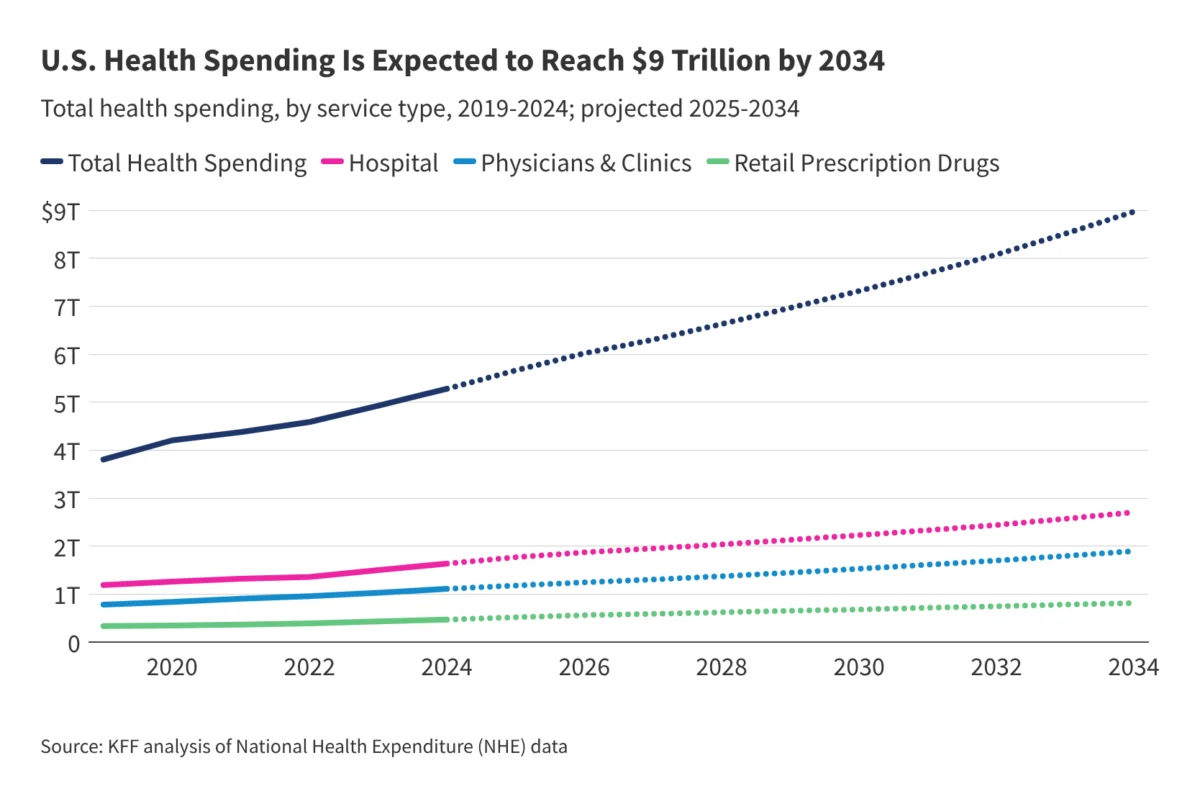
The United States healthcare system stands at a fiscal crossroads. According to the latest data from the Peterson-KFF Health System Tracker, based on federal actuarial projections, the nation is bracing for an era of unprecedented healthcare expenditure. As the cost of care continues to climb, policymakers, economists, and healthcare providers are grappling with a singular, daunting reality: by the mid-2030s, the health sector will account for more than one-fifth of the entire U.S. economy.
This analysis explores the structural drivers of this growth, the anticipated policy interventions intended to act as fiscal brakes, and the long-term implications for the American taxpayer and the healthcare infrastructure.
Main Facts: The Fiscal Horizon
The projections released by federal actuaries paint a picture of a sector that is consistently outpacing broader economic growth. By 2026, total U.S. health spending is expected to reach a staggering $6.0 trillion, representing 18.7% of the nation’s Gross Domestic Product (GDP).
Hospital care remains the most significant driver of this expenditure, with projections estimating that hospitals will account for $1.9 trillion in spending alone by 2026. This reflects not only the rising costs of clinical care and technological advancements but also the increasing demand from an aging demographic. Looking further into the future, the numbers reach an even more monumental scale. By 2034, total annual health spending is projected to hit $9.0 trillion.
While the absolute numbers are rising, the rate of growth is showing signs of stabilization. After years of volatile shifts—often exacerbated by the COVID-19 pandemic and subsequent recovery efforts—the annual percentage change in health spending growth is estimated to have cooled to 6.3% in 2026. Projections suggest a further deceleration to 4.7% by 2027, as the system begins to normalize post-pandemic.
Chronology of Expenditure and Projections
To understand where we are going, we must view these projections as part of a multi-decade timeline of fiscal evolution:
- 2018–2023 (The Volatility Era): This period was defined by the COVID-19 pandemic, which saw massive federal stimulus, shifts in utilization patterns, and extraordinary expenditures on vaccines, testing, and emergency hospital care.
- 2024–2026 (The Transition Phase): During these years, the system is moving away from pandemic-era funding levels. This phase is characterized by a "return to normal" for utilization patterns while simultaneously adjusting to the inflationary pressures of the post-2022 economy.
- 2027 (The Stabilization Point): Projections indicate that by 2027, the annual growth rate will settle at 4.7%, providing a more predictable, albeit high, fiscal baseline.
- 2027–2034 (The Long-Term Expansion): This period will be defined by the demographic "silver tsunami"—the aging of the Baby Boomer generation—which will exert consistent, upward pressure on Medicare spending and chronic disease management costs, culminating in the $9 trillion mark.
Supporting Data: The Drivers of Cost
Why is the cost of healthcare rising faster than other sectors of the economy? The data highlights several structural factors:
1. Utilization and Demand
The primary driver of the $9 trillion projection is the shift in demographics. As the U.S. population ages, the prevalence of chronic conditions—such as diabetes, heart disease, and dementia—increases. These conditions require long-term, high-intensity care, primarily provided in hospital settings.
2. The Inflationary Ripple
Healthcare is not immune to the broader economic forces of inflation. Rising wages for clinical staff, particularly nursing shortages that have driven up contract labor costs, have significantly impacted hospital balance sheets. Furthermore, the rising cost of pharmaceutical innovation, while providing immense clinical benefit, continues to inflate the "price per unit" of care.
3. The Composition of Spending
Hospitals remain the "anchor" of health spending, but pharmaceutical spending is gaining ground as a percentage of the total. While the Inflation Reduction Act (IRA) aims to curb these costs, the sheer volume of prescription drug usage—driven by the introduction of high-cost biologic drugs and specialty therapies—ensures that pharmaceuticals remain a central pillar of the expenditure growth chart.
Official Responses and Policy Interventions
The federal government is not a passive observer in this fiscal trajectory. Several legislative levers are being pulled to dampen the growth rate of national health expenditures.
The Impact of the 2025 Budget Reconciliation
Changes to Medicaid policy within the 2025 budget reconciliation framework are expected to be a primary driver in slowing spending growth. By tightening eligibility verification and adjusting federal matching requirements, the government is attempting to curb the rapid enrollment growth observed during the pandemic.
The Sunset of ACA Marketplace Credits
A significant pivot point occurs in 2025 with the expiration of the Affordable Care Act (ACA) Marketplace enhanced premium tax credits. These credits were instrumental in driving record-high enrollment during the pandemic. Their expiration is expected to lead to a decrease in federal spending on subsidies, though experts warn this may also lead to a decrease in coverage rates, shifting the burden of care back to uncompensated hospital care.
The Inflation Reduction Act (IRA)
The IRA represents the most significant legislative attempt to control Medicare prescription drug spending. By allowing Medicare to negotiate prices on high-cost drugs and implementing inflation rebates, the government expects a deceleration in long-term pharmaceutical spending. However, the report notes that in the near term, Medicare spending may remain high as the full weight of these reforms takes time to manifest in the market.
Implications: A System at Risk
The transition toward $9 trillion in annual spending carries profound implications for the U.S. economy and the average American household.
The Burden on the U.S. Economy
When healthcare accounts for more than 20% of the GDP, it creates an "opportunity cost" for the nation. Resources poured into healthcare are resources that are not being invested in education, infrastructure, green energy, or technological research. This level of spending effectively serves as a tax on the economy, reducing the global competitiveness of U.S. industries that must absorb high healthcare premiums for their employees.
The Impact on the Individual
For the average consumer, the growth in healthcare spending translates into stagnant wage growth. As employers spend more on health insurance premiums, they have less capital available for salary increases. This creates a "hidden" financial crisis where Americans find themselves working harder but seeing their purchasing power eroded by the rising cost of benefits.
The Sustainability of Public Programs
Medicare and Medicaid are the bedrock of the U.S. safety net. However, if spending growth consistently outpaces the growth of the tax base that funds these programs, the government faces a choice: raise taxes, cut benefits, or increase the national deficit. The projections for 2034 suggest that the current trajectory is unsustainable without fundamental shifts in how care is delivered and paid for.
The Future of Value-Based Care
The data reinforces the urgency for the transition to value-based care. The current fee-for-service model, which rewards the volume of services rendered, is inherently inflationary. To move the needle on the $9 trillion projection, the healthcare system must pivot toward models that reward health outcomes—keeping patients out of the hospital rather than filling beds.
Conclusion
The Peterson-KFF Health System Tracker provides an essential window into the fiscal future of American medicine. While the projected growth in healthcare spending is a testament to the nation’s commitment to medical innovation and expanded access, the sheer scale of the $9 trillion projection serves as a warning.
To manage this future, the U.S. must navigate a delicate balance: maintaining the quality of care that defines the American health system while implementing the rigorous reforms necessary to ensure that care remains accessible and affordable for the generations to come. The era of unchecked growth is coming to a close; the era of fiscal discipline, fueled by policy innovation and systemic reform, must now begin in earnest. For those interested in the ongoing performance of this critical sector, the Peterson-KFF Health System Tracker remains the definitive hub for monitoring these trends as they unfold in the coming decade.

 Lina Hope