


 Ali Ikhwan
For Mitzie Westgate, a 21-year-old senior at the College of Charleston, the path to a career in occupational therapy was supposed to be a linear progression: graduate, apply to a doctoral program, and eventually open a nonprofit to serve children with disabilities like her cousin. Today, that trajectory is suspended in a state of administrative limbo.
Westgate is one of thousands of American students caught in the crosshairs of a seismic shift in federal student lending. Last year, Congress removed dozens of graduate-level programs from the Department of Education’s list of “professional” degrees. This reclassification, coupled with a flurry of legal challenges, has created a policy vacuum that is forcing students to reconsider their professional futures, defer their applications, or contemplate the precarious world of high-interest private lending.
The Shift: Understanding the New Lending Landscape
The core of the issue lies in the elimination of the Grad PLUS loan program, which previously allowed graduate students to borrow up to the full cost of attendance. Under the new legislation, which took effect July 1, federal loan limits have been capped at $20,500 per year—and $100,000 in total—for the majority of graduate programs.
Only a select group of 11 professional programs currently enjoy higher annual caps of $50,000, with a lifetime limit of $200,000. For students like Westgate, whose chosen field of occupational therapy does not currently fall under the "professional" umbrella with higher limits, the gap between what the government will lend and the actual cost of tuition at elite institutions is insurmountable.
“It’s kind of up in the air whether I’ll be able to pay for college after this year,” Westgate says. Her top choices—Quinnipiac University, the University of New Hampshire, and the Medical University of South Carolina—are now financially daunting. The alternative, remaining in her home state of Rhode Island to attend Johnson & Wales, offers lower costs but risks sacrificing the professional networking opportunities critical to her field.
Chronology of a Crisis: From Legislative Action to Judicial Standoff
The current state of confusion is the result of a rapid succession of policy and legal maneuvers:
- Pre-July 2026: Graduate students operated under the Grad PLUS model, which provided a reliable safety net for financing higher education regardless of the program’s perceived “earning potential.”
- July 1, 2026: The new law officially took effect, slashing borrowing limits for most graduate programs and narrowing the definition of “professional” degrees.
- Late 2026: A coalition of nursing associations and healthcare advocacy groups filed a lawsuit, arguing that the restrictive limits would exacerbate workforce shortages. A federal judge granted a stay, suspending the implementation of the new rules until at least December.
- Present Day: Students are in a state of “whiplash.” As they prepare applications for the 2027-28 academic year, they have no guarantee whether their programs will ultimately be categorized under the lower or higher loan limits.
Supporting Data: The Economic Reality of Debt
The debate over these caps centers on the tension between government fiscal responsibility and the necessity of specialized graduate training. Critics of the current system argue that the government should not subsidize expensive degrees in fields where graduates may struggle to repay their loans.
According to a report by the American Enterprise Institute (AEI), the relationship between high tuition and high post-graduate earnings is often tenuous. "Students attending more expensive programs do not, on average, earn substantially more after graduation," the report noted. In fields like social work, physical therapy, and psychology, higher debt burdens often reflect institutional prestige rather than a proportional increase in salary.
This data has created a chilling effect in the private lending market. Financial aid expert Mark Kantrowitz notes that private lenders are increasingly scrutinizing applicants, focusing their marketing efforts on students in high-earning, lucrative career tracks. For those in lower-earning, albeit socially vital, fields, the private sector may not be a viable alternative.
The Risks of Private Lending and "Predatory" Traps
With federal guardrails weakening, experts are sounding the alarm regarding the private student loan market. Eileen Connor, director of the Project on Predatory Student Lending, warns that students forced into the private market may face predatory practices.
“There are a lot of different ways these loans can have traps,” Connor explains, pointing to mandatory arbitration clauses that prevent borrowers from taking lenders to court. Furthermore, for students with poor credit scores—a demographic that includes many who have already spent years in undergraduate education—interest rates could climb as high as 16 percent.
Sallie Mae, one of the nation’s largest lenders, has adopted a cautious tone. Rick Castellano, a spokesperson for the company, emphasized the necessity of responsible underwriting, stating, “For some people, a loan is just not the answer.” This sentiment, while fiscally prudent, offers little solace to students who view graduate education as a mandatory step for their professional licensure.
Implications for the Workforce: A Domino Effect
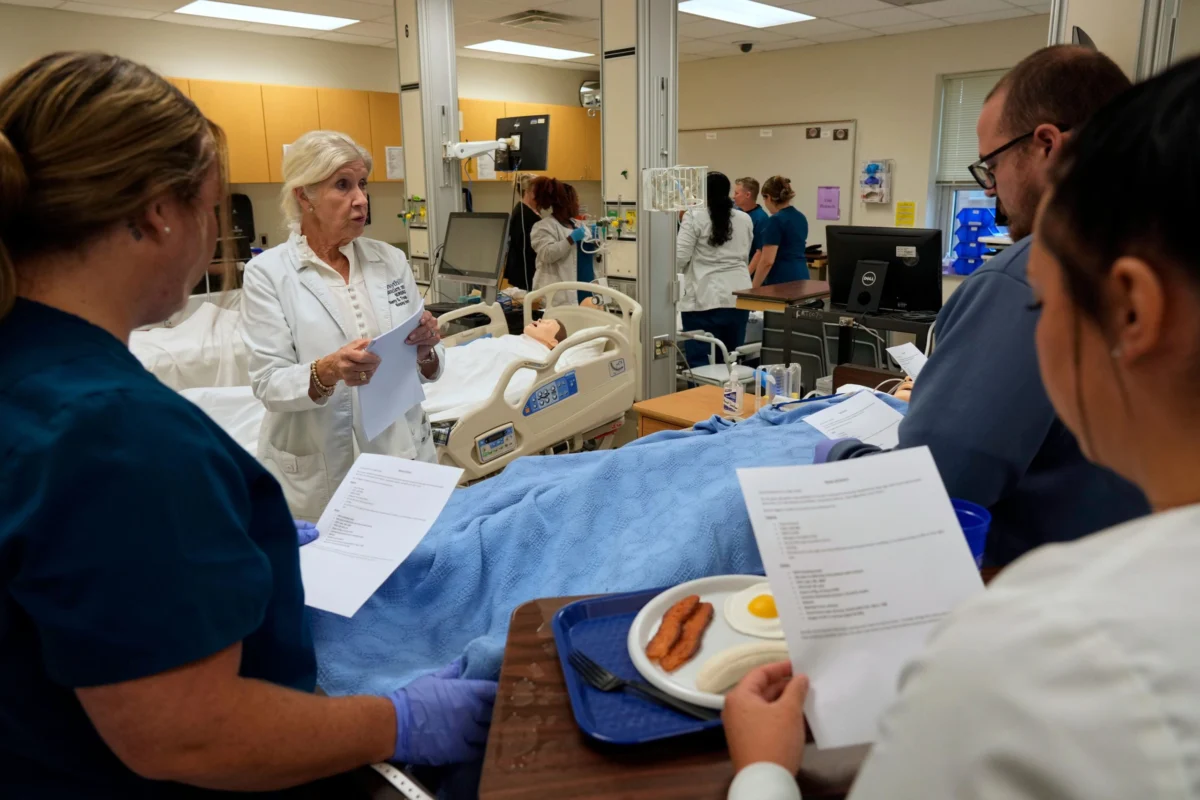
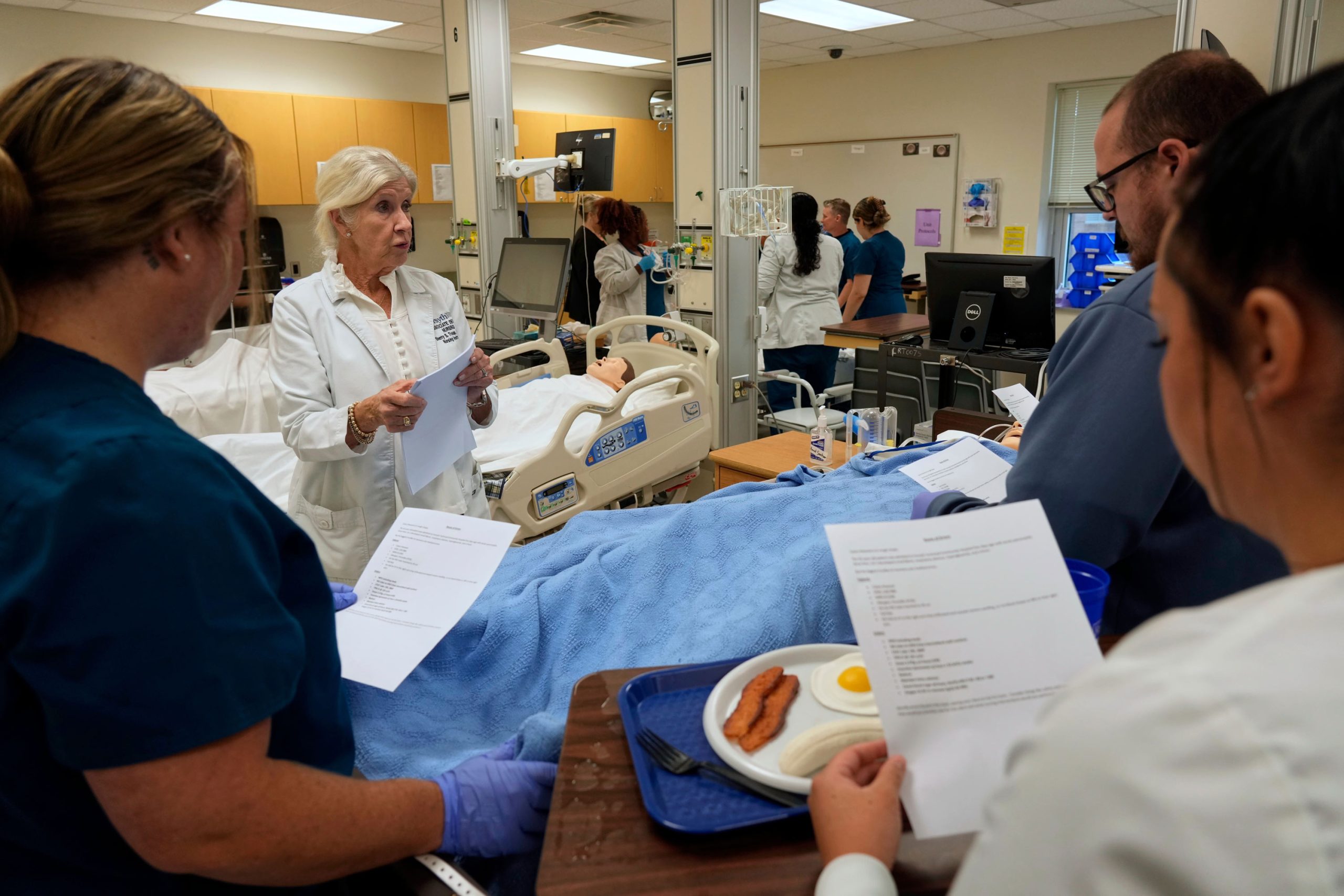
The human cost of these policies is most evident in essential sectors like nursing. Kayce Cordray, a 44-year-old doctoral candidate at Oral Roberts University, warns that the cap on federal loans is creating a "domino effect."
"We are facing a real nursing shortage and a real rural health care shortage," Cordray says. "We’re not even going to be able to get registered nurses if we don’t have faculty. It’s a domino effect."
For many graduate students, who are often juggling full-time jobs and families, the prospect of taking on private loans that require repayment during the enrollment period—unlike the deferred payment structure of federal loans—is a non-starter. This is forcing many to choose between their education and their domestic responsibilities, with some dropping out of rigorous programs entirely.
Official Responses and Institutional Strategy
In the face of this "policy vacuum," universities are scrambling to find a response. Some, like the University of Pennsylvania, are facing pressure to lower tuition costs as students gravitate toward more affordable regional competitors like Drexel or Temple.

However, many institutions remain silent. Major systems like the California State University (CSU) and the State University of New York (SUNY) have declined to comment, leaving students in a state of uncertainty. Megan Walter, a senior policy analyst at the National Association of Student Financial Aid Administrators, describes the atmosphere on campuses as one of deep frustration.
"We’re navigating this in a policy vacuum and with a sense of whiplash," Walter says. "Aid directors are confused about what to tell students. We just want to see this ended so students and schools know what to do."
Looking Forward: A Future in Flux
For students like Gracie Hayworth, a 23-year-old in an online Master of Public Health program at Dartmouth, the uncertainty has forced a complete reassessment of her family’s financial future. She and her husband, both of whom intend to pursue doctorates, are now debating the feasibility of their long-term plans.
“We were sitting at the kitchen table deciding whether we can make this work,” Hayworth says. “If [my husband] has to pay those loans while he’s still in school, that adds another barrier.”
As the December deadline for the judicial ruling approaches, the landscape of graduate education remains fractured. Whether the government will restore higher borrowing limits, or whether universities will be forced to restructure their tuition models, remains to be seen. In the meantime, the next generation of therapists, nurses, and public health professionals are left to "play it by ear"—a precarious strategy for a group of people expected to carry the burden of the nation’s future health and wellbeing.
For now, the American graduate education system stands at a crossroads: it must decide whether the pursuit of essential, high-skill professional training is a public good worth protecting, or a private financial risk that must be offloaded onto the individual. Until that question is answered, the doors to many graduate programs will remain effectively locked for those without independent wealth.

 Laily UPN

 Nila Kartika Wati