



 Pevita Pearce
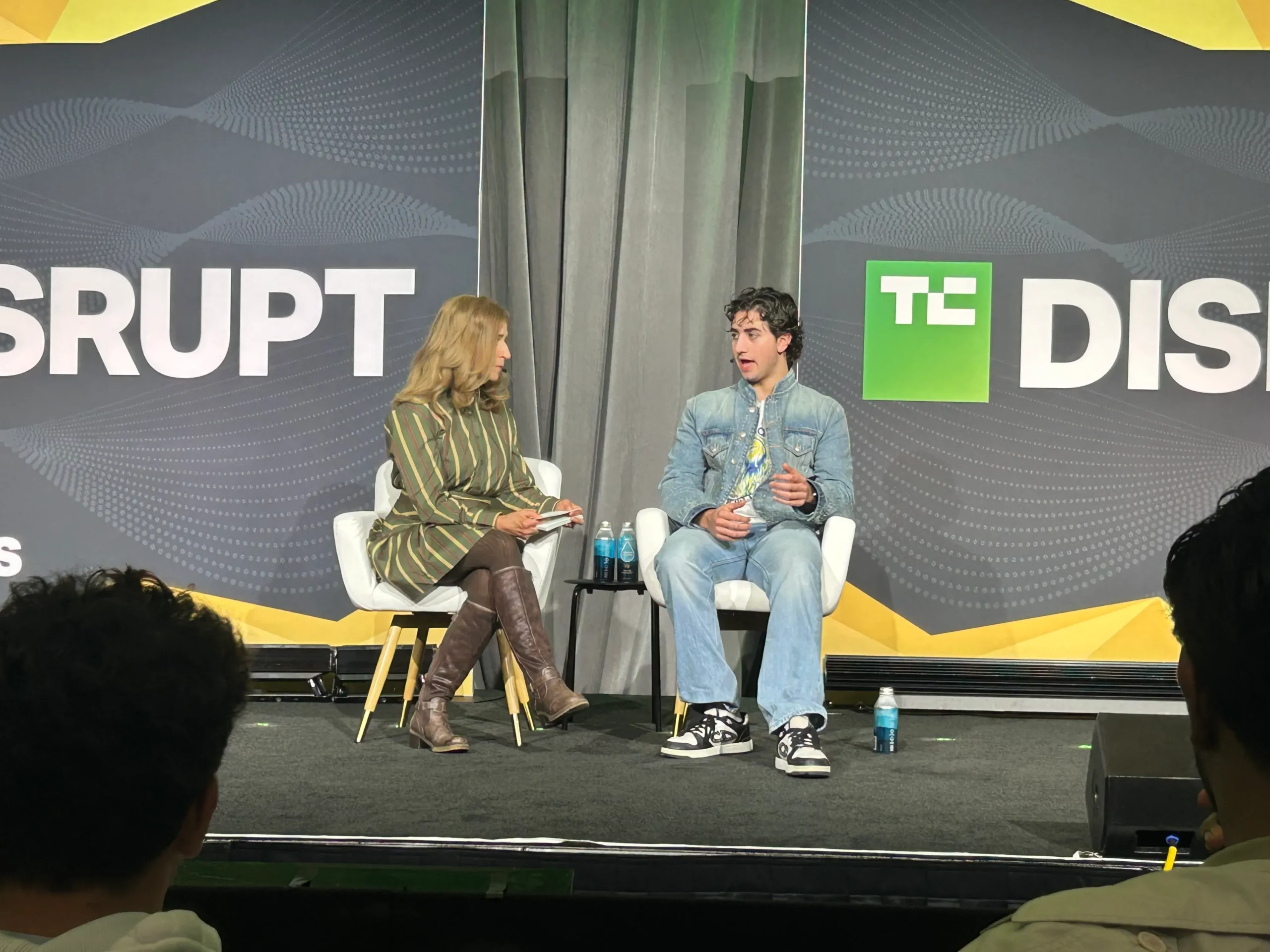
At an age when most of his peers are navigating the complexities of freshman orientation or worrying about midterms, 19-year-old Zach Yadegari has already achieved what many veteran entrepreneurs spend decades chasing: a massive exit, a viral consumer product, and the attention of the global venture capital community.
Yadegari, the founder of the AI-powered calorie tracking app Cal AI, took the stage at TechCrunch Disrupt this Thursday to pull back the curtain on his rapid ascent. His story is not just one of technical ingenuity, but a masterclass in modern digital marketing, influencer arbitrage, and the sheer audacity required to disrupt established industries before one is legally old enough to rent a car.
Main Facts: The Cal AI Phenomenon
Founded in 2024, Cal AI was designed to simplify the often-tedious process of tracking nutrition through artificial intelligence. By leveraging generative models to estimate caloric intake from simple photos or descriptions, the app quickly captured the attention of a health-conscious Gen Z audience.
The company’s growth was nothing short of explosive. Over the course of just two years, Cal AI generated a staggering $30 million in revenue. This rapid accumulation of users and capital made the startup an irresistible target for industry giants. In March 2026, the company was acquired by MyFitnessPal—a household name in the fitness-tracking space—for an undisclosed sum.
Yadegari’s success has not gone unnoticed by the broader tech establishment. He is an alumnus of the prestigious Forbes 30 Under 30 list, a testament to his ability to identify market gaps and execute on them with singular focus.
Chronology: A Two-Year Sprint
The timeline of Cal AI reads like a condensed version of a traditional Silicon Valley success story, compressed into a 24-month window:
- 2024: Cal AI is founded. Yadegari begins developing the AI engine and testing early iterations of the user experience.
- Late 2024: The company initiates its aggressive influencer-led growth strategy, moving from experimental testing to a full-scale recruitment of social media creators.
- 2025: The "linear growth" phase begins. As more influencers join the roster, the user base scales exponentially, leading to the $30 million revenue milestone.
- March 2026: MyFitnessPal officially acquires Cal AI.
- October 2026: Yadegari announces his new startup, Persona, successfully closing a $10 million funding round.
Supporting Data: The Influencer Arbitrage Model
During his session at TechCrunch Disrupt, Yadegari demystified the engine behind his growth. He described his marketing strategy as a form of "influencer arbitrage."
"An early sign of success came when an influencer’s post about us led to approximately a thousand new users over the course of two days," Yadegari recalled. This realization transformed the company’s trajectory. Recognizing the predictability of the return on investment, Yadegari pivoted his operations to focus almost entirely on rapid influencer recruitment.
The Economics of Influence
Yadegari’s strategy relied on a disciplined, data-driven approach to negotiation. Rather than opting for flat, high-cost celebrity endorsements, he targeted influencers with "tight-knit" communities—creators whose audiences were highly engaged and prone to conversion.
"We would pay as many people as possible to start posting for us," he explained. "It was a clear formula. Every post they did would get a certain number of viewers that would convert. It was linear, but it was extremely fast."
The financial arrangement was equally pragmatic. By negotiating performance-based payouts, Yadegari ensured that the company only paid for the reach it actually received. He candidly noted that many of his early partners were "broke college kids" who were highly motivated by immediate cash incentives. By setting clear benchmarks—requiring influencers to keep posting until a specific user-acquisition goal was met—Yadegari maintained strict control over his marketing spend and growth velocity.
Official Responses and Personal Philosophy
Yadegari’s appearance at the conference was a mix of business strategy and personal reflection. With his father watching from the audience, the young founder spoke openly about the support systems that enabled his career. He cited his family as a primary pillar of strength, noting that their willingness to allow him the freedom to pursue his ambitions was instrumental.
When the conversation turned to the role of formal education in modern entrepreneurship, Yadegari did not mince words. Responding to a question about whether he credits college for his success, he dismissed the necessity of a degree with a laugh, stating, "I think the only real reason to go to college is if you want to have a fun social time as a kid and be with other people." His comments highlight a growing sentiment among the "founder-first" generation, who often prioritize real-world iteration over traditional academic certification.
Implications: The Next Chapter with "Persona"
Having successfully exited his first venture, Yadegari is not slowing down. Earlier this month, he announced his new AI agent startup, Persona, which has already secured $10 million in funding.
A New Frontier in AI
Persona represents a shift in focus from specialized nutrition tracking to a broader, more ambitious goal: "making computing seamless with human life." Unlike standard chatbots or search-based AI, Persona is designed to be an omnipresent assistant. According to Yadegari, the AI will "live anyplace with an internet connection," including iMessage, email, and phone calls.
The implications for this technology are vast. By integrating an AI agent into the daily communication channels of users, Persona aims to reduce the "friction" of human interaction with digital systems. However, the most intriguing aspect of the company’s roadmap is the ambition to build a "hardware ecosystem" around the app. This suggests that Yadegari intends to follow the path of companies like Apple or Meta, where the software is tethered to a proprietary physical device, thereby creating a more immersive and sticky user experience.
The Broader Impact on the Startup Ecosystem
The rise of Zach Yadegari serves as a case study for the "new guard" of tech founders. His career trajectory highlights several key shifts in the startup landscape:
- The Rise of the Teen Founder: We are entering an era where access to powerful AI tools and global social media platforms has effectively erased the "experience gap" that once prevented younger people from building massive, revenue-generating companies.
- Marketing as Engineering: By treating influencer marketing as a quantifiable, linear mathematical equation rather than a "creative" endeavor, Yadegari was able to scale his company with the efficiency of a software product.
- The Pivot to Ambient Computing: His move from Cal AI to Persona signals a broader industry trend toward "ambient AI"—systems that do not require an app interface to function, but instead integrate directly into the existing workflows of our digital lives.
As the tech world watches, the question remains whether Yadegari can replicate his early success at a larger scale. If his track record with Cal AI is any indication, he is well-equipped to navigate the complexities of building a hardware-software ecosystem. Whether one agrees with his views on education or his aggressive marketing tactics, his results are undeniable. In the span of just two years, he has moved from a high school classroom to the center of the AI revolution, proving that in the digital age, speed, data, and a willingness to bypass tradition are the most valuable assets a founder can possess.


 Sagoh

 Nana Wu