

 Nana Wu
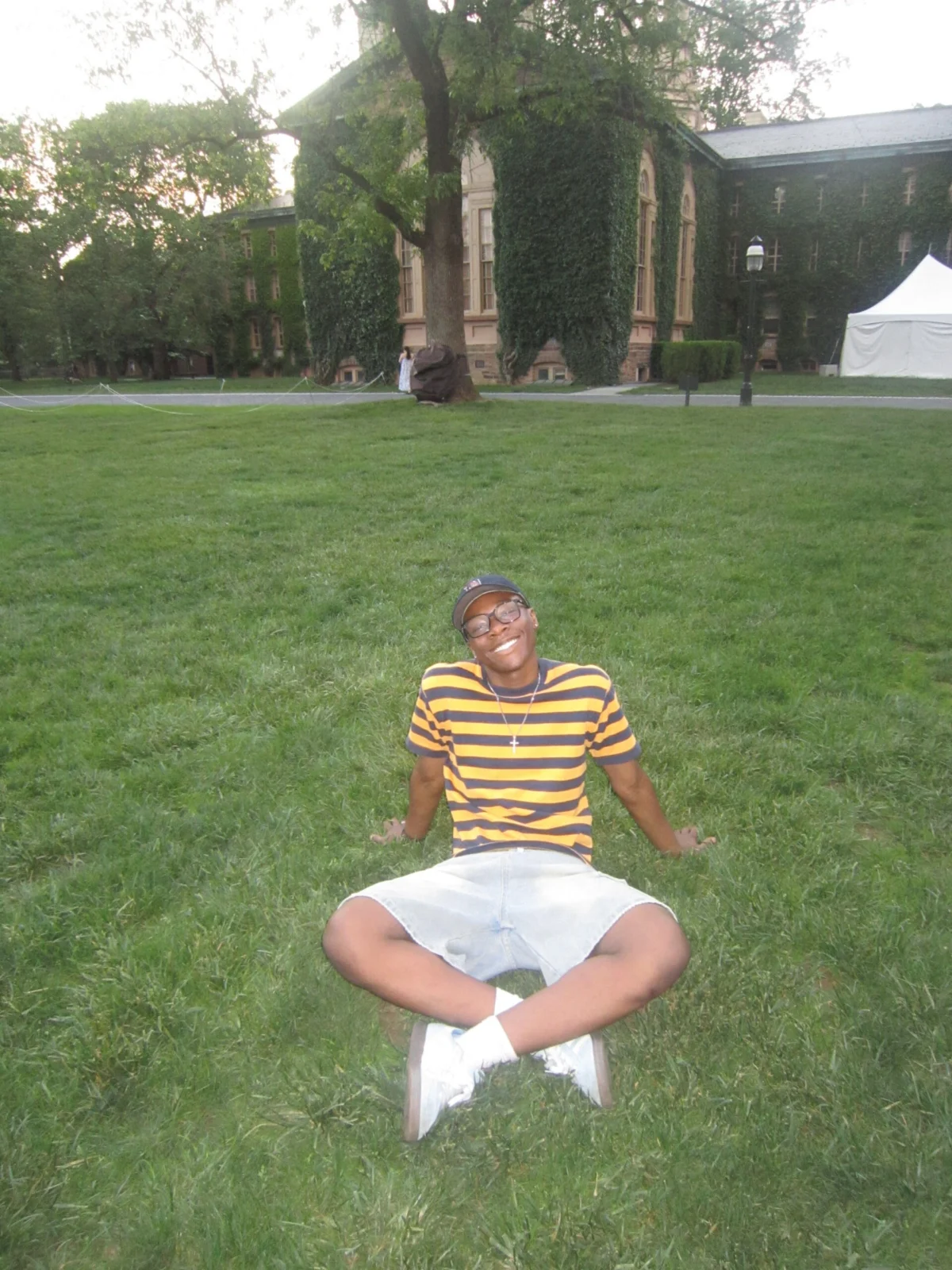
Every summer, the halls of Benetech—both physical and virtual—are enlivened by the arrival of a new cohort of bright, mission-driven students. Among the most anticipated is the annual Princeton Internships in Civic Service (PICS) fellow, a partnership that consistently brings fresh perspectives to the organization’s work in social good. This summer, that mantle was taken up by Kweku Akese, a student whose personal journey with invisible disability and storytelling made him a natural fit for Benetech’s marketing and communications team.
As Akese reflects on his tenure, his narrative serves as a powerful reminder of why organizations like Benetech exist: to transform the "silence" surrounding disability into a chorus of advocacy, technological innovation, and systemic change.
The Core Mission: A Synthesis of Advocacy and Technology
At its heart, Benetech operates on the belief that software and technology are the great equalizers of our time. By focusing on accessibility, education, and human rights, the organization seeks to dismantle the barriers that keep marginalized populations from participating fully in society.
For Akese, the mission was not just professional; it was deeply personal. Growing up, he witnessed the "silence" that surrounds specific diseases—particularly those that are chronic, invisible, or misunderstood. His focal point was sickle cell disease, a genetic blood disorder characterized by extreme, unpredictable pain and chronic fatigue. Because the condition often lacks outward physical markers, it is frequently categorized as an "invisible disability," leading to social isolation and a lack of institutional support in educational environments.
The Power of Storytelling
Akese’s desire to bridge this gap led him to pen the children’s book Amira’s Amazing Day. By introducing the realities of sickle cell disease to children at a formative age, Akese aimed to foster empathy and awareness. This commitment to storytelling caught the attention of Benetech, an organization that similarly recognizes that advocacy is incomplete without the inclusion of the lived experiences of those it serves.
Chronology of a Summer Internship: From Learner to Advocate
The PICS internship program at Benetech is structured to provide students with more than just administrative tasks; it offers a seat at the table where real-world decisions are made.
Early Weeks: Immersion and Cultural Calibration
Upon joining the marketing team, Akese’s first hurdle was one of cultural integration. In an era of remote work, corporate culture often feels sterile or transactional. Akese admitted to initial reservations about the warmth of a fully remote team, but he was quickly disabused of this notion during his first company-wide Zoom call. He describes a culture defined by "calm and receptiveness," noting that the team prioritized getting to know him as a person before treating him as a contributor.
Mid-Season: The Shift in Perspective
As the internship progressed, Akese’s role evolved. He transitioned from an observer to a creator, tasked with producing graphics for social media. It was here that he experienced a "paradigm shift" regarding the nature of design. As a self-described "COVID painter," Akese was accustomed to the artistic freedom of a blank canvas. However, working within an accessibility-first organization required him to unlearn his old habits.
He began to view every design choice through the lens of inclusivity:
- Color Contrast: Are these shades discernible for individuals with low vision?
- Alt-Text Integration: Can a screen reader accurately describe this image to a blind user?
- Typography: Is the font size and style readable for those with neurodivergent needs or visual impairments?
The Final Month: Integrating the Learnings
By the end of his term, Akese was no longer just creating content; he was championing an accessibility-first workflow. His transition highlights a critical truth: accessibility is not a "check-the-box" requirement; it is a design philosophy that must be woven into the fabric of every project from inception.
Supporting Data: The Landscape of Educational Inequality
Akese’s work touches upon a broader, systemic issue: the failure of the modern education system to accommodate students with disabilities.
According to data from the National Center for Education Statistics (NCES), students with disabilities continue to face significant achievement gaps compared to their non-disabled peers. While legislation like the Individuals with Disabilities Education Act (IDEA) provides a legal framework for support, the practical application often falls short.

The Role of Assistive Technology
Benetech’s flagship product, Bookshare, stands at the center of this conversation. Bookshare provides a vast library of accessible ebooks, allowing students with dyslexia, visual impairments, and physical disabilities to engage with curriculum materials in a format that works for them.
Akese’s experience underscores that the barrier is often not the student’s capability, but the "system that wasn’t built for them." When schools fail to utilize tools like Bookshare, they effectively place a ceiling on a student’s potential. Akese’s call for "greater urgency" is supported by the reality that, for many students, the difference between success and failure is simply access to the right technological tool.
Official Responses: The Philosophy of "Meeting People Where They Are"
The leadership at Benetech views the internship program not merely as a way to gain labor, but as a reciprocal exchange of knowledge.
When asked about the impact of the PICS program, a Benetech spokesperson noted: "We don’t just want to teach interns how to work in the tech-for-good space; we want to learn from their unique lived experiences. Kweku’s focus on the intersection of invisible disability and communication has pushed our team to think more critically about how we represent our communities."
The organization emphasizes that a critical component of their success is the integration of people with disabilities into their own workforce. Akese noted that "knowing that some of Benetech’s own employees are part of the communities Benetech serves" was the most eye-opening aspect of his internship. This "nothing about us without us" approach remains the gold standard for advocacy organizations globally.
Implications: The Future of Accessible Advocacy
As Akese prepares to return to his studies at Princeton, the implications of his internship resonate far beyond his own resume.
1. The Necessity of Universal Design
Akese’s evolution from artist to accessibility advocate suggests that the future of digital communications must be inherently inclusive. As AI and automated tools continue to dominate the content creation space, the human element—the "why" behind the alt-text, the "who" behind the color palette—becomes more, not less, important.
2. Bridging the "Systemic Silence"
The "silence" Akese speaks of is not merely a lack of conversation; it is a failure of empathy at the institutional level. To overcome this, organizations must do more than provide resources; they must actively advocate for the policies that make those resources mandatory in every classroom, workplace, and public space.
3. A Legacy of Purpose
For Akese, the internship provided a closure of sorts. He views his past struggles—the years spent navigating a system that didn’t see him—not as wasted time, but as training for his current advocacy work. "Every hard year I spent trying to make a system see me is a year I now spend trying to make that same system see someone else," he stated.
This sentiment is the defining ethos of the next generation of social innovators. They are not satisfied with merely navigating broken systems; they are determined to reconfigure them.
Conclusion
Kweku Akese’s summer at Benetech serves as a microcosm of the organization’s broader objective. By marrying the personal passion of individual advocates with the scalable power of technology, Benetech continues to prove that the "silence" surrounding disability is not inevitable. With the right tools, the right intent, and the right voices leading the conversation, the system can, and will, be rebuilt for everyone.
As Akese moves forward, he carries with him the tools he honed at Benetech, ready to continue his work in making the invisible visible. For those who watch his trajectory, it is clear: the trade he’s made—trading his past struggles for future progress—is one that will benefit the disability community for years to come.


 Dwi Wanna

 Asro