

 Lina Irawan
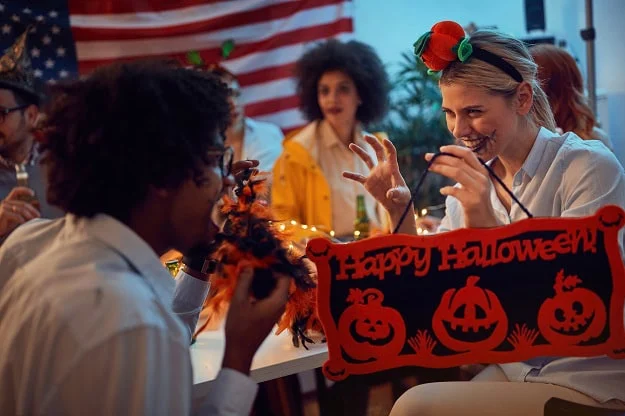
Halloween has long been celebrated as a time for imaginative play, costume parties, and a touch of mischief. While traditionally reserved for children and neighborhood festivities, the holiday has undergone a significant cultural shift over the past two decades. Today, it has firmly established itself as a staple of office culture, serving as a unique bridge between professional responsibilities and team-building camaraderie.
As companies continue to prioritize employee engagement and morale, the infusion of levity into the workplace has become a key strategy for maintaining a healthy organizational climate. To navigate this seasonal transition, many professionals are turning to curated lists of Halloween quotes—ranging from the witty to the inspirational—to brighten up team communications, digital workspaces, and in-office celebrations.
The Evolution of Workplace Festivities: Main Facts
The transformation of Halloween from a domestic holiday to a corporate event is not merely a coincidence; it is a response to the growing demand for "human-centric" work environments. Research into organizational behavior suggests that shared social rituals—even those as lighthearted as dressing up or sharing themed humor—can significantly reduce workplace stress and foster stronger interpersonal bonds.
In the modern office, Halloween serves as a "circuit breaker" in the professional calendar. By allowing employees to engage in creative expression, companies are effectively humanizing their leadership teams and breaking down the rigid hierarchies that often inhibit communication. Whether through a subtle nod in an email sign-off or a full-scale costume contest, the holiday offers a rare, sanctioned moment for staff to "let loose a little," as many HR professionals now advocate.
A Chronological Shift: From Corporate Stasis to Creative Engagement
Historically, the corporate world maintained a strict separation between private life and professional conduct. During the mid-20th century, office attire was uniform, and the "seasonal" calendar was strictly limited to professional milestones. However, the rise of the creative economy and the influx of millennial and Gen Z talent shifted the paradigm.
- 1980s–1990s: Halloween in the workplace was often limited to private, after-hours gatherings or very subtle office decorations.
- 2000s: The rise of internet culture and the "office comedy" genre—exemplified by shows like The Office—popularized the idea of the "office prank" and the "costume day."
- 2010s–Present: The integration of instant messaging platforms (Slack, Microsoft Teams) has allowed for a new, digital version of the office holiday. Quotes and memes have replaced the physical office bulletin board, making it easier than ever to distribute humor across remote and hybrid teams.
Supporting Data: Why Morale Matters
The importance of these small gestures is supported by data on workplace engagement. According to various HR studies, employees who feel that their workplace culture accommodates personal expression and humor are 30% more likely to report high levels of job satisfaction.
Furthermore, the "Halloween Effect" in the office serves as a tool for cross-departmental collaboration. When a marketing team member and an accounting lead share a laugh over a quote about "overworked and underpaid" ghosts, a psychological barrier is lowered. This informal interaction often leads to improved communication during high-pressure projects later in the quarter.
Official Perspectives: The Value of "Play"
Management experts have increasingly weighed in on the role of holiday celebrations. While some traditionalists argue that office festivities can be a distraction, contemporary leadership theories suggest the opposite.
"Halloween is the only time people can become what they want to be without getting fired," notes a sentiment often echoed in the spirit of Sylvester Stallone’s famous observation. This idea of "psychological safety"—the ability to show up as one’s authentic, perhaps even whimsical self—is critical. When leaders participate in the fun, it signals that the organization values the individual beyond their output.
The Role of Humor: Curated Quotes for the Modern Professional
To facilitate this engagement, managers often utilize specific categories of quotes to set the right tone.
Funny Quotes for the Stressed Professional
In a fast-paced environment, self-deprecating humor is a powerful tool for bonding. Quotes like "Darkness doesn’t scare me, my inbox does" or "I’m not undead, I’m just overworked and underpaid" resonate with employees who understand the pressures of modern deadlines. These phrases, while humorous, acknowledge the shared burden of the workload, creating a sense of "we are in this together."
Witty and Motivational Perspectives
For those looking to bridge the gap between fun and professional development, quotes from figures like Eleanor Roosevelt or Marie Curie provide a more serious, yet seasonally relevant, touch. "Nothing in life is to be feared, it is only to be understood," Curie famously noted—a phrase that serves as an excellent reminder for teams facing complex, uncertain projects.
Short and Impactful Sayings for Digital Communication
In the age of Slack and Microsoft Teams, brevity is essential. Phrases like "Hocus pocus, time to focus" or "Being normal is vastly overrated" are perfect for status updates or email signatures. They provide a quick, low-stakes way to acknowledge the date without disrupting the workflow.
Implications for Future Workplace Culture
The long-term implication of these trends is clear: the modern workplace is moving toward a more fluid identity. As we look to the future, the integration of such cultural markers will likely become more sophisticated.
1. Hybrid and Remote Integration
For distributed teams, the challenge is maintaining a cohesive culture. Digital "Halloween kits"—containing themed virtual backgrounds, curated quote lists, and collaborative digital boards—are becoming the new standard. This ensures that a remote employee feels as much a part of the team as someone sitting in the headquarters.
2. Inclusivity and Sensitivity
As companies become more diverse, the way they celebrate is also changing. The focus is shifting from "scary" themes to those that are positive, creative, and inclusive of various cultural backgrounds. The emphasis is now on "imagination" and "finding the costume within," as noted by Elvis Duran, rather than just traditional fright.
3. Boosting Retention through Culture
Ultimately, the decision to embrace Halloween in the workplace is a retention strategy. In a competitive labor market, the "vibe" of a company is a key differentiator. Employees want to work for organizations that recognize the value of a shared laugh. By leveraging humor, team-building, and a bit of seasonal whimsy, firms are not just celebrating a holiday—they are building a community.
Conclusion
Whether it is through the wit of Stephen Colbert, the dark humor of The Addams Family, or the timeless wisdom of classic literature, Halloween provides a rich reservoir of material to refresh the office atmosphere. By thoughtfully incorporating these elements into the workplace, leaders can transform the mundane into the memorable.
As October 31st approaches, remember that the goal is not merely to celebrate, but to connect. By using these quotes to foster a culture of openness, creativity, and mutual support, you ensure that your workplace remains a place where people—even the "dead but delicious" ones—truly want to be. After all, as the saying goes, "Being normal is vastly overrated."


 Nana Wu
 Ali Ikhwan