 Layla Zulfa
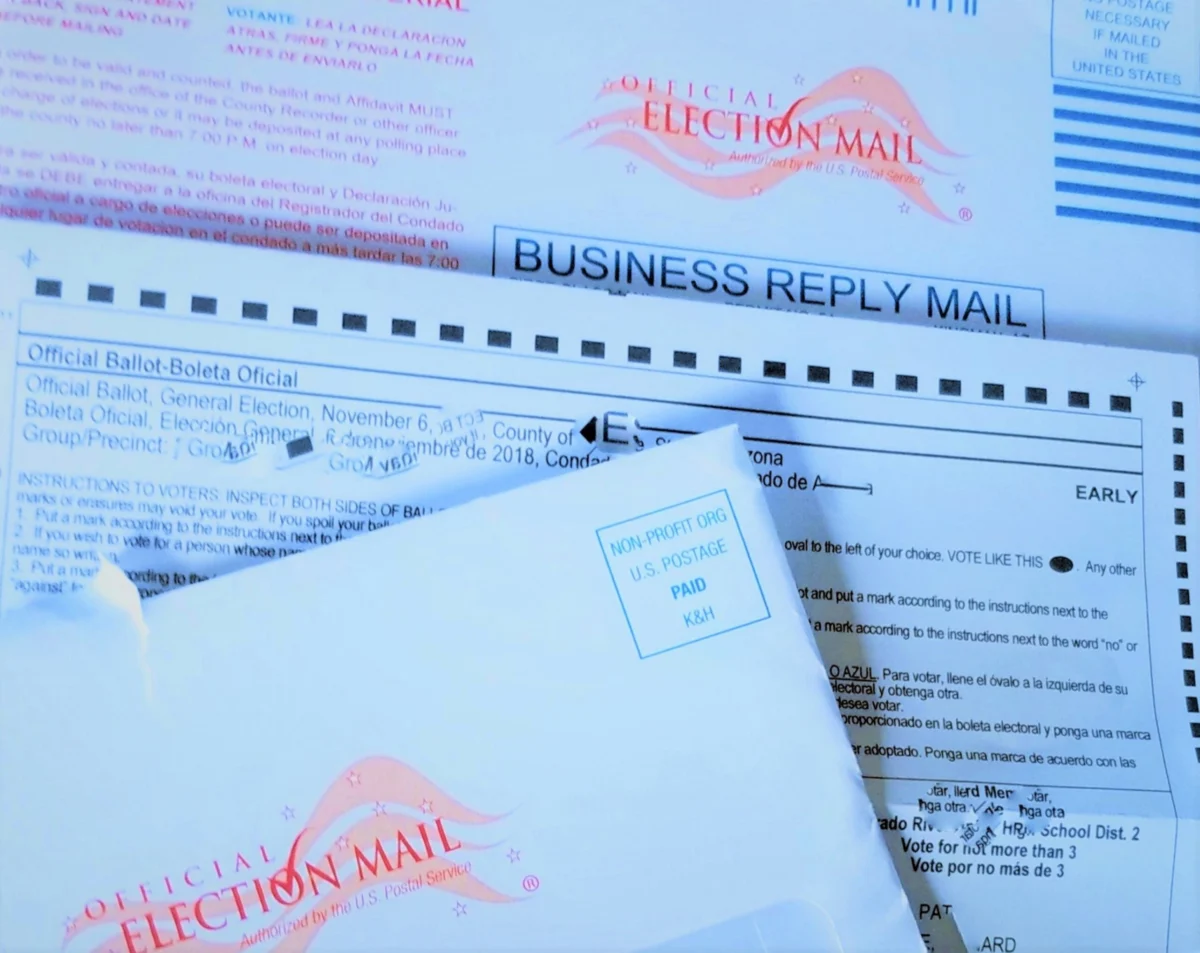
In a significant legal victory for voting rights advocates and election officials, the Supreme Court of the United States issued a pivotal ruling late tonight, effectively halting the Trump Administration’s attempt to enforce sweeping new restrictions on mail-in ballot delivery. The emergency request, which sought to stay a lower-court injunction, was denied, ensuring that the U.S. Postal Service (USPS) will continue its standard operations for the upcoming midterm elections without the proposed federal interference.
The rejected regulations would have mandated that states provide sensitive voter data through a newly established federal portal and adhere to stringent, non-standardized ballot-envelope requirements. Critics argued that these rules were not merely administrative hurdles but a deliberate attempt to cause systemic disruption, creating a high probability that otherwise valid ballots would be rejected due to technical non-compliance. By preventing the implementation of these rules, the Court has averted a potential crisis of disenfranchisement that threatened to silence millions of voters across the nation.
The Core Conflict: Federal Oversight vs. State Election Autonomy
The proposed federal rules represented a radical departure from the established norms of election administration, which historically reside under the jurisdiction of state and local officials. The Trump Administration’s push for a centralized federal portal for voter information and specific USPS handling requirements sparked immediate backlash from civil rights organizations, election administrators, and constitutional scholars.
At the heart of the dispute was the concern that the USPS—an agency already facing logistical pressures—would be forced to act as a gatekeeper for ballot validity. Had the rules been allowed to take effect, the burden of compliance would have shifted onto the voters, many of whom might have inadvertently used non-compliant envelopes or failed to navigate the opaque federal portal in time. The Supreme Court’s decision, which noted that the government was unlikely to prevail on the merits of the case, suggests a judicial recognition that the Administration’s actions potentially exceeded federal authority and interfered with the fundamental right to vote.
A Chronology of the Legal Battle
The path to tonight’s Supreme Court decision was paved by a series of aggressive legal challenges led by a coalition of civil rights groups. The following timeline outlines the rapid escalation of this conflict:
- Initial Implementation: The Trump Administration announced the new USPS protocols, citing the need for uniformity. Critics immediately identified these protocols as "stealth disenfranchisement."
- The Massachusetts Challenge: Voting rights advocates secured a preliminary injunction in federal court in Massachusetts, targeting the specific ballot-mail scheme that threatened to invalidate thousands of ballots in that state.
- The NAACP v. Trump Lawsuit: A broader challenge was filed in the U.S. District Court for the District of Columbia by the Lawyers’ Committee for Civil Rights Under Law, Common Cause, and Black Voters Matter. This lawsuit sought not only to block the rules for the midterms but to challenge the legal authority of the USPS to implement such regulations nationwide.
- District Court Injunction: One day prior to the Supreme Court’s ruling, the D.C. District Court issued a sweeping preliminary injunction, blocking the Postal Service rule across the country.
- Emergency Appeal: The Trump Administration immediately filed an emergency request with the Supreme Court, seeking a stay on the D.C. District Court’s injunction.
- Supreme Court Ruling: The Supreme Court denied the emergency request, effectively cementing the injunction and ensuring the current status quo remains in place for the remainder of the election cycle.
Supporting Data and the Impact of Litigation
The litigation was not an isolated event but rather the culmination of a broader campaign by the Trump Administration to assert federal control over state-run elections. Over the past several months, the Justice Department has engaged in an unprecedented effort to obtain granular, sensitive voter data from various states.
According to reports from the Lawyers’ Committee for Civil Rights Under Law, the Administration has suffered a "long losing streak" in these endeavors. Federal courts have consistently signaled that the executive branch lacks the broad authority to unilaterally rewrite election procedures or intrude upon the voter registration databases managed by individual states.
The data suggests that these regulations were poised to create an administrative bottleneck. During previous election cycles, mail-in ballots have faced scrutiny over postmark deadlines and signature verification. The proposed USPS requirements would have introduced a third, more volatile variable: the technical design of the envelope and the digital interface of the federal portal. Experts noted that even a minor technical glitch in the federal portal could have led to the mass invalidation of ballots, particularly in states with high mail-in participation rates.
Official Responses and Stakeholder Statements
The ruling has been met with relief by civil rights leaders who viewed the administration’s actions as a direct assault on democratic participation. Damon Hewitt, president and executive director of the Lawyers’ Committee for Civil Rights Under Law, released a comprehensive statement following the ruling:
"Tonight, at least for now, one avenue for sowing election chaos has been blocked," Hewitt stated. "The Supreme Court has joined lower federal courts, which have consistently rejected the Trump Administration’s efforts to allow these last-minute Postal Service restrictions to take effect."
Hewitt emphasized the significance of the national scope of the injunction secured in the D.C. District Court. "Our injunction blocks the same dangerous ballot-mail scheme as in Massachusetts, while going further and halting USPS from implementing or enforcing the final rule nationwide and past 2026," he noted.
Beyond the legal success, the Lawyers’ Committee is shifting its focus to voter empowerment. Hewitt urged citizens to remain proactive, stating, "Nevertheless, we encourage Americans to check their voter registration status and to vote early. All voters planning to vote by mail should mail in your ballot as soon as possible, track your ballot online where available, and contact the nonpartisan Election Protection hotline at 866-OUR-VOTE or 866ourvote.org with any questions."
Broader Implications for Democracy
The Supreme Court’s refusal to intervene on behalf of the Administration serves as a critical check on executive power during an election year. By upholding the lower court’s injunction, the judiciary has prioritized the continuity of election administration over the implementation of late-breaking federal protocols that were widely viewed as disruptive.
The Role of Nonpartisan Advocacy
The success of this litigation highlights the vital role of nonpartisan, nonprofit organizations in the democratic process. The Lawyers’ Committee for Civil Rights Under Law, which was formed in 1963 at the request of President John F. Kennedy, has once again utilized legal advocacy to safeguard the rights of marginalized communities. By marshaling pro bono resources from the nation’s top law firms, these organizations were able to mount a sophisticated, multi-front legal defense that moved faster than the administrative processes of the federal government.
Ensuring Future Election Stability
While tonight’s ruling secures the upcoming midterm elections, the legal battles underscore a growing tension between federal oversight and state-managed elections. The "pattern of civil rights advocates prevailing" mentioned by Hewitt suggests that while the current attempt to "upend established election norms" has failed, the battle over election administration is likely to continue into the next cycle.
The immediate result of the Court’s decision is that voters can proceed with confidence, knowing that their mail-in ballots will be processed according to the established rules that have governed previous cycles. The threat of mass disenfranchisement, fueled by last-minute bureaucratic changes, has been effectively neutralized for the time being.
As the nation approaches the general election, the focus now turns to voter turnout and the logistical realities of processing millions of ballots. With the legal uncertainty cleared, the focus shifts to the nonpartisan Election Protection efforts, which aim to provide voters with the resources they need to ensure their voices are heard.
For now, the machinery of American democracy remains intact, protected by the judiciary from last-minute interventions that threatened to destabilize the fundamental right to vote.

 Laily UPN
 Rifan Muazin