



 Layla Zulfa
In September 2026, the Trump administration announced a controversial fiscal policy: the issuance of one-time $500 “refund checks” to approximately 1 million Americans enrolled in health insurance plans through the federal marketplace, HealthCare.gov. Framed by the administration as a return of excess user fees collected during the preceding Biden administration, the policy has sparked intense debate among health policy experts, fiscal conservatives, and consumer advocates. As the federal government navigates the complexities of the Affordable Care Act (ACA), these payments represent a departure from historical norms regarding how marketplace surpluses are managed.
Main Facts: Who Gets What and Why?
The $500 payments are directed specifically at a narrow segment of the population: individuals who enrolled in coverage through HealthCare.gov in 2026 without the assistance of federal premium tax credits (APTCs). This group accounts for roughly 5% of all total ACA Marketplace enrollees.
Under the ACA, the Department of Health and Human Services (HHS) collects “user fees” from insurers to fund the operational costs of the federal marketplace, including IT infrastructure, enrollment support, and outreach programs. Insurers typically pass these fees on to consumers as part of their monthly premiums. The Trump administration’s rationale is that the fees collected under the previous administration exceeded the actual cost of operating the exchange, and that this surplus should be returned to the consumers who effectively paid for it.
However, the policy excludes the vast majority of enrollees—95% of the marketplace population—including those who received premium subsidies or who were enrolled in previous years but have since dropped coverage. Critics argue that the selection process for these recipients is arbitrary, as the user fee pool is funded not only by individual premiums but also by significant federal taxpayer contributions.
Chronology of User Fee Fluctuations
To understand the current controversy, one must look at the historical trajectory of user fee rates. Since the inception of the ACA marketplaces in 2014, the Federally Facilitated Marketplace (FFM) user fee has remained a key lever for administration policy.
The Obama and First Trump Administrations (2014–2020)
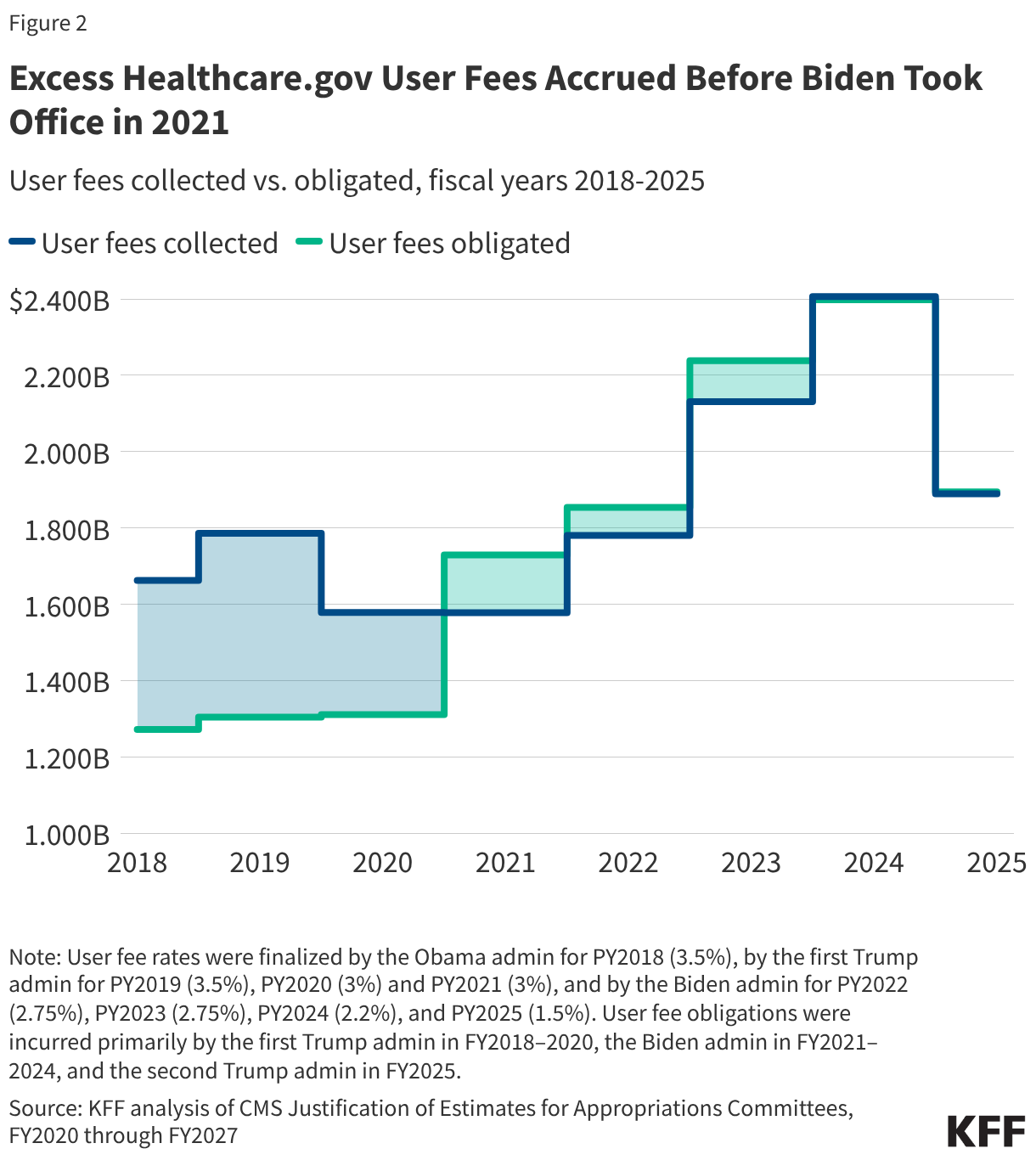
For the duration of the Obama administration, the FFM user fee was consistently set at 3.5%. During the first Trump administration, the rate saw its first significant shift. In 2020, the administration lowered the rate to 3.0%, citing increased operational efficiencies and a desire to reduce the burden on issuers. This rate remained steady through 2021.
The Biden Administration (2021–2025)
Upon taking office, the Biden administration adjusted the 2022 user fee to 2.75%. Throughout the remainder of his term, the Biden administration pursued a strategy of aggressive enrollment growth, supported by enhanced premium tax credits. As enrollment swelled, the administration lowered the user fee rate to reach an all-time low of 1.5% in 2025. By early 2026, the final payment notice issued by the outgoing Biden administration set the fee at 2.5%, factoring in the anticipated expiration of enhanced subsidies.
The Second Trump Administration (2026–Present)
Following its return to office, the Trump administration initially proposed maintaining the 2.5% rate but ultimately finalized a reduction to 1.9% for the 2027 plan year. The decision to issue the $500 checks in late 2026 serves as a pivot, marking the first time in ACA history that an administration has opted to return “excess” fee revenue directly to consumers rather than carrying it forward to fund future operations or lowering future fees.
Supporting Data and Financial Analysis
The financial mechanisms behind these payments are complex. Historically, the federal government has not been required to return unused user fees; instead, surpluses have been carried over into subsequent fiscal years to stabilize marketplace operations.
Spending Trends: Outreach vs. Infrastructure
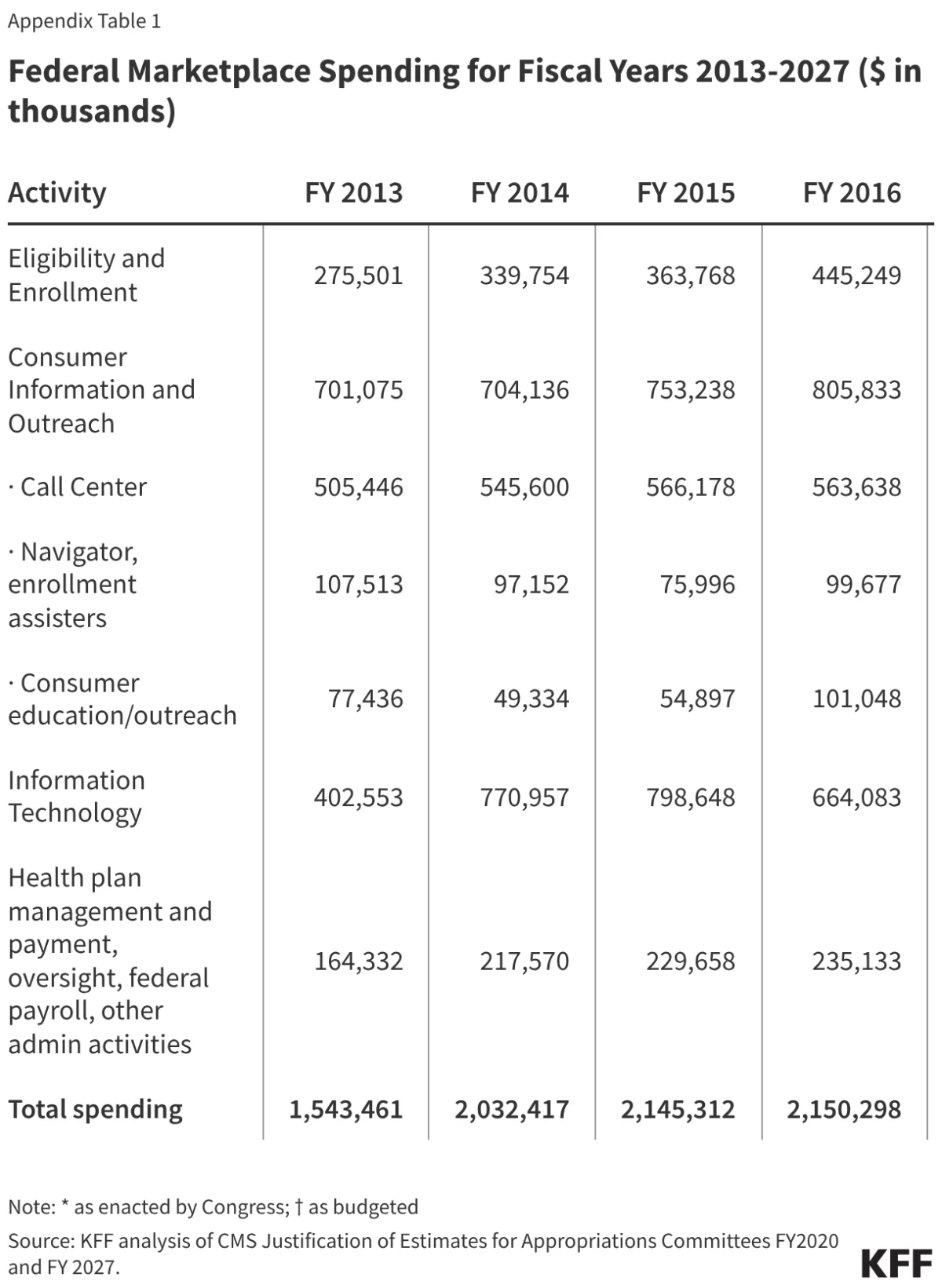
Analysis of CMS Justifications of Estimates for Appropriations Committees reveals that administration priorities drive spending volatility. Between fiscal years 2016 and 2020, the first Trump administration oversaw a significant reduction in spending on consumer outreach and Navigator programs—decreasing from roughly $806 million to $503 million.
Conversely, the Biden administration significantly increased investment in consumer information and outreach, peaking at $1.2 billion in FY 2023. This increased spending was fueled by record-high enrollment numbers. When the second Trump administration took over, these outreach expenditures were once again curtailed, dropping to $778 million in FY 2025.
The “Refund” vs. The Reality of Premium Hikes
The $500 figure, while substantial, appears disconnected from the actual financial experience of the target demographic. Data indicates that the average premium payment for unsubsidized HealthCare.gov enrollees in 2026 was approximately $8,844, with an average user fee component of only $221.
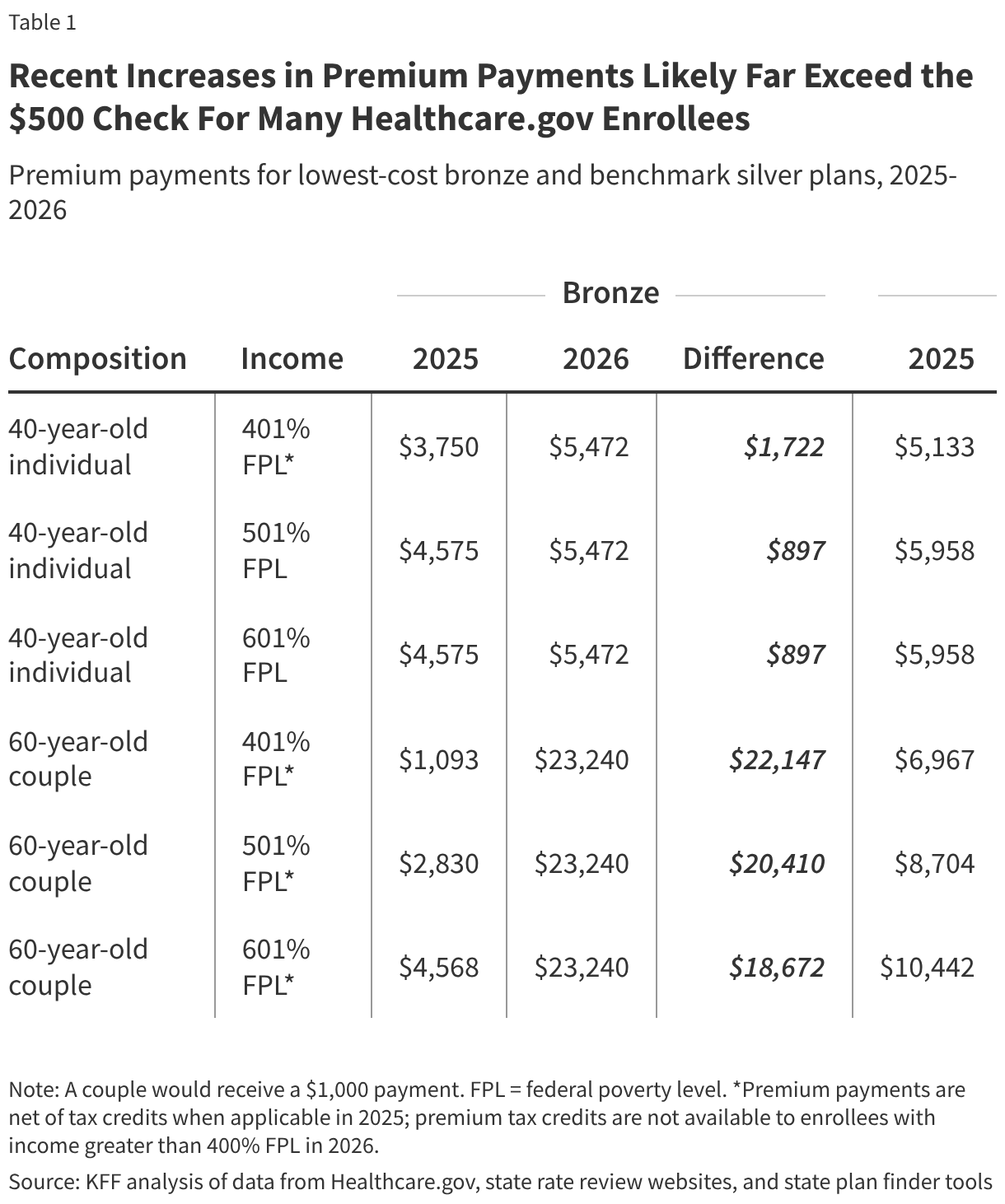
Furthermore, the $500 check is significantly outweighed by the sharp increase in premiums many consumers faced between 2025 and 2026. Following the expiration of enhanced premium tax credits, many enrollees saw their annual costs jump by over $2,000. For a 60-year-old couple, the increase could reach into the tens of thousands of dollars. In this context, a $500 payment acts as a minor palliative, offsetting only a fraction of the cost increases brought on by the broader shift in federal subsidy policy.
Official Responses and Political Implications
The administration’s announcement has been met with mixed reactions. Supporters of the Trump administration point to the payments as a “common-sense return of taxpayer dollars” and a direct benefit to consumers who have navigated a complex and often costly marketplace.
However, the lack of a clear legal framework for these payments has raised eyebrows among legal scholars and budget watchdogs. There is no explicit statutory authority requiring HHS to refund “excess” user fees. Opponents argue that these funds—which include significant taxpayer-funded subsidies—should be reinvested into the marketplace to lower premiums for all participants, rather than being disbursed as a one-time payment to a select few.
Furthermore, the timing of the payments—falling in the latter half of 2026—has led some to question the underlying motivation. With premiums for 2027 projected to increase by double digits, the $500 check may be viewed as an attempt to mitigate political blowback regarding the rising cost of health insurance.
Future Implications for the ACA Marketplace
The precedent established by these $500 payments could have long-term consequences for how federal health insurance programs are financed. By choosing to treat the marketplace as a fund that can generate “dividends” for enrollees, the government may be signaling a shift toward a more transactional view of public health insurance.
1. Market Stability and Predictability
Predictability is the bedrock of the insurance market. If user fees are treated as variable assets subject to ad-hoc refunds, it complicates the long-term financial planning of both insurers and the federal government. Insurers rely on stable fee structures to price their products accurately. Sudden changes in these structures could lead to more conservative, higher-priced plan offerings in the future.
2. Impact on Enrollment
The reduction in outreach spending, coupled with the loss of enhanced tax credits, has already begun to dampen enrollment growth. If the surplus funds—which previously could have been used to bolster enrollment assistance—are instead distributed to individuals, the marketplace may struggle to reach vulnerable populations who rely on Navigators to understand their coverage options.
3. Economic Burden on Enrollees
The data suggests that for most recipients, the $500 check is a drop in the bucket compared to the rising cost of premiums. As the nation approaches the 2027 plan year, the projected 11% increase in benchmark premiums threatens to outpace any temporary relief provided by the current policy. Older adults, in particular, face a compounding crisis of rising premiums and stagnant income, which these refunds do little to solve.
Conclusion
The $500 “refund” checks issued in September 2026 represent a unique moment in the history of the Affordable Care Act. While the administration frames the policy as a return of excess fees to consumers, the broader financial data suggests that the move is more symbolic than structural. As the federal government continues to balance the cost of operating the HealthCare.gov platform with the shifting financial landscape of the American health insurance market, the long-term impact of this policy remains uncertain. What is clear, however, is that the fundamental challenges of affordability and access remain, and that a one-time payment is unlikely to provide a sustainable solution to the rising costs facing millions of American families.

 Lina Hope