


 Sagoh
As the American population ages and the prevalence of chronic disabilities continues to rise, the nation faces a looming caregiving crisis. At the heart of this challenge are 2.3 million direct care workers—the personal care aides, home health aides, and nursing assistants who serve as the essential, often invisible, backbone of the long-term care (LTC) system.
New data from the 2024 American Community Survey (ACS) reveals a workforce that is not only vital to the economy but also one that operates under significant socioeconomic precarity. With over half of all Americans over age 65 expected to require long-term care at some point in their lives, the fragility of this workforce poses a direct threat to the quality and availability of care for millions.
Main Facts: Who Provides Our Care?
Direct care workers are the frontline responders for our most vulnerable populations. Their roles are divided into three primary categories:
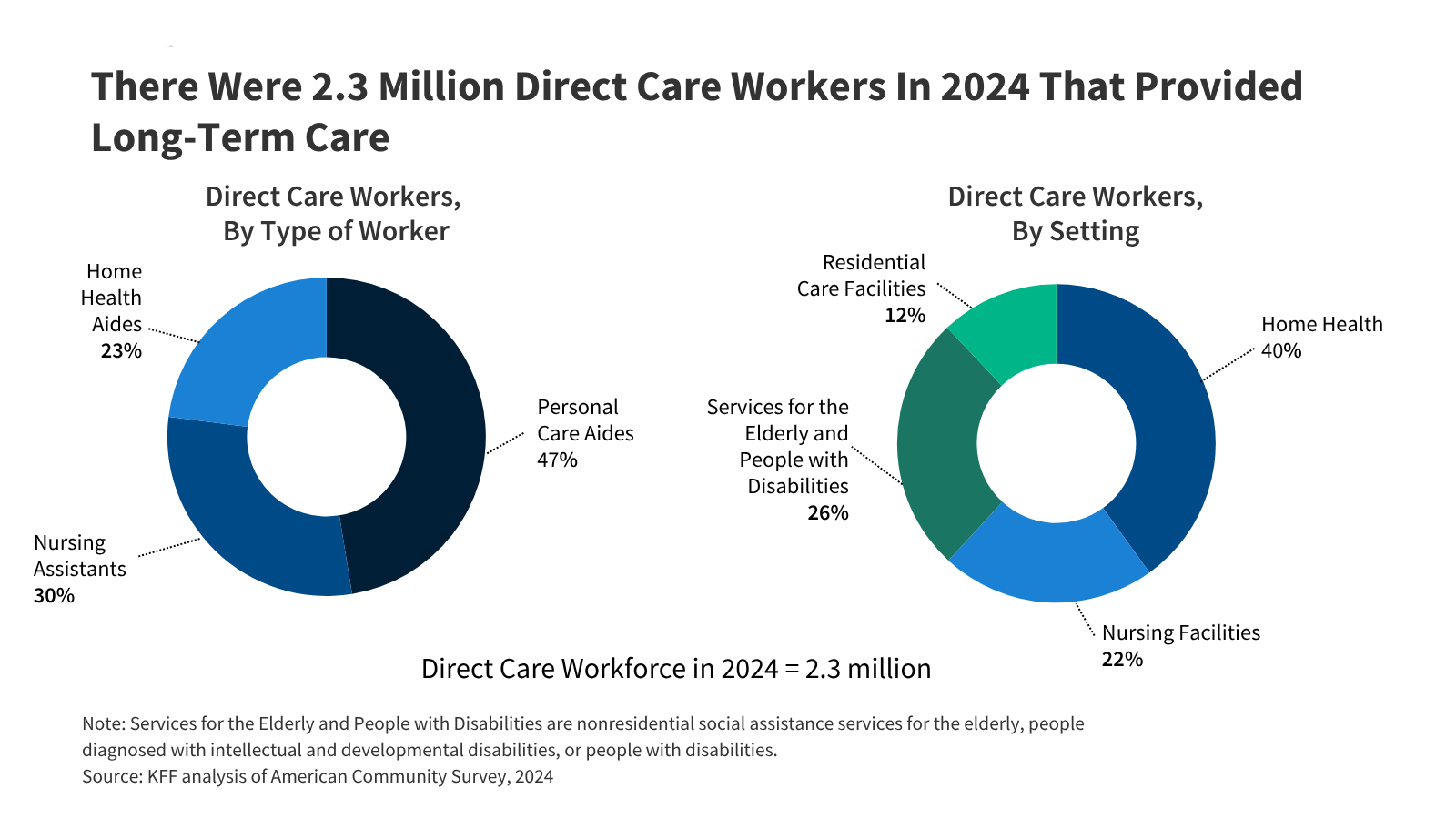
- Personal Care Aides: These professionals assist with activities of daily living (ADLs) and instrumental activities of daily living (IADLs), such as grocery shopping, meal preparation, and medication management for those living at home.
- Nursing Assistants: Commonly known as CNAs, these individuals work primarily in nursing facilities, providing hands-on bedside care, monitoring residents, and ensuring their daily needs are met.
- Home Health Aides: These workers provide more clinical support in home settings, such as checking vital signs, managing medical equipment, and administering medication under supervision.
The environments in which these workers operate are as diverse as the care they provide. Approximately 66% of these professionals work in home care settings, while 22% are situated in nursing facilities, and 12% serve residents in assisted living or group home environments. Despite their essential status, they remain among the lowest-paid workers in the American healthcare landscape.
A Chronology of Growing Instability
The challenges facing the direct care workforce are not new, but they have reached a critical juncture due to a convergence of demographic shifts and policy volatility.
- Pre-2020: The sector suffered from long-standing shortages and high turnover rates, driven by systemic underfunding of Medicaid, which acts as the primary payer for long-term services and supports (LTSS).
- 2020–2023: The global pandemic exacerbated these stresses, highlighting the physical and emotional toll of the work. Many providers left the field, citing burnout and insufficient hazard pay.
- 2024–2025: The release of the 2024 ACS data provided the most comprehensive look at a post-pandemic workforce that is increasingly reliant on immigrant labor to fill critical gaps.
- June 2026: A landmark Supreme Court ruling allowed the termination of Temporary Protected Status (TPS) for Haitian nationals, a decision with immediate ramifications for a workforce where Haitian immigrants constitute a significant portion of the personnel.
Supporting Data: A Demographic Snapshot
The 2024 ACS data highlights a stark divide between direct care workers and the broader U.S. labor force. The profile of a typical direct care worker is significantly different from the average American employee:
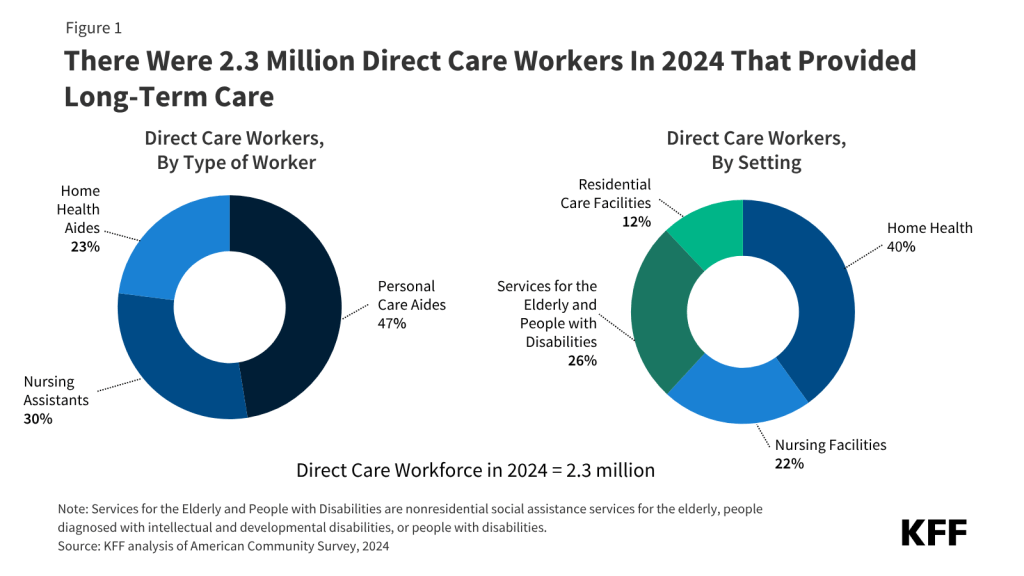
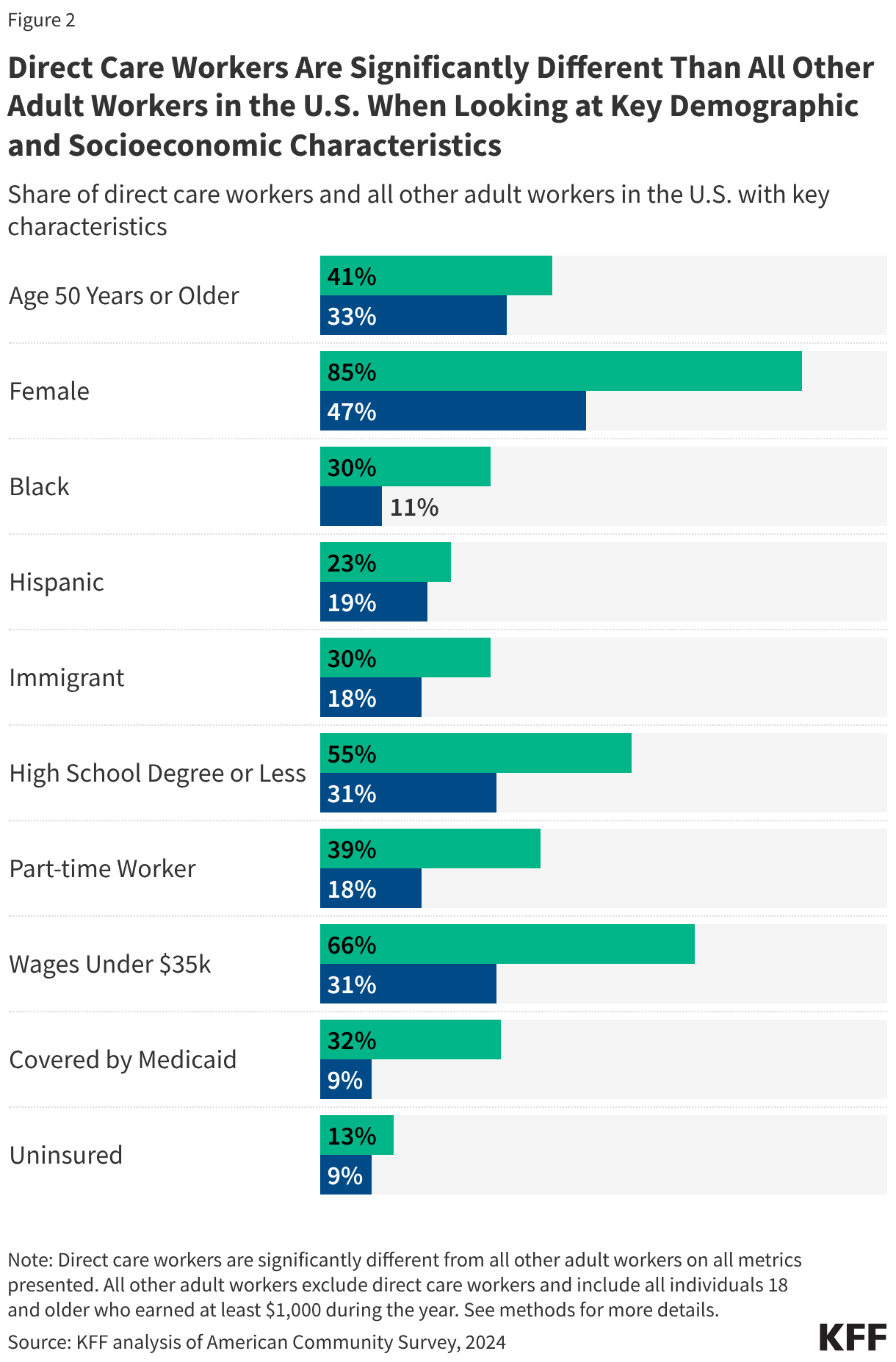
- Gender and Age: While 47% of the total adult workforce is female, direct care is 85% female. Furthermore, 41% of these workers are age 50 or older, suggesting an aging workforce that will soon face its own retirement challenges.
- Economic Hardship: Nearly two-thirds (66%) of direct care workers earn less than $35,000 annually. This low-wage reality forces many to rely on the very programs they support; 32% of direct care workers are covered by Medicaid, and 13% are uninsured—a rate significantly higher than the general workforce.
- Educational Barriers: Fifty-five percent of these workers have a high school degree or less, often limiting their ability to transition into higher-paying clinical roles without significant, often unaffordable, educational investment.
The Role of Immigrant Labor
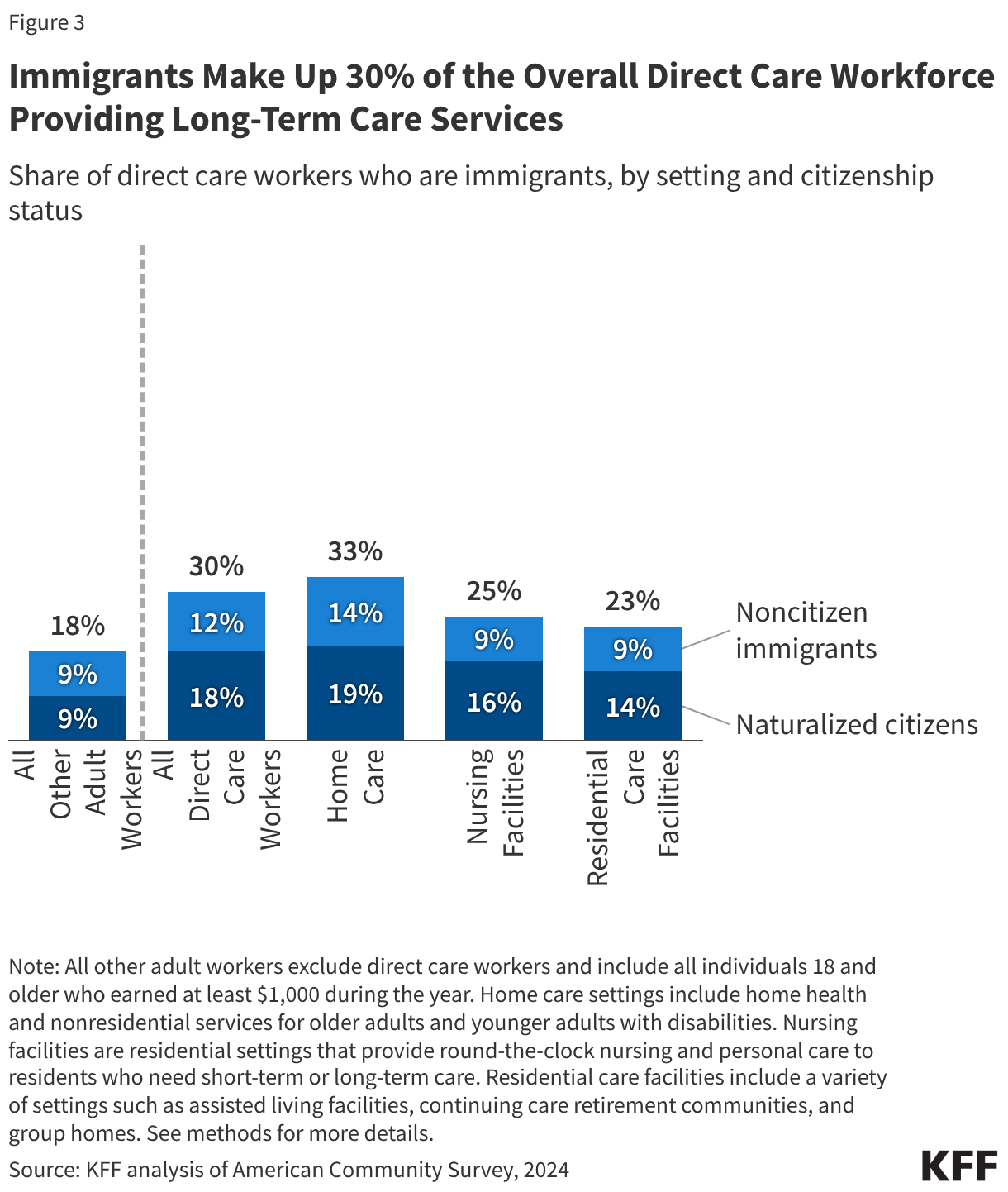
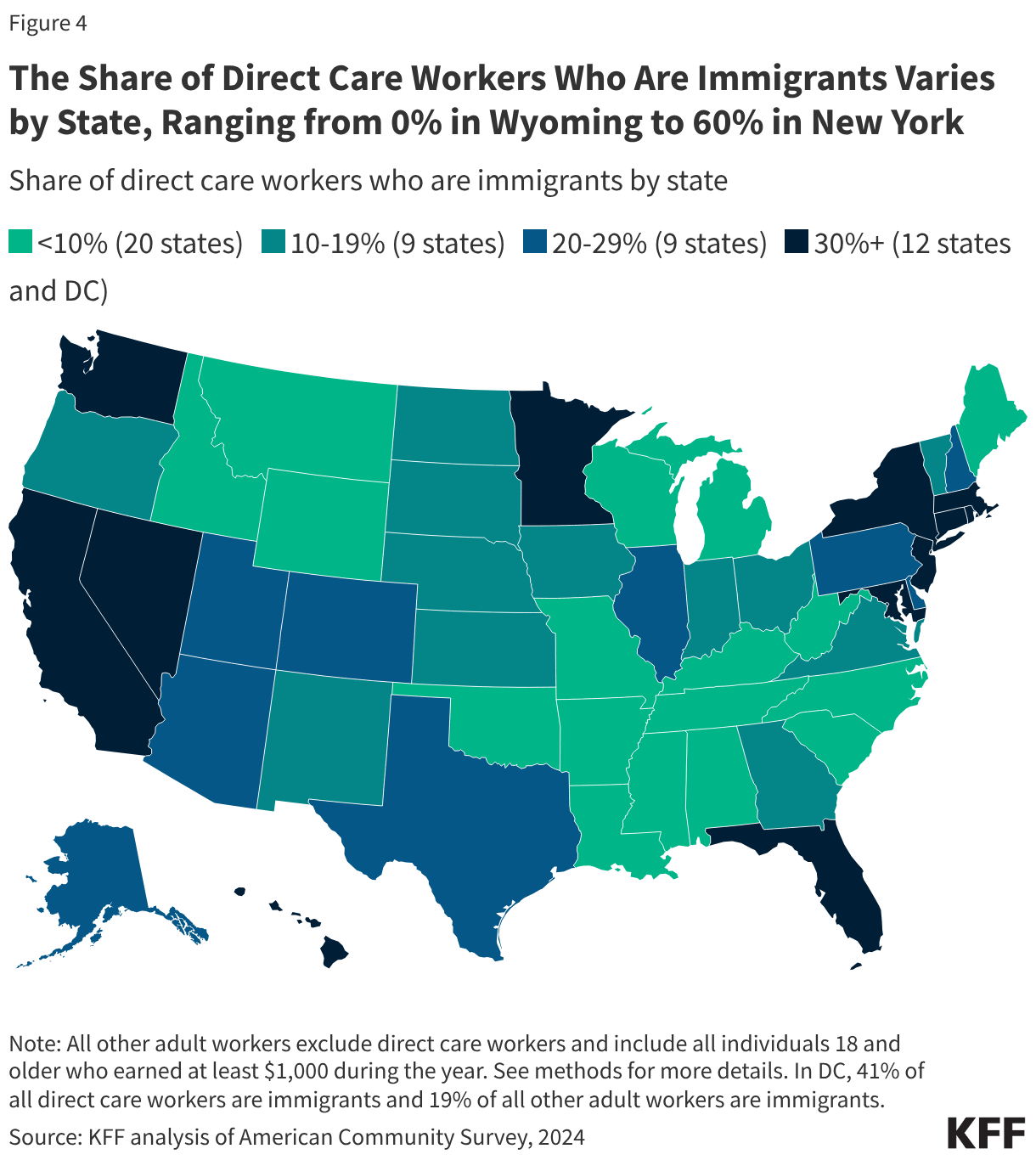
Perhaps most significant is the reliance on immigrant workers. Immigrants comprise 30% of the overall direct care workforce. In states like New York, this figure climbs as high as 60%. These workers are not a monolith; they come from diverse global backgrounds, with Mexico, the Philippines, Jamaica, Haiti, China, and the Dominican Republic representing the primary countries of origin.
Official Responses and Policy Implications
Federal policy is currently a double-edged sword for the industry. While there is a recognized need to expand the capacity of home and community-based services (HCBS), recent executive actions and judicial rulings have introduced new uncertainties.
The Trump administration’s implementation of an immigrant visa pause, which impacts 75 countries, has sent ripples through the healthcare sector. Because a substantial portion of the direct care workforce hails from countries currently affected by these restrictions—such as Jamaica, Haiti, Nigeria, Cuba, and Ghana—hospitals and home health agencies are bracing for a future labor drought.
“The workforce is already at a breaking point,” says one policy analyst reviewing the recent ACS findings. “By restricting the pipeline of immigrant labor without simultaneously investing in wage increases or career ladders for domestic workers, the system is essentially guaranteeing a collapse in service availability.”
Implications for the Future of Care
The findings underscore a fundamental mismatch between the nation’s care needs and the current labor infrastructure. As the "Silver Tsunami"—the massive demographic shift of the Baby Boomer generation—continues to unfold, the demand for assistance with bathing, dressing, and medical management will only accelerate.
1. The Quality of Care Gap
When direct care workers are underpaid and overworked, the continuity of care suffers. High turnover rates mean that the individuals who need the most stability—those with dementia or chronic physical disabilities—are constantly forced to adapt to new caregivers. This lack of continuity is associated with poorer health outcomes and higher rates of emergency room visits.
2. The Economic Sustainability of Medicaid
Medicaid is the primary payer for LTC, but it is currently functioning on a model that relies on the "cheap" labor of a marginalized workforce. If the cost of recruiting and retaining a stable workforce rises—as it must to address the current shortages—states will be forced to either increase taxes, divert funds from other areas, or face a reduction in the number of people who can receive state-funded support.
3. The Human Cost of Immigration Policy
The intersection of immigration policy and health policy has never been more evident. By tethering the survival of the nursing home industry to a demographic group currently under pressure from restrictive visa policies, the government has created an unintended vulnerability. The loss of workers from countries like Haiti, who are often the bedrock of the residential care sector, could lead to widespread facility closures in regions already experiencing "care deserts."
Conclusion: A Call for Systemic Reform
The 2024 ACS data serves as a clarion call. The "invisible" workforce of 2.3 million people is the only thing standing between millions of Americans and a total failure of the long-term care system. Solving this crisis will require more than just short-term fixes. It demands:
- Wage Parity: Transitioning direct care work from a "low-wage" profession to a living-wage career path.
- Pathways for Advancement: Creating bridge programs that allow aides to obtain certifications for higher-level clinical roles.
- Policy Stability: Recognizing that the healthcare workforce is an economic and national security asset that requires consistent, predictable immigration pathways.
As we look toward the remainder of the decade, the question is not whether we can afford to support this workforce, but whether we can afford the catastrophic consequences of ignoring them. The care we provide to our most vulnerable citizens today will define the moral and economic landscape of the next generation. For now, those caregivers remain at the front lines—stressed, underpaid, and essential.


 Reynand Wu