



 Pevita Pearce
Since its inception on July 16, 2022, the 988 Suicide & Crisis Lifeline has evolved from a nascent federal initiative into a critical pillar of the American behavioral health infrastructure. Four years later, as of May 2026, the system stands at a crossroads: it has successfully connected millions of individuals with life-saving support, yet it faces mounting fiscal, operational, and policy-driven headwinds that threaten its long-term viability.
Main Facts: The Evolution of 988
The 988 number was established to provide a simplified, accessible entry point for Americans experiencing mental health distress. By dialing or texting 988, individuals are routed to a network of over 200 state- and local-funded crisis centers.
The urgency of this mandate cannot be overstated. Between 2014 and 2024, the United States saw over half a million lives lost to suicide. By 2024, suicide and substance-related deaths had collectively become the third leading cause of death in the nation, trailing only heart disease and cancer. In this context, 988 serves not merely as a hotline, but as the "front door" to a broader, essential crisis continuum that includes mobile crisis units and stabilization centers.
A Chronology of the Crisis Lifeline
- July 2022: The 988 three-digit dialing code goes live nationwide, replacing the previous ten-digit toll-free number.
- 2023–2024: Public awareness campaigns lead to a surge in volume. By the end of this period, 988 has handled over 15 million contacts.
- 2025: The specialized LGBTQ+ youth support service—which accounted for 10% of total volume—is eliminated, sparking public outcry and prompting ongoing legislative discussions regarding its restoration.
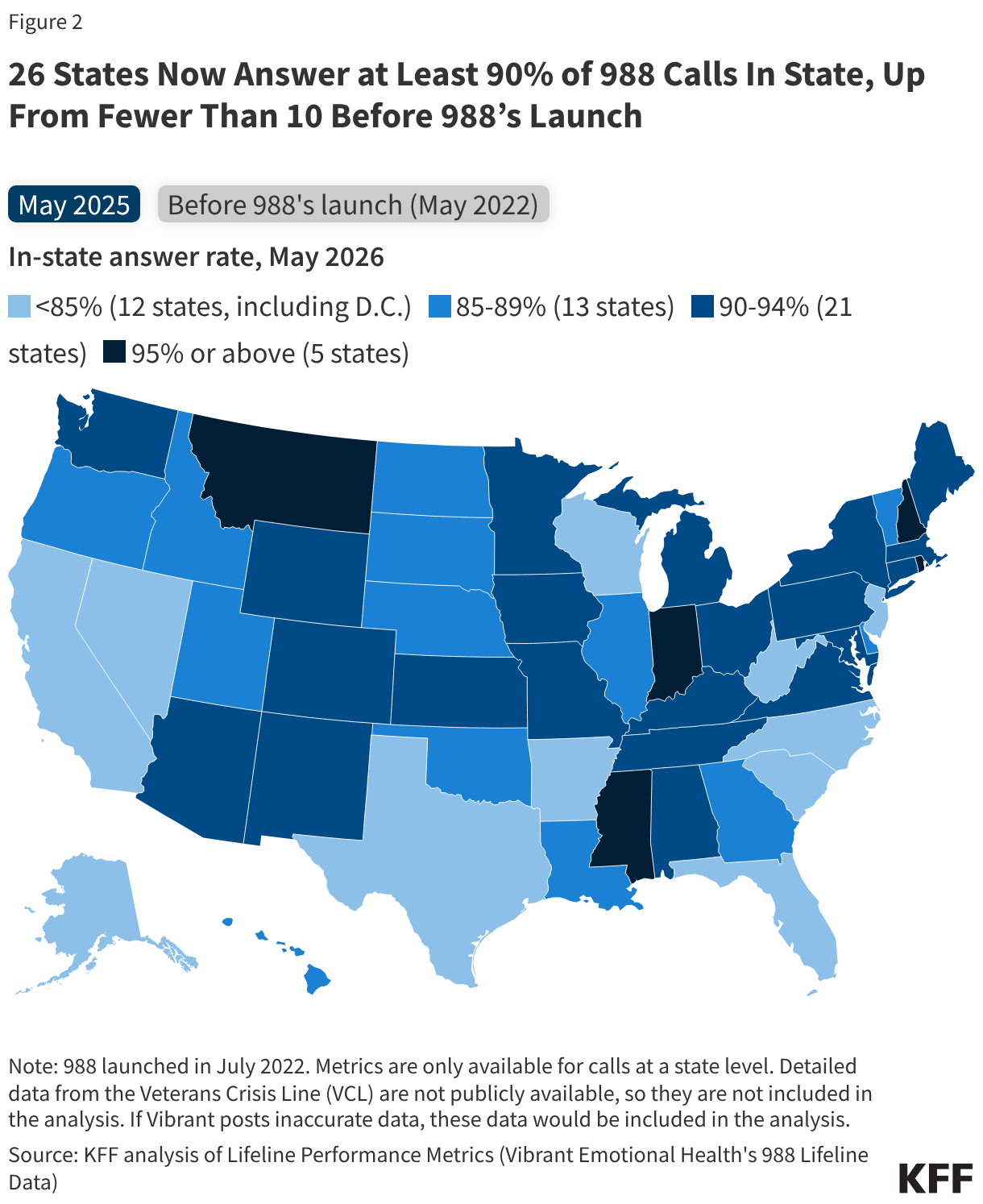
- 2026: As of March, 988 volume is 15% higher than the previous year and 50% higher than two years prior. By May, 26 states achieve a 90% in-state answer rate for calls.
Supporting Data: Volume and Efficacy
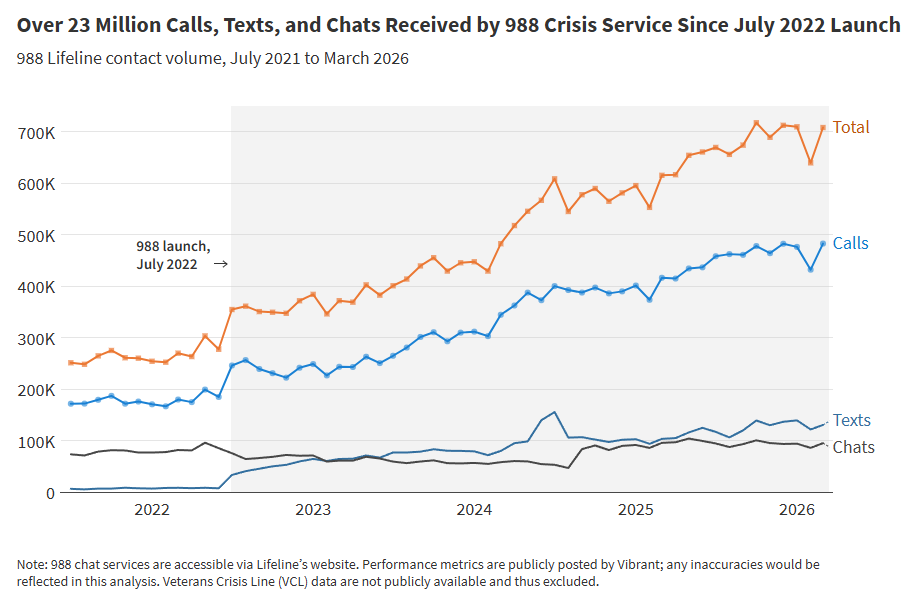
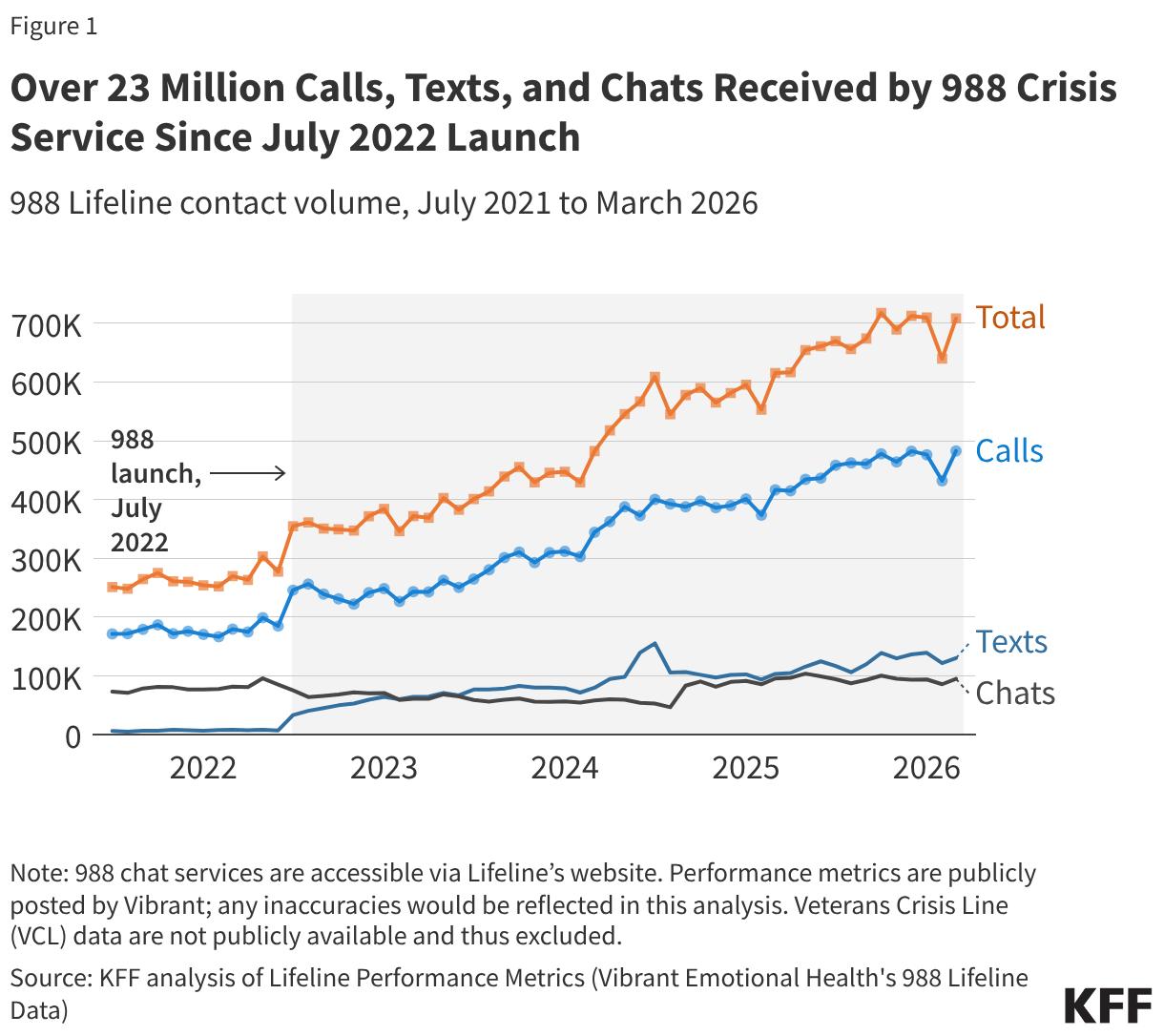
Data through March 2026 reveals that 988 has handled 23.3 million total contacts since launch, comprising 15.8 million calls, 4.2 million texts, and 3.4 million chats. This volume represents a more than 100% increase compared to pre-launch statistics in June 2022.
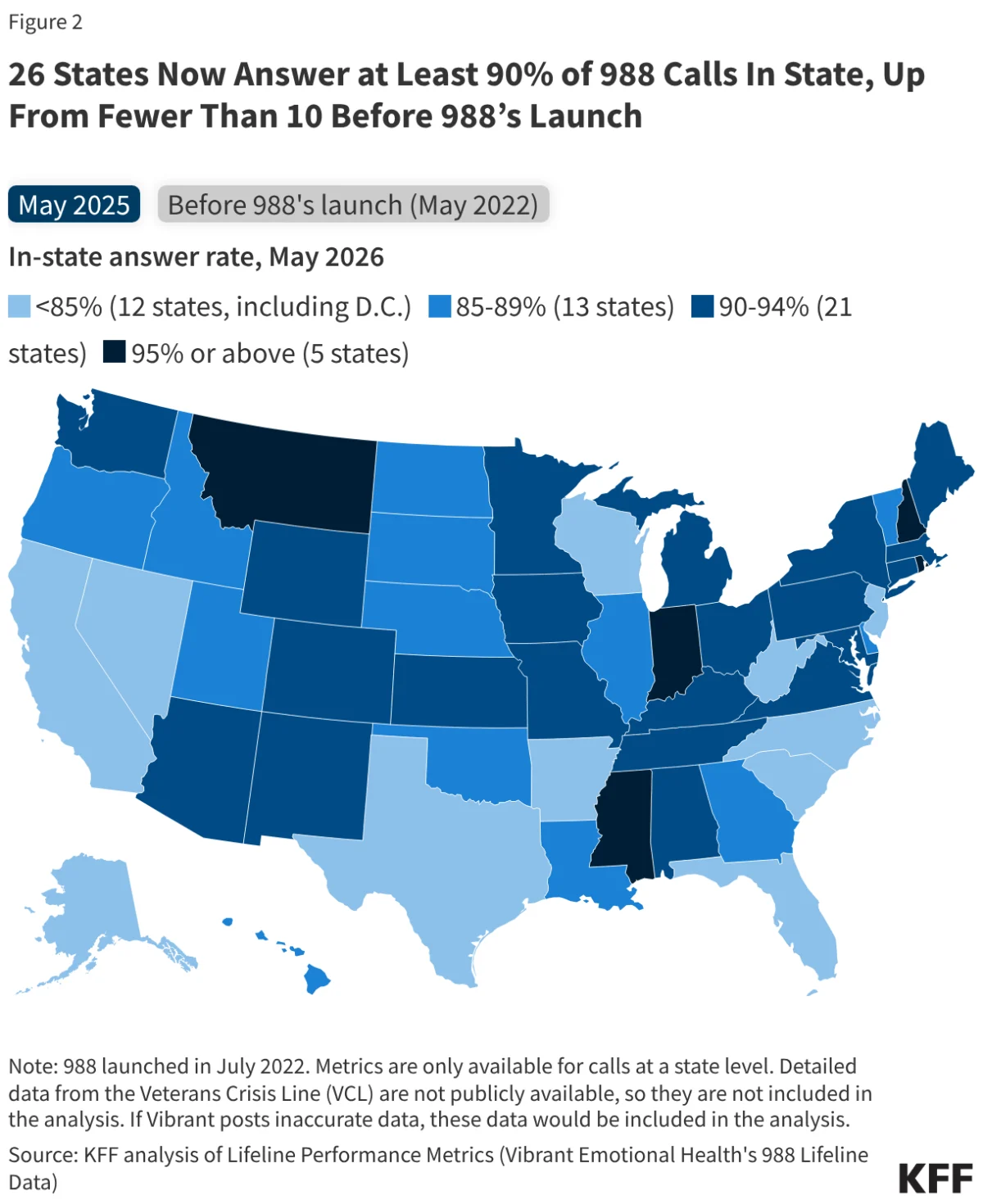
The system’s effectiveness is underscored by improved local responsiveness. Before the launch of 988, only eight states were equipped to answer 90% of their calls in-state. As of May 2026, that number has climbed to 26 states. This is significant because local counselors possess a deeper understanding of regional resources, facilitating more effective referrals to mobile crisis teams and stabilization services.
Research published in JAMA suggests a direct correlation between the service and positive outcomes. Among individuals aged 15 to 34, suicide deaths were approximately 11% lower than statistical projections for the period following the 988 launch. Furthermore, emergency department visits for suspected suicide attempts dropped by roughly 7% in 2025 compared to 2021, suggesting that the expansion of the "crisis continuum"—which includes 988, mobile crisis teams, and stabilization centers—is effectively diverting individuals from the most acute and expensive levels of care.
Official Responses and Policy Challenges
Despite the success in volume and reach, the transition from federal seed money to sustainable state funding remains the system’s greatest challenge. Federal grants provided the initial spark, but the operational burden of maintaining 24/7 call centers rests largely with the states.
The Funding Gap
Currently, only 12 states have enacted telecom fees—similar to the surcharges used to fund 911—to create a dedicated, stable revenue stream for 988. In many jurisdictions, fees are set at less than 45 cents per line per month. Other states rely on unpredictable, year-to-year appropriations. This fiscal instability has direct consequences for staffing. A 2025 survey of call center leadership revealed that 75% of centers are facing chronic staffing shortages, with 89% reporting difficulty securing the resources necessary to recruit and retain qualified mental health professionals.
Federal Policy Shifts
The horizon is further complicated by anticipated federal policy changes. Upcoming shifts in Medicaid regulations and the structure of Affordable Care Act (ACA) Marketplaces are projected to increase the number of uninsured Americans. As coverage is lost, the safety net of 988 will likely experience a surge in demand from individuals who can no longer access traditional outpatient behavioral health care. Simultaneously, the expiration of enhanced federal Medicaid funding for mobile crisis services in 2027 will force states to absorb even higher costs at a time when their own budgets are tightening.
Implications for the Future
The first four years of 988 have demonstrated that when a crisis service is made accessible, the public will utilize it. The system is no longer a pilot program; it is a vital utility. However, the path forward requires a transition from "emergency response" to "systemic sustainability."
1. Scaling Infrastructure
The reliance on national backup centers—which take over when local centers are overwhelmed—remains a secondary solution. To truly capitalize on the 988 model, states must continue to build out local capacity. The geographic routing technology implemented by the FCC has been a success, but it requires local staffing to be effective.
2. Diversifying Funding
Policymakers must prioritize long-term, legislative funding mechanisms. The "911-style" telecom fee is currently the most viable model for providing predictable, dedicated funding that is immune to the volatility of annual state budget cycles. Without such mandates, the quality of care will continue to vary drastically from state to state, creating a "lottery of support" for those in crisis.
3. Integrating the Continuum
988 cannot function in a vacuum. Its success is intrinsically linked to the availability of the "rest of the chain"—mobile crisis teams that can respond to a scene and stabilization centers that can provide a brief, safe environment for a person in crisis. As federal funding for these services wanes, state legislatures must integrate these services into their permanent Medicaid managed care contracts to ensure they are not treated as elective, but as essential.
4. Public Trust and Inclusivity
The controversy surrounding the removal of the specialized LGBTQ+ youth service serves as a reminder that the 988 system must be inclusive and trustworthy to serve all populations effectively. The potential restoration of these specialized services is a necessary step in maintaining public confidence and ensuring that the most vulnerable populations continue to utilize the line.
Conclusion
As of May 2026, 988 has proven to be an indispensable asset in the fight against the rising tide of suicide. The data suggests that it is saving lives and easing the burden on the American healthcare system. Yet, the system is fragile. The next phase of 988’s life cycle will not be measured by the number of calls it receives, but by the stability of the infrastructure that answers them. Without a concerted shift toward sustainable, dedicated funding and continued expansion of the broader crisis continuum, the progress made over the last four years could be jeopardized by the very demand it worked so hard to cultivate.
If you or someone you know is in crisis, please call or text 988 to reach the Suicide & Crisis Lifeline. The service is free, confidential, and available 24/7.


 Nila Kartika Wati
 Neng Nana






