



 Nila Kartika Wati
By [Your Name/Agency]
Ten years after the world’s eyes turned toward the wind-swept plains of North Dakota, where the slogan "Mni Wiconi"—Water is Life—became a global rallying cry, the Standing Rock Sioux Tribe remains locked in an intractable struggle. On Friday, the Tribe filed a new lawsuit in the U.S. District Court for the District of Columbia, marking the latest chapter in a decadelong legal and political crusade to decommission the Dakota Access Pipeline (DAPL).
The litigation targets the U.S. Army Corps of Engineers and the U.S. Pipeline and Hazardous Materials Safety Administration (PHMSA), seeking to vacate the May 2026 record of decision that granted a crucial easement for the pipeline’s river crossing upstream from the tribe’s reservation. For the Standing Rock Sioux, the fight is not merely about energy policy; it is an existential defense of their water supply, their sovereign treaty rights, and the sanctity of their ancestral lands.
The Core of the Dispute: Safety, Sovereignty, and Risk
At the heart of the Tribe’s newest filing is the assertion that the federal government has repeatedly failed to address the systemic risks posed by the pipeline. The Standing Rock Sioux contend that the Army Corps’ December 2025 final environmental impact statement (EIS) was fundamentally flawed, ignoring critical concerns regarding the structural integrity of the pipeline, inadequate spill response protocols, and the potential for a catastrophic rupture into the Missouri River—the Tribe’s sole source of drinking water.
“For ten years, Standing Rock’s concerns about this pipeline have not changed, and for ten years we have fought to protect our water, our Treaty rights, and our people,” said Standing Rock Sioux Tribal Chairman Steve Sitting Bear. “The Army Corps has now chosen to move forward without addressing those concerns. Until this pipeline is shut down, we will continue to defend what generations before us protected for our children.”
The legal complaint further highlights a growing anxiety among tribal leadership: the potential for a massive increase in throughput. While the pipeline currently transports between 500,000 and 525,000 barrels of oil per day (bpd), the environmental review considered a potential expansion to 1.1 million bpd. The Tribe argues that such an increase would fundamentally alter the risk profile of the project, increasing the severity of a potential spill and complicating emergency shutdown procedures.
A Chronology of Conflict (2016–2026)
The DAPL controversy has unfolded over a decade of complex legal maneuvers and grassroots mobilization.
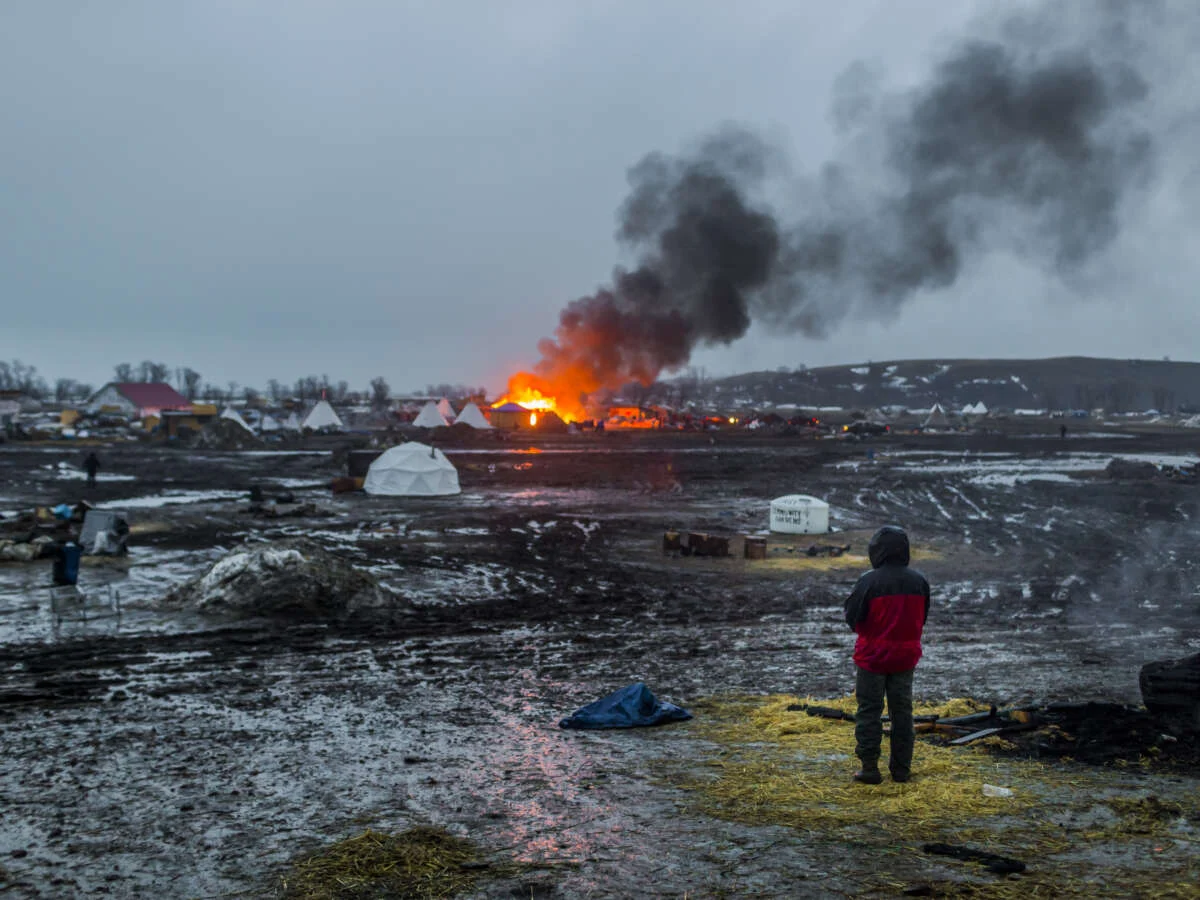
- 2016–2017: Thousands of “water protectors” converged at the Oceti Sakowin camp, creating one of the largest Indigenous-led protests in American history. The movement drew international attention to the pipeline’s path through treaty-protected lands and its proximity to the Missouri River.
- 2020: A significant victory for the Tribe occurred when a federal judge ordered a comprehensive, court-mandated environmental review of the river crossing, acknowledging that the initial assessment was insufficient.
- 2024: Following years of administrative stalling, the Tribe filed a new federal lawsuit challenging the ongoing nature of the Army Corps’ environmental review process.
- 2025: A federal judge dismissed the 2024 case, a setback that led the Tribe to appeal before eventually dropping the challenge to focus on the newer, more specific federal approvals.
- May 2026: The Army Corps issued its final record of decision, officially granting the easement for the river crossing, effectively cementing the pipeline’s legal status despite the ongoing opposition.
- October 2026: The Tribe files the current lawsuit, seeking to rescind the federal approvals and force a shutdown until safety standards are met to their satisfaction.
Supporting Data and Industry Perspectives
The divide between the Tribe and project stakeholders remains wide. Energy Transfer, the company behind the pipeline, has consistently maintained that the infrastructure is among the safest in the world. According to the company, the pipe is buried at least 95 feet below the riverbed, protected by advanced leak detection technology and robust steel casings designed to withstand seismic and geological shifts.
Industry proponents, including officials from North Dakota—the nation’s third-largest oil producer—argue that the pipeline is essential infrastructure. They maintain that the transport of crude oil by pipeline is statistically safer than rail or truck, reducing the risk of transit accidents. Justin Kringstad, director of the North Dakota Pipeline Authority, has noted that while the environmental study assessed a capacity of 1.1 million bpd, the current operational capacity stands at roughly 750,000 bpd.

However, the Tribe’s legal team points to the "uncertainty of the variables." In court documents, they emphasize that industry-provided safety data is often self-reported and that federal oversight agencies, such as the PHMSA, have historically been reactive rather than proactive in their regulation of the Bakken oil field infrastructure.
The Legal and Ethical Implications
The implications of this lawsuit extend far beyond the borders of North Dakota. It touches upon the foundational relationship between the United States government and sovereign tribal nations. The Tribe’s argument rests on the federal government’s fiduciary duty to protect tribal resources—a duty they claim was sidelined in favor of corporate energy interests.
The Question of Treaty Rights
The Standing Rock Sioux maintain that the Missouri River crossing violates the 1851 and 1868 Fort Laramie Treaties. By permitting a project that threatens the water supply, the federal government is effectively devaluing the land granted to the Tribe in perpetuity. Legal scholars note that while "treaty rights" are often invoked in court, the judicial system has been inconsistent in prioritizing them over domestic infrastructure projects.
The Lingering Shadow of Protests
The legacy of the 2016 protests remains a potent force in the region. Recent years have seen a flurry of related litigation, including a massive $345 million judgment against Greenpeace organizations brought by Energy Transfer, as well as a Dutch lawsuit brought by Greenpeace International. These cases reflect a broader, global shift in how environmental activism is being policed—moving from physical protests to "lawfare," where activists and corporations alike use the courts as their primary battleground.
Looking Toward the Future
Last month, at a renewable energy summit held at Standing Rock, tribal leaders and participants from the original protest camps gathered to reflect on the past decade. The mood was one of tempered resilience. While the pipeline continues to pulse with oil beneath the riverbed, the movement has successfully shifted the national conversation regarding climate justice, Indigenous sovereignty, and the true cost of fossil fuel dependency.
For the Standing Rock Sioux, the lawsuit is not just an attempt to turn off the tap; it is a declaration that the passage of time does not equate to the legitimization of an injustice. As the case moves toward the discovery phase, the Tribe remains steadfast in its position.
“We should not have to live with unanswered questions about the safety of our water,” Chairman Sitting Bear reiterated. “The Tribe files this action to require the defendant agencies to respect the Treaty rights and sovereignty of the Tribe and to protect the waters of the Missouri River and the ancestors resting at the water’s edge.”
As the U.S. District Court for the District of Columbia prepares to hear arguments, the outcome of this case could set a new precedent for how federal agencies handle environmental impact reviews in the shadow of Indigenous opposition. Whether the court will choose to hold the Army Corps accountable for the legacy of the pipeline, or uphold the status quo of modern energy infrastructure, remains the central question of this decadelong impasse. For now, the water continues to flow, and so does the fight.


 Rifan Muazin
 Ammar Sabilarrohman






