


 Ammar Sabilarrohman
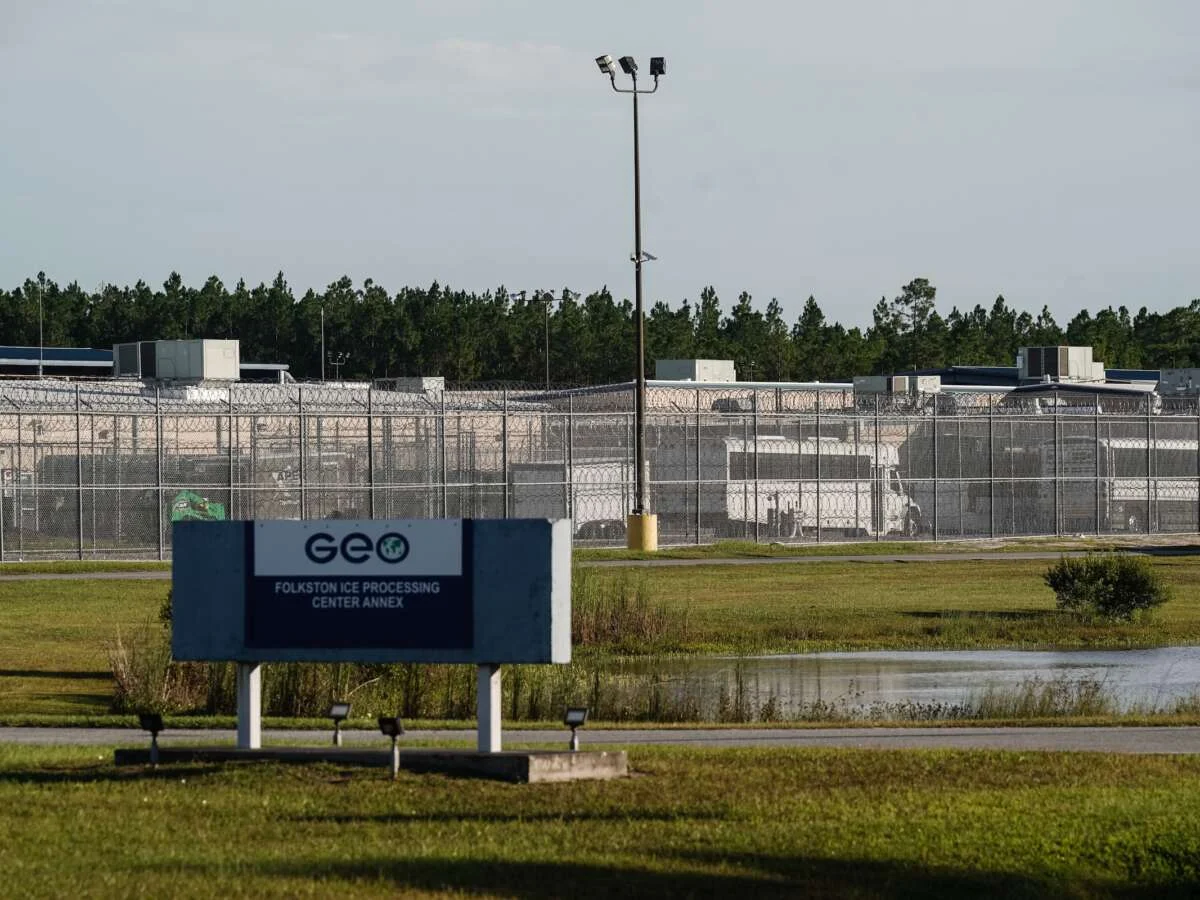
FOLKSTON, Georgia — The death of 48-year-old Luis Sandoval on Friday at the Folkston ICE Processing Center has transformed an already volatile situation into a national flashpoint for immigration advocates, lawmakers, and human rights organizations. Sandoval, a Salvadoran national who had been held at the facility for just 21 days, was discovered by staff with a ligature around his neck. Despite immediate attempts at life-saving medical intervention, he was pronounced dead less than an hour later.
His passing marks the 60th death of an individual in Immigration and Customs Enforcement (ICE) custody since the beginning of President Donald Trump’s second term. The incident has injected a new sense of urgency into a growing protest movement within the facility, where a prolonged hunger strike—now entering its third week—has brought allegations of systemic abuse, medical neglect, and retaliatory practices into the light.
A Chronology of Crisis
The escalation of tensions at the Folkston center, which is owned and operated by the private prison contractor GEO Group, did not happen in a vacuum. The facility has long been a subject of concern for civil rights groups, but the current crisis began in early October when approximately 500 detainees initiated a mass hunger strike.
- Early October: Hundreds of detainees refuse meals to protest substandard living conditions, lack of medical care, and violations of established asylum protocols.
- Mid-October: Reports emerge from inside the facility detailing retaliatory measures taken against participants, including the use of solitary confinement and the denial of basic necessities.
- October 20, 2026: U.S. Senators Raphael Warnock (D-GA) and Jon Ossoff (D-GA) issue a formal inquiry to the Department of Homeland Security (DHS), expressing grave concerns over reports of medical neglect and the punitive use of restrictive housing.
- October 23, 2026: Luis Sandoval, who had been in the facility since early in the month, is found dead in his cell.
- October 24-25, 2026: Advocacy groups, including Asian Americans Advancing Justice-Atlanta, issue public statements demanding the immediate closure of the facility and an independent federal investigation into the circumstances surrounding Sandoval’s death.
The Human Cost of Private Detention
The death of Luis Sandoval has reignited a fierce debate over the morality and efficacy of privatized immigration detention. GEO Group, one of the largest private prison operators in the United States, has faced years of criticism for prioritizing profit margins over the health and safety of those in their care.
Murtaza Khwaja, executive director of Asian Americans Advancing Justice-Atlanta, did not mince words following the announcement of Sandoval’s death. "Mr. Sandoval should not have died in a cage owned by a company that gets paid to fill them," Khwaja said. "GEO Group and ICE have turned the incarceration of people into revenue streams. This system that profits from human suffering will keep producing it."
For advocates, the tragedy is not an isolated event but a predictable outcome of a system designed to strip detainees of their agency and dignity. The hunger strike, which continues with at least 12 individuals still refusing food, serves as a desperate plea for recognition of the abuse occurring behind the razor wire. Detainees have alleged that staff have used force-feeding and psychological intimidation to break the strike, claims that have prompted the recent intervention by Georgia’s congressional delegation.
Official Responses and Bureaucratic Silence
In the wake of the tragedy, official narratives have remained sparse and, according to critics, deflective. ICE released a statement acknowledging the death and confirming that an investigation is underway, though the agency has notably focused on Sandoval’s past criminal history—a common tactic used by the agency to shift the narrative away from the conditions of detention and toward the character of the deceased.
The Georgia Bureau of Investigation (GBI) has been called upon to look into the death, though the lack of an independent, third-party federal monitor remains a point of contention for activists.
"The lack of transparency is standard operating procedure for ICE," says an anonymous source close to the advocacy efforts. "They control the information, they control the access, and they control the narrative. When someone dies on their watch, they treat it like a bureaucratic inconvenience rather than a loss of human life."

Legislative Oversight and Growing Scrutiny
The involvement of Senators Warnock and Ossoff marks a significant escalation in the pressure being applied to the Folkston facility. In their joint letter to the DHS, the senators highlighted that the use of solitary confinement as a penalty for protesting is not only an abuse of power but a potential violation of federal guidelines regarding the treatment of detainees.
"We are troubled by reports of medical neglect and retaliation by custodial officers in response to the mass hunger strike," the senators wrote. "If accurate, the use of restrictive housing to penalize individuals for reporting poor conditions would constitute retaliation and an abuse of disciplinary authority."
The lawmakers are demanding a full accounting of how the facility is being managed and whether the contractual obligations of the GEO Group are being met. However, for those on the ground, legislative inquiries feel insufficient. The "Shut Down Folkston Campaign" is calling for concrete action: the permanent closure of the facility and the release of all detainees, arguing that no amount of oversight can reform a business model predicated on the mass incarceration of vulnerable immigrants.
Implications for the Future of Immigration Enforcement
The situation at Folkston serves as a microcosm of the broader challenges facing the U.S. immigration system under the current administration. As the number of deaths in custody continues to rise, the tension between aggressive border enforcement policies and basic human rights protections is reaching a breaking point.
The privatization of detention centers has created a unique set of incentives that prioritize occupancy levels over human welfare. When companies are paid per-bed-filled, there is little incentive to expedite processing or ensure that detainees are treated with humanity. Instead, the incentive is to maintain the status quo, even when that status quo involves mass hunger strikes and deaths in custody.
As the investigation into Luis Sandoval’s death proceeds, the focus will likely remain on the following critical questions:
- Medical Oversight: Was Sandoval receiving adequate mental health care given the high-stress environment of the facility?
- Retaliation: Were the reports of solitary confinement and physical abuse during the hunger strike accurate, and did these conditions contribute to the deterioration of the detainees’ mental health?
- Accountability: Will the GEO Group face any tangible consequences, or will the investigation conclude with a standard statement of compliance?
For now, the Folkston ICE Processing Center remains in the spotlight, a dark symbol of a system in crisis. For the families of those detained, and for the advocates fighting on their behalf, the fight is no longer just about policy—it is about preventing the next death. As the hunger strike continues, the eyes of the nation remain fixed on a small town in Georgia, waiting to see if the government will prioritize the lives of those it holds captive or continue to protect the interests of the industry that holds them.
The tragedy of Luis Sandoval is a sobering reminder of the stakes. As the community mourns his passing, the demand for justice becomes louder, the calls for closure more urgent, and the questions regarding the morality of the current detention system more difficult to ignore. In the coming weeks, the results of the investigation will be scrutinized, but for many, the conclusion is already clear: the system as it stands is broken, and it is costing lives.


 Muslim
 Rifan Muazin