




 Asro

For decades, the American classroom operated under a quiet, pedagogical consensus: reading was an intuitive, natural process that children would "pick up" if provided with the right environment, colorful books, and a bit of encouragement. Teachers across the country were trained to prioritize context over precision, teaching students to treat words as obstacles to be bypassed rather than codes to be cracked.
Today, that consensus has shattered. As literacy rates stagnate and the "Science of Reading" movement gains national momentum, educators are reckoning with a generation of students who were taught to guess their way through books rather than learn the mechanics of the English language. This is the story of that systemic failure—and the long, difficult road toward a more scientific approach to literacy.
The Mirage of Success: How Three-Cueing Masked Illiteracy
For years, the instructional model taught in teacher-preparation programs and codified in widely adopted curricula was known as "three-cueing." The premise was simple: when a child encountered an unknown word, they were encouraged to look at the pictures, consult the context of the sentence, and ask themselves what "made sense." Sounding out the word—decoding—was relegated to a last resort, a strategy reserved for when all else failed.
In practice, this turned reading into a game of linguistic gambling. A student might look at a picture of a dog, see the word "canine," and guess "dog." Because the sentence "The dog ran" made sense in context, the teacher would offer praise. The child felt successful, but they hadn’t read the word "canine." They had simply performed a visual check against a predicted outcome.
This approach was bolstered by "predictable" books, designed with repetitive sentence structures and heavy pictorial support. These books were engineered to help children "feel successful," but in reality, they were conditioning students to bypass the text entirely. By the time students reached the upper elementary grades, the cracks in this foundation became impossible to ignore.
A Chronology of Confusion: From Flashcards to Failure
The classroom experience for many educators was a repetitive cycle of frustration. In the early years, teachers relied heavily on rote memorization. Words like "was" or "the" were presented on flashcards with no explanation of their orthographic structure. Why does "was" not contain a ‘z’? Why does the ‘e’ in "the" produce a schwa sound? Teachers didn’t know because they hadn’t been taught; they were told these were "sight words" to be memorized by heart.
As the years progressed, the impact on students became visible. The "good guessers" of first grade struggled to navigate the more complex, abstract texts of third and fourth grade. Self-esteem began to plummet as students realized, with increasing clarity, that their peers were moving ahead while they remained trapped in a cycle of decoding failure.
The systemic blame-shifting that followed was predictable:
- The Parents: Accused of not reading enough at home.
- The Students: Labeled as lacking motivation or effort.
- The Environment: Often cited as the culprit for "lack of exposure" to literacy.
Behind the scenes, the reality was much darker. Teachers were following the manuals they were given, using the programs they were sold, and relying on a system that was fundamentally at odds with how the human brain processes language.
The Speech-Language Revelation
The turning point for many educators often came from an unlikely source: the school’s speech-language pathologist (SLP). Unlike classroom teachers, who were often trained in "balanced literacy" methodologies, SLPs were grounded in the linguistics of sound.
One educator, reflecting on her own transition, recalled the moment she realized her school’s SLP held the keys to the kingdom. In asking about correcting "aminal" for "animal" or how to teach the /th/ sound, the SLP’s answers were rooted in phonological awareness—a skill the teacher had never been trained to teach.
"Speech therapists teach kids how to read?" the teacher wondered. The realization that speech-language experts had been using evidence-based phonics instruction for decades—while the rest of the school faculty was busy teaching children to look at pictures—was a profound professional epiphany. It highlighted a dangerous disconnect between the classroom and the science of linguistics.
Supporting Data: The Cost of the "Guessing" Paradigm
The failure of the three-cueing system is not merely anecdotal; it is reflected in decades of declining or stagnant reading scores. According to the National Assessment of Educational Progress (NAEP), often referred to as the "Nation’s Report Card," a significant percentage of American fourth graders fail to reach proficiency in reading.
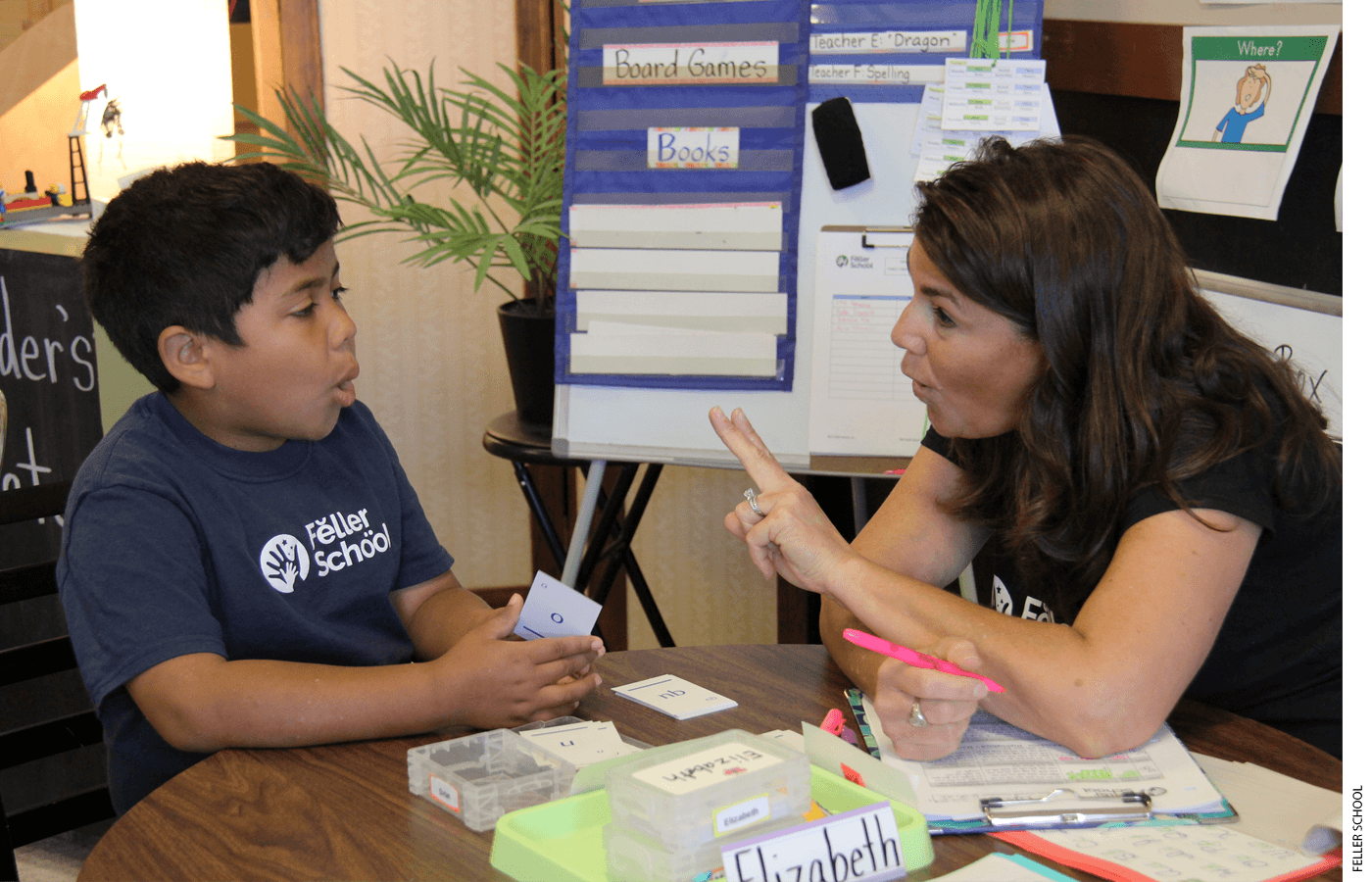
Data shows that when schools shift away from three-cueing and toward Structured Literacy—an approach rooted in the Science of Reading—the results are transformative. In districts that have overhauled their curriculum to include explicit, systematic phonics instruction, the "long tail" of struggling readers begins to shrink.
Crucially, the "Science of Reading" is not a political opinion; it is a body of research spanning cognitive science, neuroscience, and education. This research confirms that reading is not a natural process like speaking. While we are wired to speak, we are not wired to read. Reading must be taught, and the most effective way to teach it is to provide the brain with the patterns of the language: phonemic awareness, phonics, fluency, vocabulary, and comprehension.
Official Responses and the Policy Shift
In response to these findings, a wave of legislative action has swept across the United States. Since 2019, dozens of states have passed laws requiring schools to move away from three-cueing and toward curricula based on the Science of Reading.
The National Council on Teacher Quality (NCTQ) has begun auditing teacher-prep programs, revealing that many universities are still slow to incorporate evidence-based practices. Professional organizations that once championed "balanced literacy" are now facing immense pressure to retract their support for cueing-based methods.
However, the transition is fraught with challenges. Teachers who have spent their entire careers believing they were doing the right thing are now being told their methods were actively harming students. This creates a "training gap." Many teachers want to change but lack the professional development, the time, and the new materials to pivot effectively.
The Implications: Why It Matters
The implications of this shift go far beyond the classroom. Literacy is the primary indicator of lifelong success. Students who do not read proficiently by the end of third grade are four times more likely to drop out of high school. The "reading wars" are not just a debate over pedagogy; they are a struggle for social equity.
When we teach children to guess, we are creating an artificial barrier to entry for the most vulnerable students. Those from homes with fewer books or less exposure to academic language are the most disadvantaged by a system that relies on "context" and "prior knowledge" rather than teaching the direct code of the English language.
The movement toward the Science of Reading is an attempt to democratize literacy. By teaching every child the mechanics of how to blend sounds into words, we remove the guesswork and provide a reliable, consistent tool for every student, regardless of their background.
Moving Forward: A Call for Scientific Humility
The story of the system that wasn’t working is a cautionary tale about the dangers of prioritizing "feel-good" pedagogy over empirical evidence. The desire to make school "fun" and "intuitive" led to a generation of students who could look at a book but not read it.
As we move forward, the education sector must embrace a culture of scientific humility. This means:
- Admitting Error: Acknowledging that three-cueing was a pedagogical failure.
- Prioritizing Teacher Training: Ensuring that teachers understand the linguistics of the English language, not just the "tips and tricks" of classroom management.
- Collaboration: Bridging the gap between speech-language pathology, cognitive science, and classroom instruction.
- Resisting Fads: Ensuring that future curricula are vetted through rigorous, peer-reviewed research rather than marketing-driven trends.
Kim Feller’s Your Brain Loves Patterns: A Parent’s Guide to Dyslexia and the Science of Reading serves as a poignant reminder that parents are also part of this evolution. They are now, more than ever, the advocates pushing for the scientific instruction their children deserve.
The era of "guessing" is coming to a close. For the sake of the next generation, the era of the "Science of Reading" must be fully embraced—not as a temporary trend, but as the fundamental standard for how we unlock the potential of every child. The system that wasn’t working is finally being dismantled, and in its place, we are building a foundation that is as durable as it is effective.

 Laily UPN

 Nila Kartika Wati






