


 Jia Lissa
We often relegate "strategy" to the domain of generals, corporate CEOs, or grand geopolitical chess matches. Yet, the reality of the human experience is that we are constantly engaged in a silent, high-stakes game of maneuvering. From negotiating a salary increase and navigating complex office politics to managing household budgets and persuading a recalcitrant partner, we are all, in a sense, acting as our own commanders-in-chief.
If we seek to improve our efficacy in these arenas, we could do far worse than looking to Napoleon Bonaparte. Often caricatured by history as an aggressive, ego-driven figure of "short" stature (a historical misconception; he was of average height for his era) and confused origins (he was Corsican, not ethnically French), Napoleon remains one of history’s most potent case studies in pure, unadulterated agency.
The Chronology of a Meteoric Rise
Napoleon’s trajectory is a masterclass in the acceleration of competence. By the age of 24, he was a brigadier general. By 30, he was effectively the head of the French state. At 35, he reached the pinnacle of political power, famously taking the crown from the Pope’s hands and placing it upon his own head—a gesture that remains history’s most definitive "I’ve got this" moment.
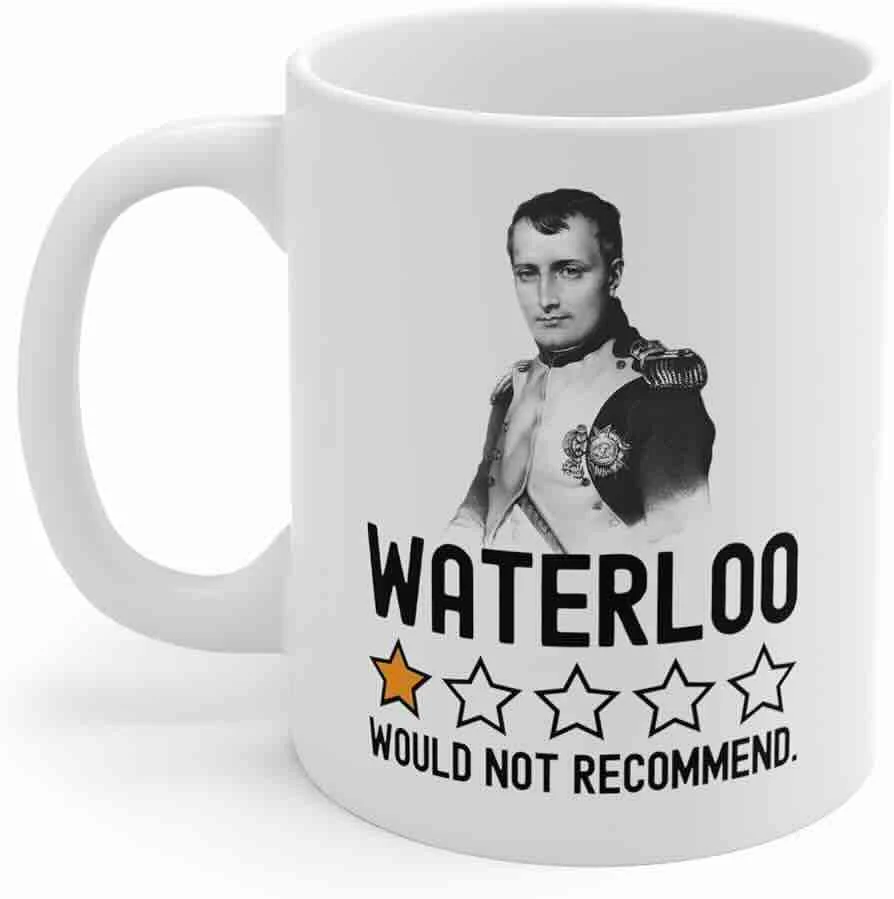
In just nineteen years, he transitioned from a junior artillery officer to an Emperor. To put this in perspective, many modern professionals struggle to navigate a two-year subscription cancellation process or a minor departmental promotion. Historian Andrew Roberts, in his seminal work Napoleon: A Life, notes that Napoleon’s combat record was an astounding 53 wins out of 60 battles. Even his eventual defeat at Waterloo, often cited by critics as a failure of his strategy, actually serves to reinforce the validity of his principles: when Napoleon adhered to his own maxims, he was invincible; when he deviated, he invited catastrophe.
Supporting Data: Why Strategy Matters
While your daily life—negotiating with a recalcitrant landlord or managing a team—is not the Battle of Austerlitz, the underlying logic of Napoleonic strategy offers a powerful framework for conflict resolution. Military historian B.H. Liddell Hart analyzed 280 campaigns across 30 wars and found that the "direct approach"—the standard, predictable path—was effective in only six instances.
This data suggests that human beings are fundamentally hardwired to prepare for the most obvious path. By failing to innovate, we are essentially walking into the very traps our "opponents" (whether they be competitors or obstacles) have laid for us.
The Napoleonic Principles of Modern Strategy
1. The "Napoleon Check": Preparing for Reality
Napoleon famously advised: "A general-in-chief should ask himself frequently in the day, ‘What should I do if the enemy’s army appeared now?’"
In modern terms, being "well-posted" does not mean having a rigid, five-year plan. Planning is an exercise in optimism; being "well-posted" is an exercise in resilience. If your plan to handle a crisis—such as a sudden job loss or a technological failure—requires resources you do not currently possess, you are ill-posted. Sun Tzu echoed this in The Art of War, emphasizing that one should not rely on the hope that an adversary will not attack, but rather on the fact that one has made their position unassailable.
The Action: Conduct a daily "Napoleon Check." Ask yourself: "If the most likely problem in my current project happened right now, what would I do?" If the answer is vague, you have found an exposed flank.
2. Never Do What the Enemy Wants
Napoleon’s maxim—never do what the enemy wishes you to do, simply because they desire it—remains the gold standard for negotiation. When you are presented with a scenario where the other party is eager for a specific outcome, realize that the situation is likely designed to favor them.
The clever combatant imposes their will on the situation rather than reacting to it. In a business negotiation, if the opposing party pushes for a quick, aggressive close, that is your signal to slow the process down, introduce new variables, or shift the focus from price to long-term value. As the David and Goliath myth illustrates, you win not by matching the giant’s sword, but by changing the rules of the engagement.
3. Reconnaissance: The Value of Informal Intelligence
Napoleon was meticulous about gathering information, often ignoring the "official" reports in favor of speaking with local curés or postmasters. He understood that the map is never the territory.
In every organization, there are two maps: the formal, public-facing organizational chart, and the informal, hidden network of "Linadas" and "Garys"—the receptionists, administrative assistants, and long-term IT staff who know who is actually in charge and how the bureaucracy truly functions. Before embarking on a new professional endeavor, ignore the mission statement and find the person who has seen the last five reorgs. Their insight into the informal structure will save you months of wasted effort.
4. The Secret of Offense: Forcing the Defense
Napoleon’s greatest strategic secret was that even in offensive warfare, he sought to force the enemy to attack him on his own terms. He would threaten a location the enemy could not afford to lose, compelling them to leave their defensive positions and commit to an engagement they were not prepared for.
In daily life, this means shifting the burden of movement onto the other party. If you are waiting on an answer, structure your communication so that the inaction of the other party creates a cost for them, rather than for you. Never enter a fight on the other person’s chosen ground.
5. Strengthening Your "Best Exit" (BATNA)
Perhaps the most crucial lesson from Napoleon is the importance of the exit. He argued that the side with the ability to move freely, to retreat, or to wait, held all the advantages.
This aligns perfectly with the modern concept of BATNA (Best Alternative to a Negotiated Agreement). A powerful individual with no alternatives is not powerful at all. Your power in any negotiation is directly proportional to your ability to walk away. If you find yourself on "desperate ground"—a position with no exits—you have already lost. Before any major decision, invest in your alternatives. Strengthening your backup plan is not a sign of lack of commitment; it is the ultimate foundation of strategic leverage.
Implications for the Modern Professional
The synthesis of these principles leads to a single, profound conclusion: Strategy is the antithesis of reactivity.
Most people move through their careers in a state of constant, frantic reaction, responding to emails, deadlines, and crises as they occur. By adopting a Napoleonic mindset, you shift from being a piece on the board to being the player.
- Maximize Agency: Focus on creating options where none existed.
- Reject Predictability: Do not do what the "enemy" expects; force them to adapt to your logic.
- Prioritize Intelligence: Trust the local, ground-level reality over the official, polished narrative.
- Cultivate Exits: Never enter a situation—professional or personal—where you lack a viable alternative.
While you should avoid referring to your home office as a "defensible position" or your morning commute as a "supply line operation," the mental shift is profound. By refusing to be forced, and by constantly optimizing your position, you move away from the chaos of circumstance and into the calm, calculated exercise of personal strategy. History shows us that those who control the terms of the engagement rarely find themselves at the mercy of the outcome.


 Muslim

 Lina Hope