

 Asro
The hallway of a typical American high school is meant to be a transit point—a space between classes where students socialize, gather their books, and prepare for the next lesson. For Fatimah Fair, a former student in the District of Columbia, it was the site of a humiliating confrontation that would alter her perspective on her own education. Stopped by an administrator, she was subjected to a public, head-to-toe inspection that ended in a reprimand regarding the length of her shorts. She was told never to wear them again.
"I felt embarrassed and shaken," Fair recalls. "For the rest of the day, I wondered if her impression of me had changed simply because of the shorts I was wearing."
Fair’s experience is not an anomaly; it is part of a systemic pattern of "school pushout" that disproportionately impacts Black girls. From hair policy violations to subjective enforcement of "modesty" standards, the policing of Black bodies in schools has become a flashpoint in the national conversation regarding racial equity, bodily autonomy, and the role of the Department of Education.
The Chronology of a Policy Shift
The tension surrounding school discipline reached a critical juncture in early 2018. To understand the current climate, one must look back at the Obama-era efforts to curb the school-to-prison pipeline.
In 2016, the White House released the Rethink Discipline guidance, a comprehensive report and set of recommendations designed to address the gross racial disparities in school discipline. The guidance recognized that students of color, particularly Black girls, were being removed from the classroom at alarming rates for minor, subjective infractions. It provided schools with the tools to implement restorative justice practices rather than punitive ones.
However, in January 2018, the Department of Education under Secretary Betsy DeVos took a sharp pivot. Citing a desire to provide "local control" to schools, the Trump administration rescinded the Rethink Discipline guidance. While the move did not change federal civil rights law, it sent a clear, chilling message to school districts across the country: the federal government would no longer prioritize the protection of students of color from discriminatory disciplinary practices.
For activists like Fair, who had recently co-authored the report Dress Coded: Black Girls, Bodies, and Bias in D.C. Schools with the National Women’s Law Center, the revocation felt like a betrayal. She had met with Department of Education officials to advocate for the preservation of the guidance, only to watch as the administration abandoned the very students they had promised to protect.
Supporting Data: The Disparity in Discipline
The statistics surrounding the disciplinary treatment of Black girls are stark and undeniable. According to data analyzed by civil rights advocates, Black girls are six times more likely to be suspended from school than their white peers. In some jurisdictions, such as the District of Columbia, that disparity grows even wider, with Black girls being 20 times more likely to face suspension than their white counterparts.
These numbers are not the result of increased misbehavior or academic disruption. Instead, they are the byproduct of subjective enforcement of dress codes and behavioral policies.
The Sexualization of Black Youth
Sociologists have long noted that Black girls are often "adultified" in the eyes of educators. This phenomenon, where Black girls are perceived as older, more sexually mature, and more responsible than they actually are, leads to a specific type of policing. Teachers may view a tank top or exposed shoulders not as common teenage fashion, but as a deliberate provocation that must be "tamed."
The "Angry Black Girl" Stereotype
Beyond clothing, Black girls are frequently disciplined for "talking back" or "being loud"—subjective descriptors that feed into the pervasive "angry Black girl" trope. When a Black girl advocates for herself or expresses frustration, it is often coded as insubordination, leading to severe consequences that are rarely applied to white students for the same behaviors.
Furthermore, data suggests that Black girls who are victims of sexual harassment or violence are often treated as the aggressors. Because they are not viewed through the lens of vulnerability, their attempts to report abuse or defend themselves are frequently met with disciplinary action, effectively silencing them within their own learning environments.
Official Responses and the "Local Control" Argument
The Department of Education’s decision to revoke the Rethink Discipline guidance was framed as an effort to restore local autonomy. The argument, championed by Secretary DeVos, suggests that federal oversight of school discipline creates unnecessary bureaucratic hurdles and that individual schools and districts are better equipped to determine how to manage their student bodies.
However, critics argue that "local control" is often a euphemism for the maintenance of status-quo bias. By removing federal oversight, the Department effectively gave school administrators a "green light" to continue practices that rely on implicit bias.
During meetings with activists, officials have acknowledged that disproportionate discipline is a problem and have expressed concern regarding lost classroom time. Yet, these verbal commitments have often failed to translate into policy. The disconnect between acknowledging the harm and taking concrete action to stop it remains the primary source of frustration for students and civil rights organizations.
Implications: The High Cost of Exclusion
The implications of these policies extend far beyond a student missing a single class period. When a student is removed from the classroom for a dress code violation—a policy that rarely has any impact on academic achievement—the consequences are cumulative.
- Academic Achievement Gaps: Every minute spent in the principal’s office or in an out-of-school suspension is a minute of instruction lost. Over time, these gaps widen, directly impacting a student’s GPA, standardized test scores, and likelihood of graduation.
- Psychological Impact: The experience of being targeted and publicly shamed for one’s body or attire creates a hostile learning environment. It sends a message that the student does not "belong" or that their presence is conditional based on their adherence to arbitrary aesthetic standards.
- The School-to-Prison Pipeline: Minor disciplinary infractions are often the first step toward more severe involvement with the justice system. By treating school-aged children like criminals for minor dress code violations, schools normalize the idea that these students require surveillance and control rather than support and education.
The Path Forward: Resistance and Reform
Despite the federal retreat, the fight for equitable school policies is far from over. Fatimah Fair and a coalition of over 200 students from 14 states have proven that change is possible at the local level.
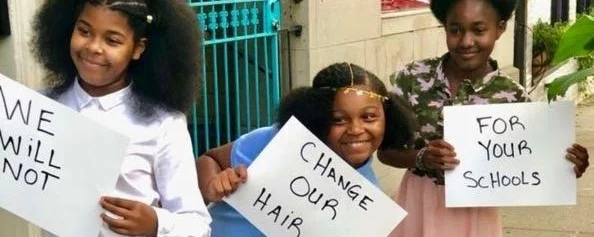
In her own school, Fair and her peers took a proactive approach. After being ignored by administrators, they drafted a comprehensive alternative dress code, organized protests, and presented data-driven arguments that forced the school to reconsider its enforcement. They won. The resulting policy was one that removed the bias and targeted policing that had previously alienated Black female students.
The existence of the original Rethink Discipline guidance still provides a framework for districts that wish to do better. Even if the federal government has stepped away from enforcing these standards, students, parents, and teachers are using the documents as a blueprint for grassroots advocacy.
Holding Institutions Accountable
The responsibility now falls on local school boards and parent-teacher organizations to examine their own disciplinary data. If a district finds that Black girls are being suspended at higher rates for subjective infractions, they must be willing to overhaul those policies. This involves:
- Implementing Restorative Justice: Moving away from punitive measures and toward conflict resolution that keeps students in the classroom.
- Implicit Bias Training: Ensuring that educators are aware of the stereotypes they may be projecting onto students of color.
- Student-Led Governance: Giving students a seat at the table when school policies—especially those concerning dress and behavior—are drafted.
"We believe all students deserve to learn free from discrimination and stereotypes," Fair says. "If the Department of Education won’t champion that cause, we will."
The movement to end the discriminatory policing of Black girls is growing. From the halls of D.C. schools to classrooms in California, Texas, and New York, a new generation of activists is demanding that their schools be spaces of safety and empowerment rather than sites of surveillance. While the policy climate in Washington may be uncertain, the resolve of these students serves as a powerful reminder that the fight for equity is not fought in a vacuum; it is won in the hallways, the classrooms, and the boardroom meetings where the future of education is decided.

 Laily UPN
 Rifan Muazin