

 Sagoh
Sagoh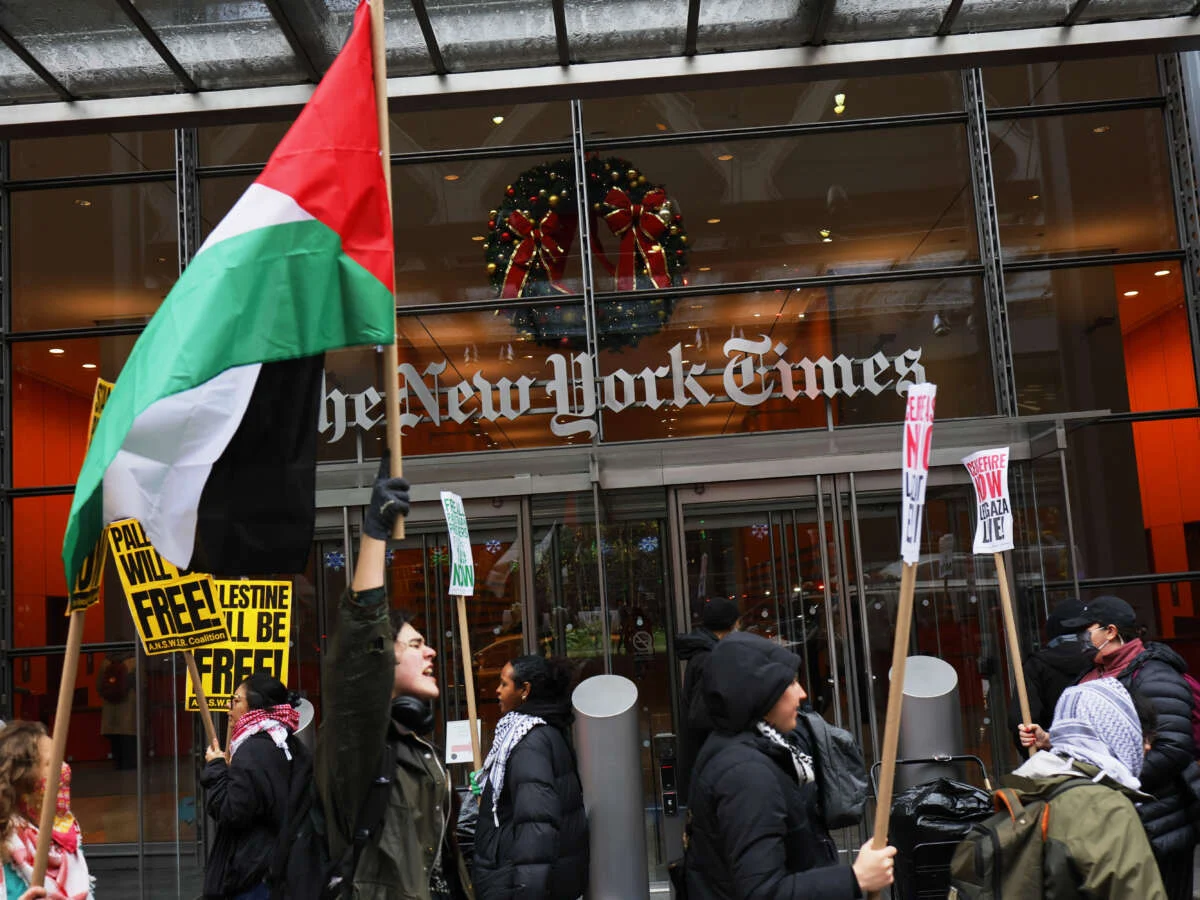
Main Facts: The Architecture of Information
In the landscape of modern warfare, the battlefield is not merely composed of geographic territory, but of the cognitive space occupied by the public. As the conflict in Gaza has unfolded, major U.S. news outlets—traditionally viewed as the "fourth estate"—have come under intense scrutiny for their role in narrating the violence. Rather than acting as neutral observers, critics argue that these institutions have constructed a "narrative scaffolding" that shapes public perception, often at the expense of historical accuracy and humanitarian clarity.
The central issue lies in the process of editorial decision-making: the selection of start dates for historical timelines, the choice of which sources to validate, and the specific lexicon used to describe death and destruction. This architectural approach to news has led to a documented disparity in how Israeli and Palestinian lives are valued and how their respective actions are interpreted. According to internal leaks and linguistic analyses, prominent outlets like The New York Times and CNN have reportedly operated under directives that restrict the use of terms such as "genocide," "massacre," and "occupied territories" when referring to Palestinian casualties, while simultaneously using evocative language to describe Israeli suffering.
The result is a mediated reality where the structural causes of the conflict—such as the decades-long military occupation—are obscured, and the immediate violence is presented through a lens of "normalization" that permits the continuation of hostilities without the interruption of moral urgency.
Chronology: From Controlled Narratives to Manufactured Evidence
The history of media bias in the region did not begin with the current escalation; it is rooted in a long-standing pattern of information management.
The Blueprint of Impunity (2022)
In May 2022, eighteen months prior to the October 7 attacks, the assassination of Al Jazeera journalist Shireen Abu Akleh served as a precursor to modern propaganda techniques. The Israel Defense Forces (IDF) initially released a video suggesting Palestinian militants were responsible. However, independent investigations by groups like B’Tselem and major international outlets eventually proved the video was misleading, filmed in a location that made the IDF’s claims logistically impossible. This established a recurring theme: the use of "pseudo-evidence" to muddy the waters during the critical first 48 hours of a news cycle.
The Hospital Campaigns (Late 2023)
By November 2023, the focus shifted to Gaza’s healthcare infrastructure. The IDF released a sophisticated 3D animation depicting a sprawling Hamas command center beneath the Al-Shifa Hospital. This visual propaganda was widely broadcast by U.S. networks, providing the moral cover necessary for the military to besiege and eventually destroy the complex. When the "beating heart" of Gaza’s medical system was reduced to rubble, the promised subterranean fortress failed to materialize in any form that matched the initial propaganda, yet the media cycle had already moved on.
The Engineering of Famine (Early 2025)
As the conflict persisted into 2025, the narrative shifted toward the humanitarian catastrophe. By March 2025, reports indicated a total blockade of aid into Gaza, a move described by international legal experts as the use of starvation as a weapon of war. During this period, media coverage frequently pivoted from the systemic causes of famine to interrogation-style interviews. A notable instance in May 2025 involved NPR interviewing a starving Palestinian writer living in the ruins of his home. Rather than exploring the logistics of the blockade, the interview focused on demanding the victim denounce political entities, a move critics call "singing for the supper of airtime."
Supporting Data: The Quantitative Reality of Bias
The disparity in media coverage is not merely a matter of subjective interpretation; it is supported by quantitative data and internal documentation.
1. Semantic Asymmetry:
An analysis conducted by The Intercept of coverage between October 7 and November 24, 2023, revealed a stark contrast in terminology. The New York Times used the word "massacre" 53 times to describe the killing of Israelis. In contrast, the term was used only once to describe the killing of Palestinians, despite the Palestinian death toll being significantly higher during that period.
2. Editorial Directives:
Leaked internal memos from major newsrooms have shown explicit bans on terms that provide legal and historical context. Reporters were reportedly advised to avoid:

- "Genocide": Despite ongoing cases at the International Court of Justice.
- "Occupied Territories": Removing the legal status of the land from the reader’s consciousness.
- "Refugee Camps": Often replaced with "neighborhoods," which masks the displaced status of the inhabitants and the history of their expulsion.
3. Visual Manipulation:
The BBC Verify unit, along with other independent fact-checkers, identified multiple instances where IDF-provided footage was doctored. In the case of the "Flour Massacre"—where starving civilians were fired upon while seeking aid—aerial footage was found to have been edited in at least four places to obscure the sequence of events and the source of the gunfire.
Official Responses and the "Stenographers to Power"
The relationship between official military sources and major media outlets has been described by some critics as "stenography." When the IDF or the Israeli Prime Minister’s office issues a statement, it is frequently reported as an objective fact, whereas Palestinian claims—even those backed by international NGOs—are often framed with skepticism or labeled as "unverified."
The IDF Strategy
The Israeli military has leaned heavily into digital-first propaganda, using slickly produced videos and social media "influencer" style content to bypass traditional journalistic gatekeepers. By the time a news organization "verifies" that a video is misleading, the initial narrative has already taken root in the public consciousness.
The Institutional Defense
Media executives often defend their coverage as "balanced," citing the need to represent all sides of a conflict. However, journalists within these organizations have begun to speak out. Leaks from The New York Times suggest that the "verbal restrictions" imposed by management have crippled the ability of reporters to offer an accurate account of the war, effectively "taking the occupation out of the coverage."
The Crackdown on Dissent
The narrative control extends beyond the borders of Gaza. When student encampments emerged across U.S. campuses in April 2024 to protest the genocide, the media adopted the "outside agitator" trope. This framing, often used by police departments, was echoed by major outlets to delegitimize student movements and condone the subsequent police violence used to dismantle the protests.
Implications: The Normalization of Genocide
The failure of the American media to accurately and courageously cover the destruction of Gaza has profound implications for international law, human rights, and the future of journalism.
The Erosion of Professional Canons
By adopting the language of the state and refusing to use humanitarian terminology, journalism loses its role as a watchdog. When the media serves as a "complicit lens," it facilitates the continuation of violence by shielding the public from its true nature. The use of "lawlessness" tropes to blame starving victims for their own plight is a direct violation of the professional canons of journalism, which prioritize truth-seeking and the minimization of harm.
Societal Dehumanization
The reliance on Orientalist tropes—depicting Arab men as hyper-sexualized or inherently "brutish"—feeds into a broader culture of Islamophobia. This dehumanization is a necessary precursor to genocide; if a population is viewed through a lens of inherent violence and lawlessness, their eradication can be framed as a matter of "security" rather than a crime against humanity.
The Future of Public Discourse
Despite the efforts of major media to control the narrative, the student protests of 2024 and the rise of independent, social-media-driven reporting have moved the debate to the center of the political stage. The "narrative scaffolding" is showing cracks as younger generations increasingly turn to sources that do not shy away from the core realities of occupation and ethnic cleansing.
In conclusion, the media’s role in the Gaza conflict has been one of active participation in narrative construction. By choosing where stories start, which words are "taboo," and which lives are worthy of empathy, establishment media has not just reported on a war—it has helped define the limits of what the public is allowed to see, hear, and ultimately, care about. The "complicit lens" remains a formidable barrier to the justice and accountability required to end the cycle of violence.


 Iffa Jayyana
 Azzam Bilal Chamdy