




 Dwi Wanna
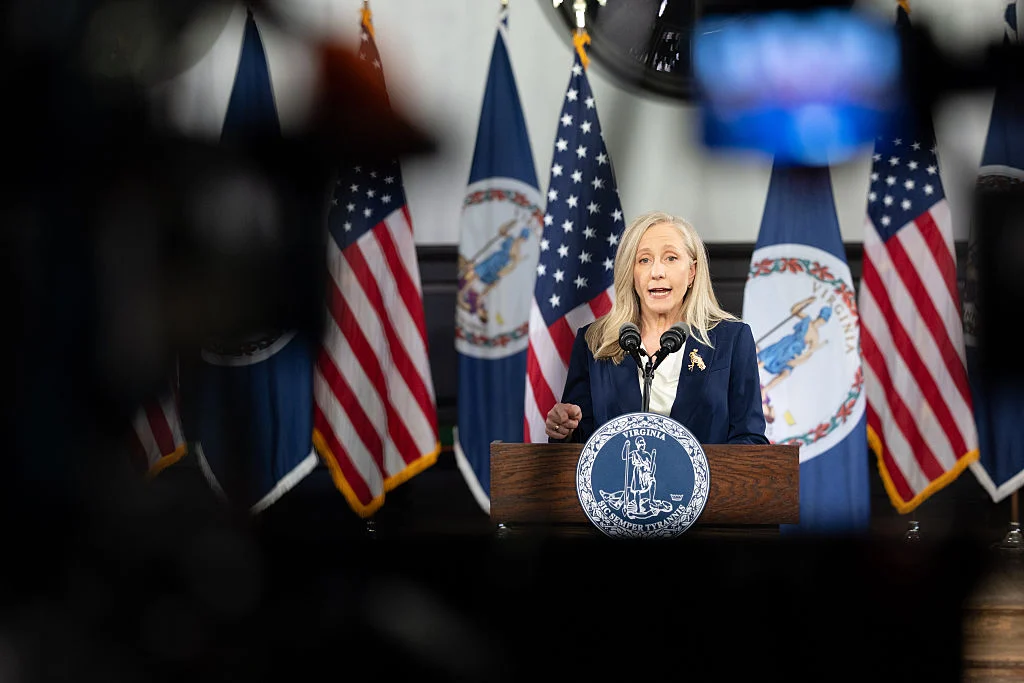
RICHMOND, VA — In a whirlwind 48-hour period that has redefined the early trajectory of her administration, Virginia Governor Abigail Spanberger has engaged in a complex series of executive maneuvers, vetoing high-profile Democratic priorities while simultaneously issuing sweeping executive orders. By rejecting legislative packages aimed at curbing federal immigration enforcement and delaying the state’s legal cannabis market, Spanberger has signaled a governing philosophy rooted in executive caution and "law-and-order" pragmatism—a move that has left many in her own party both baffled and deeply frustrated.
The Governor’s actions represent a pivotal moment for the Commonwealth. As a former federal law enforcement officer and CIA operative, Spanberger is navigating a narrow corridor between the progressive demands of a Democratic-controlled General Assembly and her own stated concerns regarding public safety, legal conflicts, and "unintended consequences."
Main Facts: A Divided Strategy on Immigration and Enforcement
The crux of the recent political firestorm involves a series of bills and an executive order concerning the operations of U.S. Immigration and Customs Enforcement (ICE) within Virginia’s borders. Within a single day, Spanberger vetoed two legislative packages (House Bill 1392 and Senate Bill 83) that would have standardized courthouse security and attorney access—measures advocates argued would provide a shield against ICE interference.
However, in a move that appeared to be an attempt at balance, she signed HB 1482 and SB 352, which mandate transparency for federal agents operating in the state, specifically targeting the use of masks and the lack of visible identification during enforcement actions. To further complicate the political landscape, she issued Executive Order 16, a directive that prohibits state property from being used as staging grounds for federal civil immigration enforcement and requires state agencies to verify warrants before granting federal access.
Beyond immigration, the Governor’s veto pen struck down several other cornerstone Democratic initiatives, including the establishment of a retail cannabis market, the creation of a Prescription Drug Affordability Board, and changes to the state’s Small, Women-, and Minority-owned (SWaM) business program.
Chronology: 48 Hours of Executive Friction
The legislative drama unfolded in rapid succession, beginning with the rejection of the cannabis retail market and ending with a flurry of immigration-related directives.
- Tuesday Morning: Spanberger vetoed bipartisan legislation intended to launch Virginia’s adult-use cannabis retail market. Despite the 2021 legalization of possession, the lack of a retail framework has left the state in a legal "gray zone." Spanberger cited public health concerns and the need for more robust regulatory safeguards as the primary reasons for the delay.
- Tuesday Afternoon: The Governor rejected the Prescription Drug Affordability Board proposal, arguing that the board’s price-capping powers could discourage pharmaceutical innovation and lead to legal challenges that the state is not prepared to defend.
- Wednesday Morning: Attention shifted to the judicial system. Spanberger vetoed HB 1392 and SB 83. These bills were designed to allow attorneys to bypass certain security screenings and maintain electronic device access in courthouses. While seemingly administrative, the bills were a priority for immigrant rights groups who believed standardized security would prevent ICE agents from exploiting local inconsistencies to target undocumented individuals appearing for court dates.
- Wednesday Afternoon: In a rapid-fire sequence, the Governor signed the "anti-masking" law enforcement bills (HB 1482/SB 352) and issued Executive Order 16. These moves were presented as a middle path—protecting the dignity of Virginia residents while avoiding the "unworkable legal conflicts" she claimed were present in the vetoed bills.
Supporting Data: The Scope of the Vetoes
To understand the scale of the current friction, one must look at the breadth of the legislation Spanberger rejected. This was not a targeted strike on a single issue, but a broad application of executive restraint across multiple sectors:
1. Criminal Justice and Mental Health
Spanberger vetoed HB 246 and SB 335, which sought to create specialized legal standards for defendants with mental illness or developmental disabilities. The Governor argued that while the intent was noble, the bills would create "inconsistent legal standards" that could confuse the judiciary and lead to unequal application of the law across different jurisdictions.
2. Economic Inclusion (SWaM Program)
The veto of HB 61 was particularly stinging for minority business advocates. The bill proposed a restructuring of Virginia’s Small, Women-, and Minority-owned (SWaM) business program. Spanberger’s office released data suggesting the changes would have stripped eligibility from nearly 800 currently certified businesses, potentially reducing state spending with those vendors by over $340 million.
3. Election Administration
The Governor rejected HB 111 (voter roll maintenance) and HB 639 (private funding for elections). Regarding voter rolls, Spanberger expressed concern that the proposed requirements for purging deceased voters would place "unintended burdens" on grieving families during the reporting process.
4. Higher Education and Human Rights
Vetoes also hit HB 1385 and SB 494, which aimed to change university governance. Spanberger claimed these measures risked "further politicizing" Virginia’s higher education institutions. Additionally, she rejected HB 1173 and SB 258, which would have added menopause and perimenopause as protected categories under the Virginia Human Rights Act, calling the addition unnecessary under existing broad protections.
Official Responses: A Party at Odds
The reaction from the Democratic caucus has ranged from measured disappointment to outright condemnation.
Senate Majority Leader Scott Surovell (D-Fairfax), an attorney himself, was vocal in his opposition to the courthouse vetoes. "The Governor’s stated concern, that allowing attorneys to bypass security screening poses a public safety risk, misreads both the bills and the people they cover," Surovell said in a joint statement. He pointed out that law enforcement officers—who have a statistically higher rate of misconduct than licensed attorneys—already bypass these screenings.
Senator Saddam Azlan Salim (D-Fairfax), a sponsor of several immigration-related measures, linked the Governor’s vetoes to a lack of empathy for the immigrant experience. "As an immigrant who carries his passport card as many immigrants do, I know the fear of being separated from our families," Salim stated. "This bill is a common-sense measure that would have protected Virginians and strengthened trust in our institutions."
The ACLU of Virginia was even more pointed. Policy Director Chris Kaiser called the Governor’s reliance on an executive order over legislation "shocking," arguing that "an executive order… does nothing to keep Virginians safe" compared to the permanent protections of a codified law.
Governor Spanberger’s Defense: In her veto statements, the Governor repeatedly leaned on her background in law enforcement to justify her caution. "Without additional study or a clear public safety benefit, I do not support mandating new statewide security screening exemptions," she wrote. Regarding the broader immigration bills (HB 650/SB 351), she warned that they would place local law enforcement in the "untenable position of choosing between violating state law or federal law," potentially creating a "false sense of legal protection" for vulnerable families.
Implications: The Political Future of the Commonwealth
Spanberger’s recent actions carry significant implications for the future of Virginia’s governance and her own political trajectory.
The "Centrist" Pivot
By vetoing the cannabis market and the Prescription Drug Affordability Board, Spanberger is positioning herself as a fiscal and regulatory centrist. This may be a calculated move to appeal to moderate voters in a state that remains purple, despite recent Democratic gains. However, this "triangulation" risks alienating the progressive base that is essential for turnout in future elections.
Executive Power vs. Legislative Intent
The use of Executive Order 16 as a substitute for SB 351 highlights a preference for executive-led solutions over legislative mandates. While an executive order can be implemented immediately, it is also easily overturned by a future governor. This "temporary" nature of the protections is exactly what has angered civil rights advocates, who seek permanent statutory changes to protect immigrant communities from federal overreach.
Stalled Progress on Social Issues
The delay of the cannabis retail market means that the illicit market in Virginia will likely continue to thrive for at least another year. This has significant tax revenue implications and continues a cycle of disproportionate policing in minority communities, despite the legality of possession. Similarly, the veto of the Prescription Drug Affordability Board leaves the state without a dedicated mechanism to combat rising healthcare costs, an issue that Spanberger herself campaigned on during her time in Congress.
A Fractured Caucus
Perhaps the most immediate implication is the strain on the relationship between the Executive Mansion and the General Assembly. If Spanberger continues to use her veto power to block cornerstone Democratic priorities, she may find it increasingly difficult to secure the legislative cooperation needed for her own agenda, which includes housing affordability and energy grid modernization.
As Governor Spanberger concludes her first six months, the message is clear: she will not be a "rubber stamp" for the General Assembly. While she has signed landmark legislation on paid family leave and insulin caps, her willingness to break with her party on immigration and regulation suggests a governorship defined by a cautious, law-enforcement-centric pragmatism that seeks to manage change rather than accelerate it. Whether this strategy will "make communities safer" or simply leave reform-minded Virginians in the lurch remains the central question of her administration.


 Jia Lissa

 Suro Senen






