




 Siti Muinah
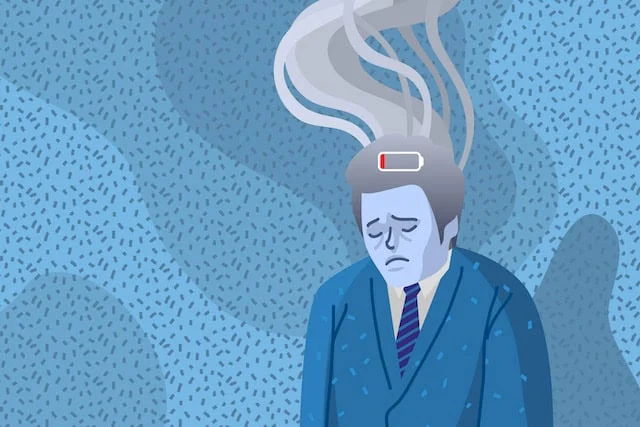
For decades, Joe White operated in the high-stakes trenches of the technology and information security sectors. In a world where a single oversight could lead to catastrophic data breaches or system failures, White was the professional safeguard. His career was built on the foundation of risk assessment: identifying vulnerabilities, questioning assumptions, and making critical decisions under pressure.
Yet, when faced with the most consequential financial decision of his life, White fell victim to the very thing he was trained to detect: a critical vulnerability. This time, however, the exploit wasn’t in a piece of software or a network architecture. It was in his own cognitive state.
After years of relentless professional strain, White succumbed to severe, "high-functioning" burnout. The result was a catastrophic loss of approximately $3 million in retirement savings, funneled into an offshore cryptocurrency lending platform that would eventually collapse. This is not merely a story of financial loss; it is a cautionary tale about the deceptive nature of cognitive depletion and the danger of assuming that sustained output equals sustained health.
The Illusion of Functionality: A Chronology of Decline
To understand how a seasoned security professional could overlook such a massive risk, one must first dismantle the common misconception of what burnout looks like. Popular culture often depicts burnout as a state of total collapse—an individual unable to get out of bed, paralyzed by exhaustion, or visibly unraveling.
For White, the experience was far more insidious.
Throughout the years leading up to the financial disaster, White remained, by all external metrics, a high-performing professional. He continued to solve complex technical problems, engage in high-level strategic discussions, and manage the mounting pressures of the startup world. In the technology sector, where long hours and "crunch time" are often glorified as badges of honor, White had become conditioned to view his exhaustion as a baseline rather than a symptom.
The Feedback Loop of Failure
The danger, White notes, lies in a treacherous feedback loop. When one pushes through exhaustion repeatedly and still manages to achieve professional objectives, the brain begins to interpret that survival as proof of well-being. "I had spent years relying on the same brain to tell me whether that brain was functioning properly," White reflects.
By the time he was weighing the decision to move his life savings into the cryptocurrency platform, he was suffering from chronic "brain fog." While he was still processing information, he was not processing it with the nuance, skepticism, and analytical rigor that he would have possessed in a rested, healthy state. The cognitive decline was so gradual that it became his "new normal." There was no singular "aha!" moment of realization—only a slow, imperceptible erosion of the judgment he had relied on for his entire career.
The Anatomy of the Loss: Data and Decision-Making
The loss of $3 million was not the result of a single, impulsive click, but rather the cumulative effect of a degraded risk-assessment capability. In the field of cybersecurity, experts are trained to use "layered defenses." They know that if one control fails, another should be in place to prevent a total breach.
White, an expert in these very systems, had effectively created a single point of failure in his life: himself.
The Psychology of Risk in a Depleted State
When the brain is cognitively depleted, the executive function—the part of the brain responsible for impulse control, long-term planning, and critical analysis—begins to misfire. In this state, the "safety checks" that normally govern a person’s behavior are suppressed.
The offshore cryptocurrency platform presented a narrative that, in a different mental state, White would have picked apart with ease. He would have questioned the underlying liquidity, the regulatory oversight, and the sustainability of the interest rates. Instead, the combination of fatigue, tunnel vision, and a false sense of security allowed the risks to go insufficiently challenged.
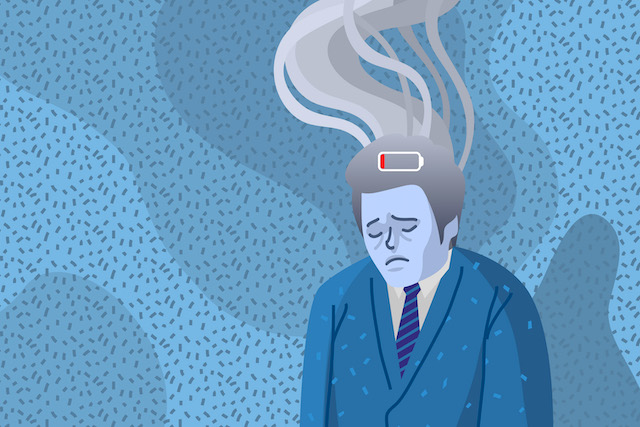
"I was still processing information," White explains. "I just wasn’t processing it the way I would have when rested and healthy."
The Expert Perspective: The Science of High-Functioning Burnout
Clinical psychologists define burnout not just as stress, but as a syndrome resulting from chronic workplace stress that has not been successfully managed. It is characterized by three dimensions: feelings of energy depletion or exhaustion, increased mental distance from one’s job, and reduced professional efficacy.
The "High-Functioning" Trap
High-functioning burnout is particularly dangerous because it masks the physiological toll of the condition. While the person continues to meet deadlines and fulfill obligations, their internal cognitive resources are being drained. Research suggests that chronic stress releases cortisol, which, over time, can impair the hippocampus—the area of the brain responsible for memory and complex decision-making.
For professionals in fields like IT, finance, and law, where "pushing through" is a cultural norm, the stigma against admitting fatigue is immense. This leads many to hide their symptoms, exacerbating the condition until a catastrophic failure occurs—either in the form of a physical health crisis or, as in White’s case, a life-altering professional or personal mistake.
Implications: Rethinking Risk Management in Personal Life
White’s journey highlights a profound irony: the very tools we use to protect our professional lives are rarely applied to our personal decision-making.
Lessons for the High-Achiever
The implications of White’s experience are twofold: the necessity of structural personal safeguards and the redefinition of "recovery."
- Implement External Controls: White argues that for major life decisions, one should never rely solely on their own internal judgment if they are in a high-stress or exhausted state. "I should have asked someone I trusted to independently look at what I was doing," he says. Just as a security firm would mandate a second pair of eyes on a critical configuration change, individuals should mandate external reviews for life-changing financial or personal decisions.
- Slow the Process Down: In a state of burnout, there is often a sense of urgency—a feeling that the problem must be solved now. This is often a hallmark of impaired judgment. The ability to hit the "pause" button is a critical, yet often ignored, risk-management strategy.
- Redefining Recovery: True recovery is not merely taking a week off or going on vacation. It requires a systemic change in how one interacts with the world—prioritizing sleep, nutrition, and boundaries. It means recognizing that the brain is an organ, not a machine, and that it requires maintenance to function at an optimal level.
The Path Forward: Accountability and Awareness
In the three years since his financial loss, White has been engaged in a dual battle: a pursuit of accountability regarding the offshore platform and an effort to reconcile his professional identity with his personal experience. He recognizes that he cannot undo the past, nor can he return to his younger self the wisdom he has gained through such a heavy price.
His goal now is to serve as a cautionary example for others in high-pressure fields. He emphasizes that competence—the ability to solve difficult problems independently—can ironically become a vulnerability. The more successful a person has been at navigating challenges alone, the more likely they are to believe they can navigate their own burnout without assistance.
A Final Warning
For those currently pushing themselves to the brink, White’s message is stark: "Don’t use the fact that you’re still functioning as proof that you’re okay."
He urges professionals to look for the warning signs:
- An increase in difficulty regarding concentration.
- The normalization of fatigue and poor sleep.
- A decline in interest for things that once brought joy.
- The tendency to respond to burnout by simply working longer hours.
"I spent a career looking for vulnerabilities in complicated systems," White concludes. "One of the most consequential vulnerabilities I ever encountered was one I couldn’t see while I was inside it."
By sharing his story, White hopes to strip away the mask of the "high-functioning" professional and highlight the reality that our best defense against disaster is often the humility to admit when we are not, in fact, operating at our best. For the high-achiever, the most important system to secure is not the network or the portfolio, but the mind that manages them.


 Reynand Wu

 Pevita Pearce





