

 Nila Kartika Wati
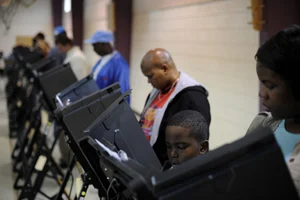
WASHINGTON, D.C. — As the 2026 midterm election season reaches its fever pitch, the American democratic experiment is being put to a rigorous test. Across the country, polling stations are bustling with activity as citizens cast their ballots for everything from local school boards to the halls of Congress. Yet, for millions of Americans, the promise of democratic participation remains a mirage. While the nation debates the future of its economy, healthcare, and infrastructure, an estimated four million citizens—a population larger than the state of Connecticut—remain locked out of the process, barred by the long-reaching shadow of felony disenfranchisement laws.
This enduring exclusion places the United States in a precarious position on the global stage. As the nation claims to champion the ideals of representative governance, it remains a stark global outlier in its approach to civic participation for those involved in the criminal legal system.
The Geography of Disenfranchisement: A Patchwork of Rights
The landscape of American voting rights is defined by a chaotic patchwork of state-level policies. In the vast majority of the country, a felony conviction can strip an individual of their right to vote—sometimes temporarily, sometimes for life. Only in Maine, Vermont, Puerto Rico, and Washington, D.C., are citizens permitted to cast a ballot while currently incarcerated.
However, even in jurisdictions where the law theoretically allows for voting, the practical reality is often one of systemic obstruction. Incarcerated individuals who maintain their eligibility often face a gauntlet of bureaucratic hurdles: lack of access to voter registration forms, limited information on candidate platforms, and physical impediments to casting or returning ballots.
According to a recent report by The Sentencing Project, the impact of these policies is not distributed evenly. The disenfranchisement of four million Americans is rooted in historical practices that have disproportionately marginalized Black communities. Current data reveals that approximately one in 22 voting-age Black Americans is blocked from the ballot box—a rate more than three times higher than that of their non-Black counterparts.
A History of Exclusion: The Roots of Disenfranchisement
To understand the current crisis of representation, one must look at the historical trajectory of voting rights in the United States. Felony disenfranchisement laws were not merely incidental; they were frequently crafted during the post-Reconstruction era as a deliberate mechanism to suppress the burgeoning political power of newly enfranchised Black citizens.
The Jim Crow Legacy
Many of the restrictive policies currently under debate are vestiges of the Jim Crow era. By tying the loss of the franchise to criminal convictions—often for minor offenses or through discriminatory policing practices—states effectively bypassed the 15th Amendment’s prohibition against race-based voting discrimination. These "civil death" laws were designed to ensure that even after serving their time, formerly incarcerated individuals remained political non-entities.
The Modern Era: A Shift in Momentum
While the weight of history remains heavy, the past decade has seen a slow, albeit significant, reversal. The 21st century has been characterized by a growing bipartisan recognition that disenfranchisement does not serve public safety; rather, it alienates citizens from the communities they are expected to reintegrate into.
Landmark Reforms and 2026 Milestones
Despite the systemic barriers, the 2026 election cycle is witnessing historic shifts in the movement toward restoration. Advocates and lawmakers across the political spectrum are beginning to view the franchise as a fundamental component of rehabilitation rather than an optional privilege.
Missouri: A Victory for Probation and Parole
In a landmark move earlier this year, Missouri enacted reforms that restored voting rights to more than 41,000 individuals currently serving terms of felony probation or parole. By eliminating the hurdles that previously kept these citizens from the ballot, the state has effectively welcomed thousands back into the civic fold, allowing them to have a say in the local policies that govern their daily lives.
Virginia: The Collapse of a Constitutional Barrier
Perhaps the most dramatic shift has occurred in Virginia. Following a high-profile federal court ruling in 2026 that significantly narrowed the state’s exclusionary policies, hundreds of thousands of Virginians were suddenly restored to the voter rolls. The state is now poised to go further; during this current election, voters will weigh in on a constitutional amendment that seeks to automate the restoration of voting rights for those on probation and parole. Should this pass, it would effectively dismantle one of the last remaining remnants of a Jim Crow-era voting ban, signaling a major victory for civil rights advocates.
The Illinois Horizon: The RACE Act
While states like Missouri and Virginia are seeing the fruits of long-term advocacy, Illinois is looking toward the future. The Reintegration and Civic Empowerment (RACE) Act is currently the centerpiece of intense legislative debate. If passed, the act would grant the right to vote to all individuals currently incarcerated within the state, potentially positioning Illinois as a national leader in modernizing democratic participation.
The Expert Perspective: Why Inclusion Matters
Nicole D. Porter, the Senior Director of Advocacy at The Sentencing Project, has been a leading voice in the push for these legislative changes. For Porter, the issue is not merely about numbers; it is about the fundamental health of American democracy.
"Felony disenfranchisement has deep roots in policies designed to silence Black political power, and its effects are still felt today," Porter noted. "As Americans cast ballots that will determine the future of their communities, millions of people impacted by the criminal legal system remain excluded from decisions that affect their families, neighborhoods, and futures. Democracy is strongest when everyone has a voice."
Porter emphasizes that the work does not end with the passage of a bill. "Restoring rights on paper is only the first step," she warns. "Protecting voting rights requires more than changing the law. It requires ensuring that eligible voters understand their rights and have the resources they need to participate. Eligible voters must have accurate information, meaningful access to the ballot, and the support necessary to participate in our democracy."
Implications for Public Safety and Civic Health
A common misconception regarding voting rights restoration is that it may negatively impact public safety. However, empirical research consistently suggests the opposite. When individuals who have served their time are re-integrated into the civic process, they are given a tangible stake in the future of their neighborhoods.
The Connection Between Voting and Reintegration
Sociological studies have shown that civic engagement is a strong predictor of lower recidivism rates. Voting serves as a symbolic and practical act of "buying in" to the social contract. By participating in local elections, individuals are encouraged to care about the quality of schools, the state of public parks, and the efficiency of local healthcare systems. This connection fosters a sense of responsibility and belonging that is critical to successful reentry.
Strengthening Community Ties
When formerly incarcerated individuals are treated as constituents rather than outcasts, the social fabric of the community is strengthened. It encourages family stability and community-based problem solving. Advocates argue that if the goal of the justice system is to rehabilitate, then the final step of that rehabilitation should be full participation in the democratic process.
The Path Forward: Challenges and Opportunities
As the 2026 midterms draw to a close, the work of the advocates is far from over. The Sentencing Project and similar organizations are calling on state officials to prioritize three key areas:
- Standardization: Eliminating the confusing patchwork of state laws that leave voters unsure of their eligibility status.
- Education: Implementing robust voter education programs within correctional facilities and for those on parole to ensure that every eligible person knows how to register.
- Accessibility: Removing physical and procedural barriers that prevent those with criminal records from participating in early voting and mail-in ballot programs.
The outcome of the 2026 elections will have lasting repercussions for the millions of people who still find themselves sidelined. Whether through further constitutional amendments or continued legislative pressure, the movement to end felony disenfranchisement is gaining momentum.
The core question facing the nation is one of identity: Does the United States view its democracy as a tool for the few, or as a foundational right for all? As the movement to restore voting rights gains steam, the nation is being forced to confront the legacy of its past and decide what kind of future it wishes to build. For the four million citizens currently silenced, the promise of a more inclusive democracy is not just a political talking point—it is a matter of basic human dignity.

 Evan Lee Salim
 Rifan Muazin