

 Layla Zulfa
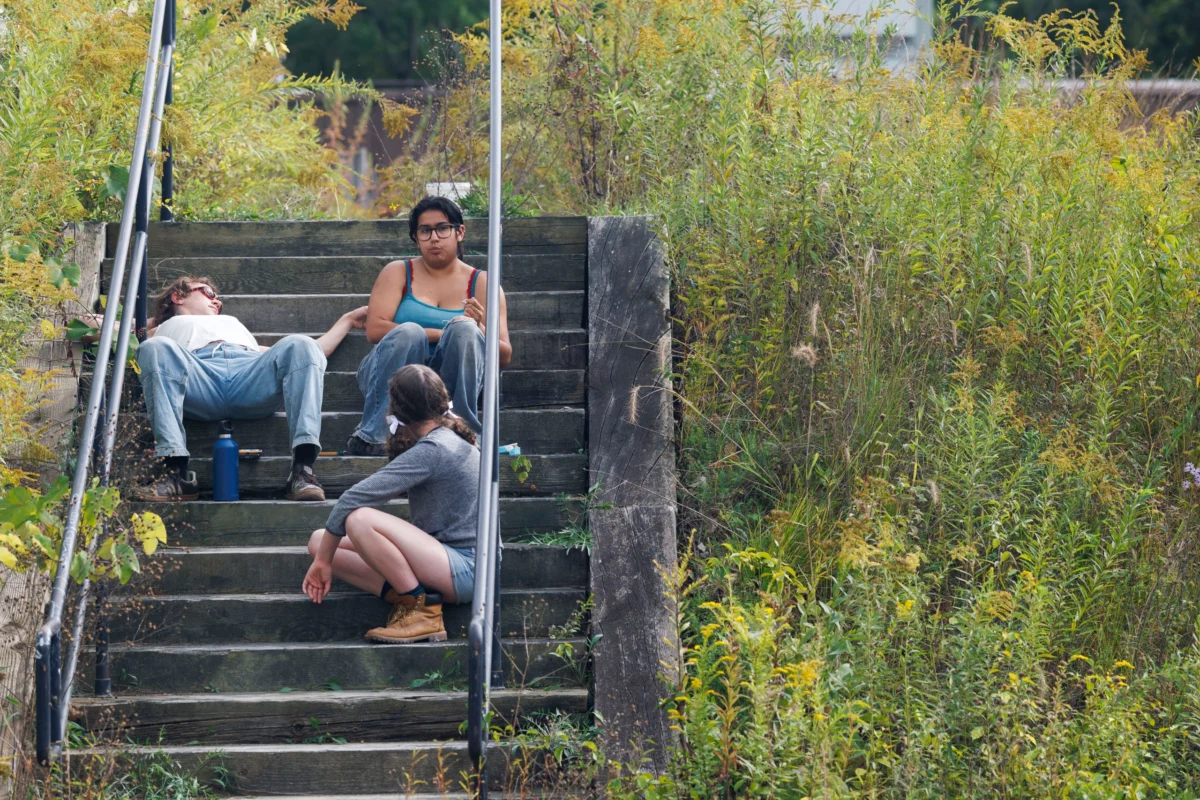
AMHERST, Mass. — The parking lots are mostly vacant. Locked and dark, many of the buildings are lifeless, save for the sight of dying plants in dusty pots left behind in the rush of a winding-down institution. One of the few people visible on the 800-acre campus is a white-bearded man on a riding mower, dutifully tending to an empty lawn as if by muscle memory—a final caretaker for a ghost town of academia.
This is not a shuttered auto plant or a rusted steel mill left to decay in the wake of an industrial downturn; it is Hampshire College, a once-celebrated bastion of liberal arts education that will officially cease operations in December. Its quiet hallways and desolate dorms serve as a stark, physical manifestation of a profound crisis gripping the American higher education landscape. Across the nation, small, private, and non-profit colleges are vanishing at an alarming rate, a trend that saw the industry lose the equivalent of one institution every three weeks last year.

The Anatomy of an Industry in Crisis
For decades, the story of American higher education was one of aggressive, near-uninterrupted expansion. Universities were seen as essential economic engines, and the demand for degrees seemed insatiable. However, the current reality suggests that the sector has entered a thirty-year cycle of contraction.
Experts at the Huron Consulting Group have issued a sobering forecast: 442 of the nation’s 1,700 remaining private, non-profit colleges are at high risk of closure or merger within the next decade.

"Everyone is shocked to hear that more than a quarter of our private colleges could be gone in the next ten years," said Peter Stokes, a managing director at Huron. "We are now talking about hundreds of other institutions being in a similar situation."
The collapse is not confined to obscure schools. It is a systemic failure rooted in shifting demographics, economic pressures, and a declining public faith in the value of the traditional liberal arts degree.

Chronology of a Collapse: From Boom to Bust
To understand the current crisis, one must look at the demographic and economic shift that began around 2011. For sixty years, colleges benefited from a ballooning population of high school graduates. But as that surge flattened, the "enrollment cliff" arrived.
- 2011: Total college enrollment in the U.S. hits an all-time high, marking the peak of a six-decade expansion.
- 2011–2016: The number of 18-year-olds begins to plateau, and the percentage of high school graduates choosing to enroll in college begins a slow, steady decline.
- 2016–2024: The proportion of students choosing to pursue post-secondary education drops significantly, from 70 percent to 63 percent, according to the Bureau of Labor Statistics.
- 2024–2026: A wave of closures sweeps across the Northeast and Midwest, including historic institutions like Wells College and Eastern Nazarene College.
- December 2026: Hampshire College, an experimental model of "hippie paradise" education, concludes its final semester, leaving behind a legacy of innovation and a cautionary tale of institutional debt.
The trend is forecasted to continue through at least 2041, driven by the declining birth rates of the early 2000s and the increasing skepticism of prospective students regarding the cost-to-benefit ratio of private degrees.

Data Points: The Numbers Behind the Silence
The data paints a grim picture for institutions that lack the massive endowments of "flagship" public universities or the brand prestige of Ivy League institutions.
- The Enrollment Gap: Overall college enrollment has plummeted by 2 million students since the 2011 high.
- The Persistence Problem: When a college closes, the impact on students is often catastrophic. According to the State Higher Education Executive Officers Association, fewer than half of students at shuttered colleges successfully enroll in another institution. Of those who do, fewer than half eventually graduate.
- Financial Unsustainability: Many failing schools have relied on "tuition discounting"—offering deep scholarships to attract students—which has rendered their business models unsustainable. They are effectively paying to educate students they cannot afford to support, leading to massive debt accumulation.
- Public Confidence: Perhaps most damning is the collapse of public trust. Gallup surveys indicate that confidence in higher education has plummeted from 57 percent in 2015 to just 38 percent today.
Official Perspectives: Navigating the Sink-or-Swim Environment
Kevin McElrath, director of the College Crisis Initiative at Davidson College, describes the current climate as a "sink-or-swim environment."

"The top schools—the highly selective privates, the big public flagships—they’re going to be fine," McElrath notes. "They have the demand, the prestigious reputations, and the endowments. But the rest? They’re in a struggle for survival that has been brewing for years and is now being exacerbated by policy changes and economic instability."
The administrative response has been largely reactive. Behind the scenes, many colleges are quietly seeking merger partners. Brian Weinblatt, founder of HCS Strategy, notes that the desperation is palpable. "The more troubled institutions are going to the relatively stable ones, asking, ‘Would you consider taking us in?’"

For most, however, the inquiry comes too late. By the time a board of trustees admits that the end is near, the financial reserves are usually depleted, and the reputational damage has already discouraged the next incoming class.
The Human Cost and Collateral Damage
While economists look at balance sheets, the reality on the ground is personal. Hampshire College, founded in the 1960s, was an alternative to the bureaucratic, lecture-hall-heavy university model. It emphasized self-directed study and narrative evaluations rather than traditional grades. Its alumni include luminaries like documentarian Ken Burns and actress Lupita Nyong’o.

For students like Chloe De Lisle, the closure is not just a financial issue; it is a loss of a community that believed in them when larger institutions did not. "It feels like we’re still waiting for the student body to arrive," De Lisle says, standing on the 800-acre campus.
The social consequences are equally severe. When a college closes, the local economy often goes with it. Colleges are usually the largest employers in their towns. When the students stop buying coffee, when the professors move away, and when the campus becomes a "ghost town," the town itself often enters a long, painful decline.

Implications for the Future of Work
The broader concern for the United States is the potential for a "skills gap." As the baby boomer generation retires, the economy is facing a record shortage of skilled workers. If higher education becomes less accessible, particularly in rural and underserved areas, the nation may struggle to produce the workforce necessary to maintain its economic competitiveness.
Musbah Shaheen, an assistant professor at the University of Massachusetts, emphasizes that the crisis is forcing a fundamental rethink of what college is for. "We’re in a period where we have to ask: How do we transform higher education?" Shaheen said. "But when you’re struggling to keep the lights on and balance the books, it’s very difficult to think about long-term transformation."

The Final Reflection
As the maintenance crews at Hampshire College slowly begin the process of decommissioning the campus, they are tasked with erasing the "wistful graffiti" left by the final cohort of students. Phrases like "Hampshire will live forever" are scrawled on redbrick walls—a defiant, if futile, gesture against the reality of institutional expiration.
Madeline Keating, one of the last students finishing her senior project, has already joined alumni groups, attempting to build a virtual community for a school that will no longer exist in the physical world. "We’ll throw a Frisbee or something," she says, laughing through her frustration. "Whatever Hampshire people do."

But the levity masks a deeper, colder truth. As the lights go out in the classrooms of Amherst, they are also flickering in towns across America. The era of the small, independent college is ending, and the collateral damage—in terms of local economies, individual futures, and national educational capacity—is only just beginning to be measured. The question remains whether this is a necessary correction or the beginning of an era where higher education is reserved only for the elite, leaving the rest of the country to navigate a landscape of academic deserts.

 Sagoh
 Nana