
 Sagoh
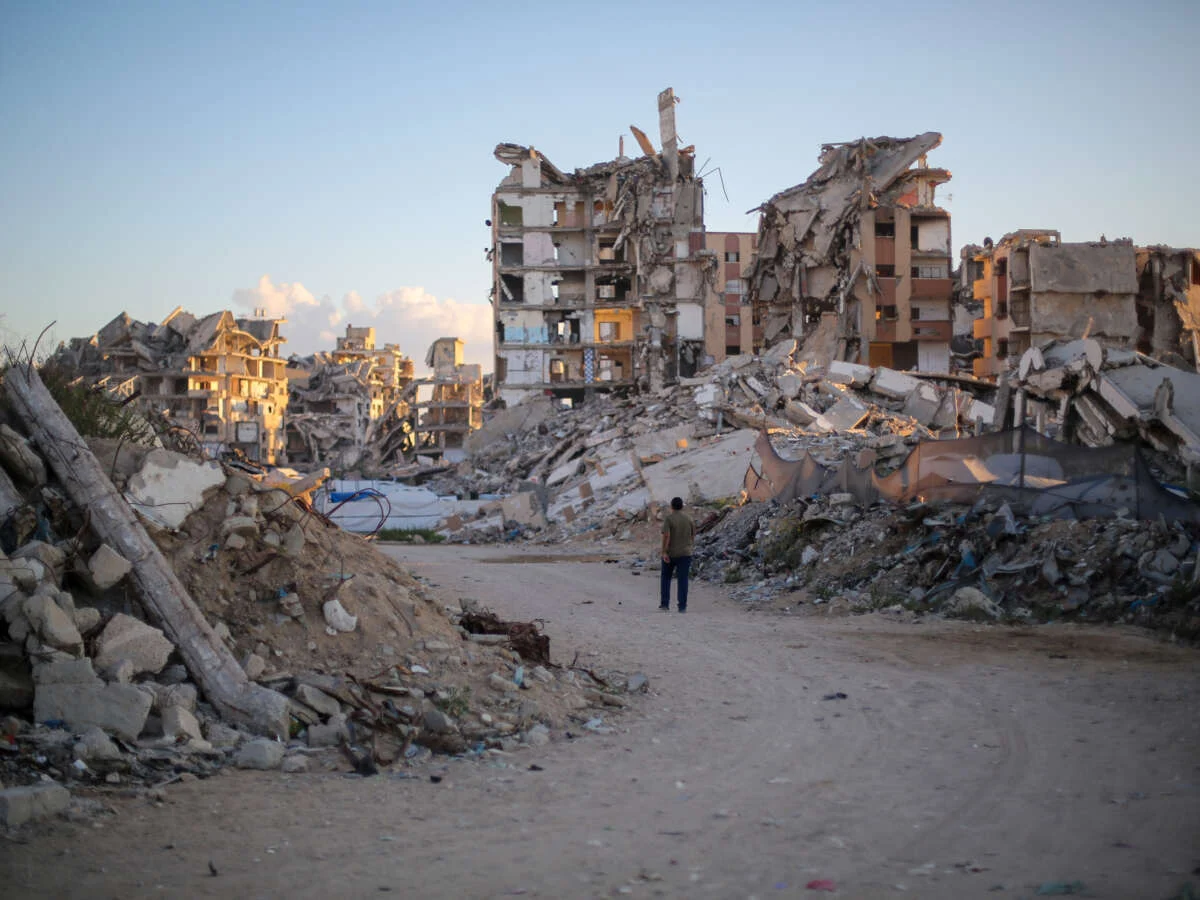
GAZA CITY — As the calendar turns toward the end of another year, the residents of the Gaza Strip find themselves trapped in a paradox of history. It has been three years since the catastrophic escalation began in October 2023, and while the international community often speaks of "post-conflict recovery" and "ceasefire agreements," the reality on the ground remains one of perpetual warfare. The "ceasefire" of October 2025 has proven to be a hollow designation, leaving over two million people in a state of suspended animation—living between the rubble of the past and the threat of a total return to high-intensity bombardment.
Main Facts: A War Without a Conclusion
The humanitarian situation in Gaza has reached a critical juncture where the distinction between "war" and "peace" has blurred into a singular, grueling experience of survival. Despite a formal cessation of major hostilities declared on October 10, 2025, the structural and social fabric of Gaza continues to disintegrate.
The primary issues defining the current landscape include:
- Structural Instability: Approximately 82% of Gaza’s buildings have sustained significant damage. This has led to a secondary crisis of spontaneous collapses, most recently the Al-Sadah building in Tal al-Hawa, which resulted in dozens of casualties.
- Medical System Paralysis: The healthcare infrastructure is in a state of collapse. Essential supplies, from life-saving cancer medications to basic dental materials, are either unavailable or prohibitively expensive due to the tightened siege.
- The Threat of Mass Displacement: Recent rhetoric from the Israeli Ministry of Defense has reintroduced the threat of a total evacuation of Gaza City, keeping the population in a state of constant psychological terror.
- Economic Hyperinflation of Care: Basic medical procedures, such as root canals, have seen a 500% to 600% price increase, forcing residents to choose permanent tooth extraction over treatment.
Chronology: From Invasion to the "Phantom Ceasefire"
To understand the current state of Gaza in late 2026, one must trace the timeline of a conflict that refused to end.
October 2023 – September 2025: The Years of Fire
The initial invasion led to the most concentrated aerial bombardment in modern history. By early 2024, the majority of the population was displaced multiple times, moving from the north to the supposed "safe zones" in the south, only to face bombardment there as well. Throughout late 2024 and early 2025, the infrastructure—including power plants, water desalination facilities, and hospitals—was systematically dismantled.
October 10, 2025: The Paper Ceasefire
A ceasefire was officially brokered and took effect at noon local time. For a brief moment, the residents of Gaza expected a return to normalcy, similar to the aftermaths of the 2014 and 2021 conflicts. They anticipated the clearing of rubble and the entry of construction materials. However, the siege was not lifted; instead, it was recalibrated. The "ceasefire" marked the end of large-scale ground maneuvers but the beginning of a "low-intensity" campaign of targeted strikes and total economic strangulation.
September 2026: The Return of the Ultimatum
On September 22, 2026, Israeli Defense Minister Israel Katz issued a stark warning that fundamentally shifted the psychological landscape. He stated that the abduction of a single Israeli soldier or civilian would trigger the total evacuation of Gaza City’s one million remaining residents to the south. This ultimatum effectively weaponized the presence of civilians, making their right to remain in their homes contingent upon events entirely outside their control.
Supporting Data: The Anatomy of a Decaying Infrastructure
The statistics emerging from Gaza paint a picture of a society being pushed beyond the limits of human endurance.
The Housing Crisis and the Al-Sadah Collapse
The collapse of the Al-Sadah building in Tal al-Hawa on September 16, 2026, serves as a grim data point for the dangers of "residual damage." The building had been struck multiple times in 2024 and March 2025. Despite warnings from Civil Defense teams, 80 displaced Palestinians were living in its cracked shell because they had no other options.
The collapse killed 21 people, including 12 children and five women. This is not an isolated incident; with 82% of buildings damaged, the Gaza Strip is essentially a landscape of "standing rubble." The lack of heavy machinery and fuel—denied entry under the siege—means that thousands of tons of debris remain uncleared, hiding unexploded ordnance and destabilizing the foundations of neighboring structures.
The Healthcare Deficit
The World Health Organization (WHO) has documented a catastrophic shortage of medical supplies. As of late 2026:
- Fuel: Hospitals operate on less than 20% of the fuel required for full capacity.
- Specialized Care: Dental care has become a luxury. Dr. Ghalib Zimmo, a local dentist, reports that the cost of dental materials has risen tenfold. A root canal that cost $40 before the war now costs $250. In a region where the unemployment rate has soared above 80%, this price point is an impossibility, leading to a surge in preventable extractions and secondary infections.
- Prosthetics: There is a backlog of thousands of individuals requiring wheelchairs and prosthetic limbs, with almost no new shipments allowed through the crossings.
Official Responses and International Stance
The response to the ongoing crisis remains polarized.
The Israeli Defense Ministry maintains that its restrictive measures and the threat of mass evacuation are necessary security protocols. Minister Israel Katz’s September 22 statement reflects a policy of "collective deterrence," where the civilian population is used as a lever against local armed groups.
The World Health Organization (WHO) has taken a more desperate tone. Director-General Tedros Adhanom Ghebreyesus recently emphasized that the "humanitarian access" granted is a mere fraction of what is needed. He described the shortages of medicines and diagnostics as "critical," suggesting that the health system is being "starved into non-existence."
Local Civil Defense and Medical Teams in Gaza have expressed a sense of abandonment. Their warnings regarding the Al-Sadah building went unheeded not because residents were defiant, but because the "safe" alternatives—tents and temporary shelters—were either full or destroyed. They continue to operate with primitive tools, often digging through collapsed concrete with their bare hands.
Implications: The Psychological and Social Toll
The long-term implications of this "unfinished war" are profound. The people of Gaza are not just suffering from physical deprivation; they are enduring a form of psychological warfare that has no precedent.
The Normalization of Trauma
Residents report a heightened sensitivity to sound that borders on the pathological. The sound of a chair scraping across a floor or a car backfiring is frequently mistaken for the "whistle" of an incoming missile. This hyper-vigilance is the result of three years of relentless acoustic terror from drones and warplanes that never leave the airspace.
The Erasure of the Future
In previous conflicts, there was a "reconstruction phase." In the current environment, there is no such hope. The threat issued by Minister Katz suggests that even if a family manages to patch together a room in a ruined building, they could be forced to abandon it at a moment’s notice. This prevents any form of long-term planning, education, or economic investment.
The Siege as a Form of War
The current state of Gaza proves that a ceasefire without the lifting of a siege is merely war by other means. By controlling the calorie intake, the availability of medicine, and the structural safety of the environment, the siege achieves the same ends as bombardment: the gradual dismantling of a society.
Conclusion
As Gaza enters another year of uncertainty, the international community’s focus on "ceasefire" headlines masks a more complex and terrifying reality. The war has not ended; it has simply changed its rhythm. For the million residents of Gaza City and the millions more across the Strip, life is a daily negotiation with death—whether it comes from a missile, a collapsing ceiling, or a lack of basic medicine. The "shadow of fear" described by the people of Gaza is not a remnant of the past, but the defining feature of their future. Without a fundamental shift in the blockade and a genuine commitment to reconstruction, the "three-year war" threatens to become a permanent state of existence.



 Siti Muinah