


 Nana
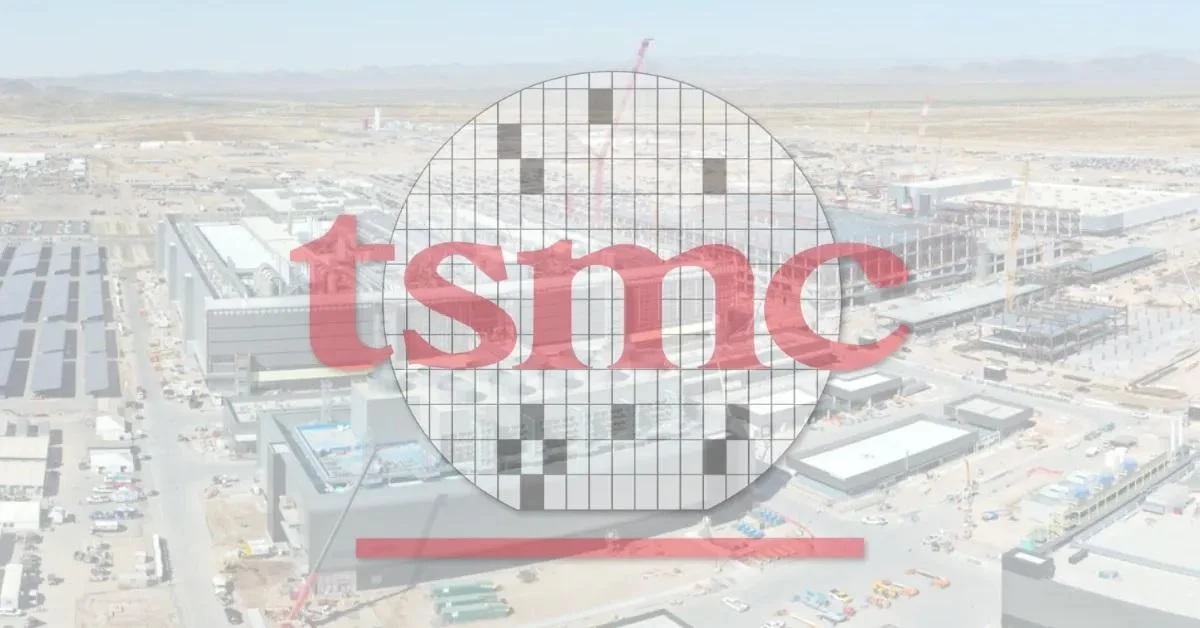
Phoenix, AZ – July 8, 2026 – A seemingly modest $115,000 grant awarded to two municipal parks in Phoenix might appear to be a purely local affair. However, this contribution from TSMC Arizona to Madison Park and Los Olivos Park represents a far-reaching initiative, originating from the water-scarce landscapes of Taiwan and extending to customers across the globe. This act underscores TSMC’s deeply ingrained commitment to water discipline, a principle it diligently applies wherever it establishes its advanced manufacturing facilities.
The City of Phoenix Parks and Recreation Department officially announced the grant on July 8, 2026, detailing how the funds from TSMC Arizona would be utilized for Calsense smart controllers and flow sensors. These technological upgrades are designed to significantly enhance water efficiency within the parks. The system allows park crews to intelligently pause irrigation during monsoon rain events and swiftly shut down broken water lines, thereby preventing the wasteful loss of thousands of gallons. Phoenix officials estimate that each instance of a skipped watering cycle can conserve approximately 81,000 gallons of precious water. While the monetary figure itself is relatively small in the context of TSMC’s global operations, the underlying philosophy and strategic approach it signifies are anything but. This grant is a tangible manifestation of a long-standing water management strategy that TSMC has honed and rigorously implemented, particularly in its home country.
A Legacy of Water Conservation Forged in Adversity
TSMC’s sophisticated approach to water conservation was not born in an environment of abundance, but rather out of necessity, driven by the acute water pressures experienced in its home base of Taiwan. The company’s sprawling Tainan operation is distinguished by housing the world’s first industrial wastewater reclamation plant specifically designed for direct reuse in the advanced chip manufacturing process. This pioneering facility, which commenced operations in September 2022, was engineered and is managed by the prominent engineering group CTCI. The plant employs a multi-stage purification process, encompassing biological treatment, ultrafiltration, and reverse osmosis, to transform industrial wastewater into a resource suitable for the highly sensitive demands of semiconductor fabrication.
The impetus for such innovative engineering was directly linked to the severe environmental challenges Taiwan faced. In 2021, the island endured its most significant drought in approximately half a century. Coincidentally, this period also saw U.S. authorities issue their first official water shortage declaration for the Colorado River, a critical water source for the American Southwest. Industry reports at the time credited TSMC with successfully maintaining the operational continuity of its Taiwan fabrication plants throughout this arid spell, largely attributed to its meticulously developed "staged water-shortage response plan." This proactive measure demonstrated that TSMC views supply risk, particularly concerning water, as a fundamental operational consideration rather than an external variable. Further underscoring this commitment, the same industry accounts highlighted a benchmark TSMC had maintained for years: a remarkable 90% water recycling rate within its fabs.
The significance of this achievement was articulated by CTCI chairman John T. Yu during the Tainan project’s inauguration. He framed the initiative in a global context, stating, "Utilizing reclaimed water as a water resource is becoming increasingly important in achieving global sustainable development." This statement not only highlighted the immediate environmental benefits but also positioned the project as a replicable model for sustainable industrial practices worldwide.
Replicating Excellence: The Sonoran Desert’s New Water Standard
The advanced water reclamation methodologies pioneered by TSMC in Tainan are now being meticulously reproduced and adapted for the unique environmental and political conditions of the Sonoran Desert in Arizona. TSMC Arizona’s north Phoenix campus is already a testament to this commitment, currently recycling approximately 65% of the water it consumes. The company has made a firm commitment to elevate this recycling rate towards an ambitious 90% through the construction of an Industrial Reclamation Water Plant, engineered for near-total water reuse. This ‘near-zero discharge’ design, as detailed by AZFamily in August 2025, serves as a crucial proof point of TSMC Arizona’s overarching green manufacturing strategy and its unwavering dedication to water conservation. This commitment is vital for ensuring the sustained availability of water resources for a growing Phoenix community.
The grant to Phoenix parks directly aligns with this broader water stewardship initiative. One facet of TSMC’s strategy focuses on minimizing the water footprint of its manufacturing operations. The other, exemplified by the parks grant, focuses on assisting the surrounding community in reducing its own water consumption from the remaining available resources. When viewed in tandem, these actions paint a clear picture of a company actively working to lessen its impact on shared water resources, addressing the challenge from both sides of the utility meter.
The "Neighbor Test": Extending Water Stewardship Beyond Facility Lines
True water stewardship is recognized and gains credibility when its benefits extend beyond the immediate confines of a company’s property lines. TSMC has proactively sought avenues to make its conservation efforts publicly visible and impactful. In Tainan, the cutting-edge reclamation plant has been transformed into a certified environmental education center. This center actively engages with the community by offering free courses and guided site tours to schoolchildren and university students specializing in water resources. This initiative not only educates the next generation about sustainable water management but also fosters a sense of environmental responsibility within the community.
Similarly, in Phoenix, the company’s investment in local parks contributes to a more sustainable urban environment by maintaining greener public spaces with reduced water usage. While neither of these gestures, individually, might seem significant when contrasted with the colossal scale of TSMC’s manufacturing operations, which are measured in billions of dollars, they collectively address a fundamental question that inevitably arises with the introduction of heavy industry into any community: will the newcomer contribute positively and give back more than it takes?
This question becomes increasingly pertinent as the semiconductor industry continues its rapid expansion. The escalating global demand for advanced chips is driving the construction of new fabrication plants in regions where water resources are already under considerable strain. These areas span from the arid American Southwest to the densely populated island of Taiwan. In this context, a manufacturer that arrives equipped with a proven track record in water recycling, a robust drought management playbook, and a demonstrated willingness to invest in local water efficiency projects offers host governments and communities a more compelling and sustainable proposition than one that simply relies on existing infrastructure without significant conservation efforts.
Industry-Wide Scrutiny: Why the Global Semiconductor Sector is Watching
TSMC does not operate in a vacuum; its water management practices have a discernible ripple effect across the entire semiconductor industry. As the leading foundry for a vast proportion of the global technology sector, TSMC occupies a critical chokepoint in the supply chain. This position means that its customers, regulatory bodies, and even rival manufacturers are closely observing its actions to define what constitutes "responsible" industrial practice at a global scale.
The company’s pioneering achievements – being the first to attain AWS Platinum standard for water stewardship, developing the world’s first chip-grade wastewater reclamation plant, and swiftly implementing these advanced methods on a new continent – provide TSMC with something far more enduring than mere public goodwill. These accomplishments establish a precedent and set an expectation for responsible water management that other players in the semiconductor field are now increasingly being measured against.
For an industry where the demand for its products and its consumption of water are both on a relentless upward trajectory, this evolving expectation may prove to be as strategically significant as any single fabrication plant. The water savings achieved by the Phoenix parks, while individually modest at 81,000 gallons per cycle, represent a quiet but consistent contribution to local sustainability. However, the more telling detail lies in the fact that a company headquartered an ocean away chose to allocate resources to these local initiatives, and that this decision is not an isolated act but rather an integral part of a comprehensive water management strategy that TSMC has been systematically building and refining, fab by fab, for many years. This consistent approach demonstrates a deep-seated commitment to sustainability that transcends geographical boundaries and operational scales, setting a new benchmark for the industry.


 Jia Lissa

 Suro Senen






