




 Evan Lee Salim

In an era defined by relentless digital noise and unprecedented levels of professional and personal pressure, the ability to maintain internal equilibrium is becoming a rare and vital commodity. Psychology experts and life coaches increasingly agree: our ultimate trajectory is not dictated by the circumstances we encounter, but by our daily attitude and our cognitive response to those circumstances.
A compelling case study from the coaching practice of Marc and Angel Chernoff highlights how intentional cognitive restructuring can lead to profound life changes. By examining the methodology used by their client, Monica—a survivor of a life-altering car accident—we can uncover a practical framework for navigating adversity. This report explores the science of mindset management, the implementation of physical cognitive triggers, and the broader implications for emotional resilience.

The Case of Monica: A Study in Resilience
The narrative of Monica serves as a powerful testament to the plasticity of the human perspective. Following a debilitating automobile accident, Monica initially perceived her injuries as the definitive conclusion to her former life. However, through a dedicated period of healing, she underwent a significant psychological pivot.
During a recent FaceTime coaching session, Monica appeared in high spirits, attributing her demeanor to a fundamental shift in her cognitive approach. She noted that while she once viewed her injuries as an end, she had arrived at the realization that they represented a new beginning. Her journey involved a systematic shedding of "shoulda, woulda, coulda" narratives—ruminative thoughts that often impede recovery—in favor of a more proactive, grace-filled mindset. This transition was not instantaneous; it was the result of consistent, daily practice aimed at reframing her reality.

The Methodology: The Power of Physical Triggers
At the heart of the Chernoffs’ coaching strategy is the concept of "top-of-mind awareness." The human brain is prone to default settings that favor anxiety and focus on external stressors. To combat this, the practice advocates for the use of physical, environmental cues.
The Science of Sticky Notes
Monica’s strategy involves the strategic placement of handwritten quotes on sticky notes in high-traffic areas of her home: her office walls, bathroom mirrors, and refrigerator doors. This is not merely decorative; it is a form of environmental conditioning. By placing positive, proactive reminders in locations where the eye naturally rests, an individual can interrupt the cycle of negative self-talk.

This practice is grounded in the psychological principle of "priming." By consistently exposing the mind to specific, empowering statements, individuals can prime their subconscious to default to these perspectives during moments of high stress. When a sudden challenge arises, the brain—having been repeatedly exposed to these "mindset anchors"—is more likely to access these prepared thoughts rather than descending into a spiral of reactivity.
Defining Inner Peace in a Chaotic World
A common misconception regarding mental well-being is that it requires the total removal of external stressors. However, the evidence suggests otherwise. True inner peace is not defined by the absence of noise, chaos, or tragedy, but by the capacity to maintain a steady, healthy mindset while in the midst of those challenges.
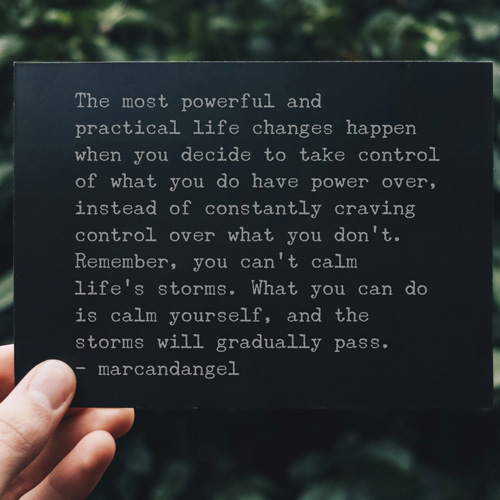
This distinction is crucial for modern professionals and individuals facing systemic instability. If we wait for the world to become quiet before we attempt to find peace, we will be waiting indefinitely. Instead, the objective is to build an internal architecture capable of weathering the storm. As Marc and Angel note, they utilize these same techniques in their own lives, acknowledging that even seasoned practitioners of mindfulness are susceptible to forgetting their core values during periods of high pressure.
Chronology of Cognitive Change
To replicate the success observed in cases like Monica’s, a structured approach is recommended. The process of cognitive recalibration generally follows a predictable arc:

- Identification (Days 1–3): The individual identifies the specific cognitive traps that most frequently derail their progress. This involves an audit of their internal dialogue.
- Externalization (Days 4–7): The individual writes down powerful, grounding truths—quotes, affirmations, or personal mantras—that directly address their specific stressors.
- Environmental Integration (Week 2): These notes are placed in the physical environment. The goal is for the individual to encounter these reminders at least 5–10 times throughout the day.
- Habitual Reflection (Week 3 and beyond): The individual moves from passive reading to active engagement. This means stopping for ten seconds upon seeing the note to breathe and internalize the message.
- Integration (Ongoing): The mindset begins to shift from a conscious effort to a subconscious baseline.
Supporting Data: Why Affirmations Work
While the term "affirmations" is sometimes dismissed as pseudoscience, there is a substantial body of research supporting the efficacy of self-affirmation theory. Studies published in journals like Psychological Science suggest that self-affirmation can improve problem-solving under pressure and decrease the physiological stress response.
When we are under threat, our cognitive resources are often diverted to the amygdala, the brain’s "fight or flight" center. By reading a grounding quote, we engage the prefrontal cortex—the area responsible for executive function and logic. This simple act of reading a physical note can serve as a "circuit breaker" for the stress response, allowing for a more measured and intelligent reaction to the situation at hand.

Implications for Long-Term Well-being
The implications of this practice extend far beyond personal comfort. By choosing to accept life as it is—with its full spectrum of frustration, uncertainty, excitement, and joy—we cultivate a state of "radical acceptance."
Accepting the Full Spectrum
Many individuals suffer because they are in a constant state of resistance against the negative aspects of life. They yearn for a curated existence that excludes pain or inconvenience. The reality is that the human experience is inherently multifaceted. By learning to embrace the "full range" of daily reality, individuals can reduce the secondary suffering caused by the resistance to their circumstances.

The "One Step at a Time" Framework
The strategy advocated by the Chernoffs focuses on making the best of what is in front of us. This is a pragmatic, iterative approach. It does not promise that the best-case scenario will always occur. Instead, it offers a guarantee of resilience: no matter what happens, one can choose to make the best of it, one step at a time. This shift from outcome-dependency to process-orientation is the hallmark of a resilient mindset.
Moving Forward: The Challenge to the Reader
The transition from intellectual understanding to practical application is the most significant hurdle. Many people consume self-help content but fail to implement the actionable steps required for transformation.

The challenge presented is straightforward:
- Select: Choose the quotes or ideas that resonate most deeply with your current life situation.
- Write: Transcribe these onto physical paper. The tactile process of writing engages the brain more effectively than digital screenshots.
- Post: Place them in your immediate line of sight.
- Pause: When life feels overwhelming, read the notes. Do not rush; allow the words to settle.
Conclusion: You Are Worth the Work
The process of cultivating a robust mindset is not a final destination; it is an ongoing practice. It requires the same dedication one might give to physical fitness or professional skill acquisition.

By acknowledging that you are a project worth working on, you grant yourself the permission to prioritize your mental environment. As we move forward into an increasingly complex future, the ability to control one’s own narrative will be the single most important factor in determining the quality of our lives. Whether you are recovering from a major life setback or simply navigating the day-to-day challenges of a modern career, the principles of intentional mindset management offer a clear, proven path to greater stability and long-term peace.
Start today by identifying the reminders that will guide your journey, and begin the process of building the momentum necessary to thrive in the face of whatever life brings.


 Nana Wu

 Ali Ikhwan