


 Reynand Wu
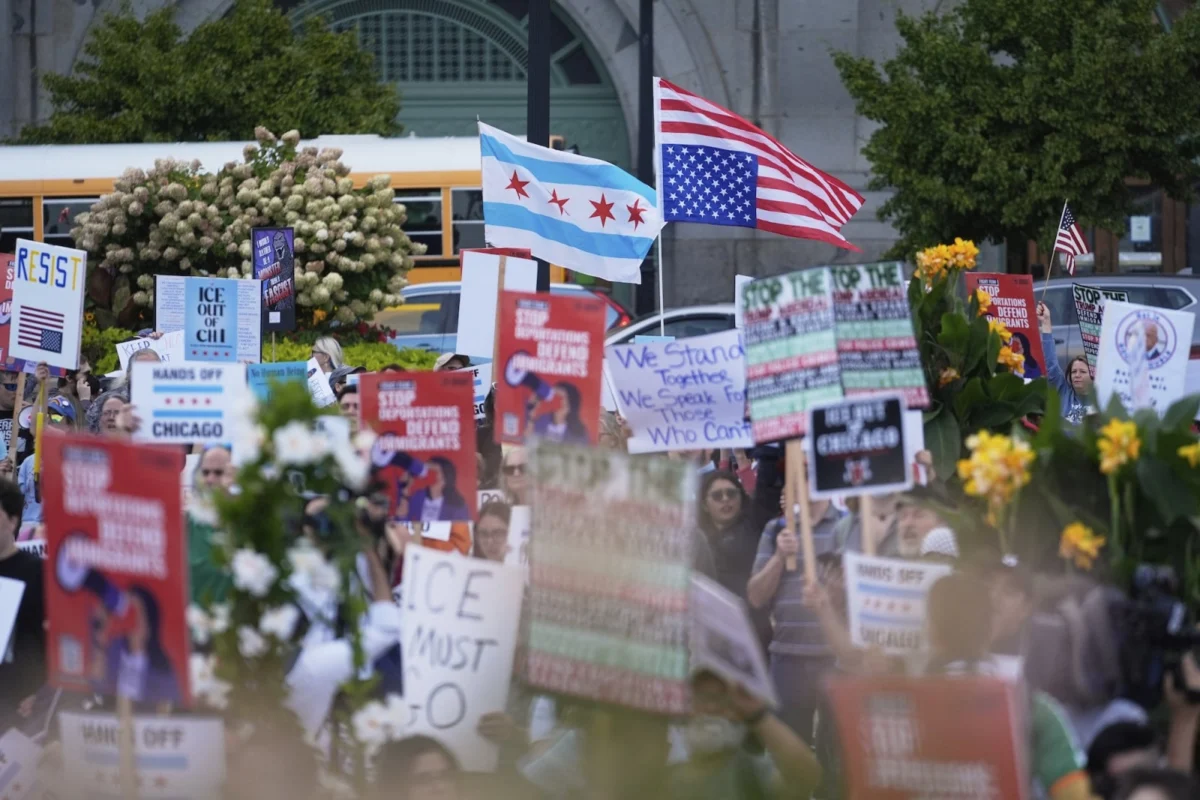
In an era where institutional trust is at an all-time low, the residents of Chicago’s Northwest Side are proving that the most effective safety nets are not constructed by corporations or federal agencies, but by the hands of neighbors. As the federal government has intensified immigration enforcement, the "trust the market" narrative—a pervasive ideology suggesting that private entities and unregulated systems will naturally yield the best societal outcomes—is being challenged by a growing movement of radical mutual aid and community-led defense.
For those on the front lines in neighborhoods like Belmont Cragin, the most Latino enclave in Chicago, the question of who provides support during a crisis has a singular answer: the community itself.
The Genesis of the Northwest Side Rapid Response Network
The emergence of the Northwest Side Rapid Response Network (NSRRN) was not a top-down administrative decision; it was a desperate, necessary reaction to the escalation of Immigration and Customs Enforcement (ICE) activity. Following shifts in federal policy that saw ICE agents deploy with newfound aggression, community members realized that waiting for institutional intervention was a losing strategy.
A Chronology of Resistance
- The Catalyst: During the federal "Operation Midway Blitz," ICE agents began indiscriminate detention operations, sweeping up not only undocumented immigrants but also U.S. citizens who happened to be in the wrong place at the wrong time.
- The Organizing Phase: Local nonprofit organizations and allied elected officials began a door-knocking campaign, distributing "Know Your Rights" literature and providing contact information for the Illinois Coalition for Immigrant and Refugee Rights (ICIRR) Family Support Network hotline.
- The Institutionalization of Care: What began as informal check-ins evolved into a sophisticated, hyper-localized network. Volunteers were trained in "ICE Watch" tactics—a methodology adapted from the long-standing Chicago "Copwatch" programs used to document police brutality.
- The Expansion: Today, the network encompasses mental health support, legal aid, and mutual aid funds for families who have lost their primary breadwinners to detention.
Dismantling the Myth of Market-Driven Public Safety
The "trust the market" narrative argues that technological innovation and private-sector efficiency are the best tools for municipal governance. However, critics argue this philosophy has facilitated the erosion of civil liberties.
Data Exploitation and the Surveillance State
The intersection of private profit and public policy has created a dangerous environment for vulnerable communities. A prime example is the collaboration between government entities and data brokers like LexisNexis. In Cook County, booking data—regardless of the final legal outcome for the individual—is collected and sold by private firms. This data follows individuals for decades, acting as a permanent barrier to housing, employment, and stability.
The Illusion of Tech-Driven Security
Similarly, the proliferation of "Flock" cameras and other mass surveillance technologies in municipalities across the U.S. is often marketed as a neutral, "efficient" way to ensure public safety. Commissioner Jessica Vásquez and other local leaders contend that these technologies are not designed to protect, but rather to enrich private tech firms while providing law enforcement with an unchecked mechanism to harass marginalized populations. These contracts often contain clauses that allow companies to monetize captured data with third parties, effectively turning the act of living in a city into a revenue stream for the surveillance industry.
Supporting Data and the Cost of Neglect
The consequences of state-sanctioned enforcement go beyond the immediate trauma of detention. When an breadwinner is removed from a home, the immediate economic fallout is devastating.
- Food and Housing Insecurity: Families often face sudden homelessness as rent payments are missed.
- Health Crises: Federal attacks on healthcare access have pushed many in the immigrant community toward charity care and emergency rooms, further straining the resources of local providers like Cook County Health.
- Accountability Gaps: The persistence of state violence is evidenced by the necessity of filing criminal complaints against federal agents—a process that is often met with indifference or hostility from local law enforcement, who have been reported to turn their backs as community responders are brutalized or pepper-sprayed.
Official Responses and the Limits of Policy
Elected officials who have risen from the ranks of grassroots organizing, such as Commissioner Vásquez and a cohort of progressive alderpeople, are attempting to bridge the gap between activism and governance.

"We don’t want to have to ask a teacher to get up at 5 a.m. to patrol a block," says Vásquez. The objective, she explains, is to build "durable infrastructure." This includes fighting to maintain guaranteed income pilots in the county budget and drafting ordinances to limit the sharing of county-held data with federal agencies.
However, these officials acknowledge that policy change is slow and often subject to federal preemption. The "guiding star" of their work remains solidarity—a commitment to prioritizing the needs of the most vulnerable over the efficiency of the administrative state.
Implications: A New Paradigm of Governance
The work happening on Chicago’s Northwest Side suggests that the future of public safety may look less like a police-led model and more like a community-led health and resource-sharing network.
The Philosophy of "Right to Peace"
The movement draws inspiration from figures like Malcolm X and the Chilean folk singer-revolutionary Victor Jara, both of whom emphasized that peace is inseparable from freedom. In this framework, "peace" is not merely the absence of conflict, but the presence of justice and the ability to thrive without the constant threat of state or corporate interference.
The Shift Toward Solidarity
As the current political administration continues to challenge the rights of immigrant families, the work of the Rapid Response Network is evolving. It is shifting from reactive crisis management to proactive systemic reform. By documenting abuses, fighting surveillance, and ensuring basic needs are met through mutual aid, these activists are creating a model that can be replicated in cities nationwide.
The lesson for urban policy is clear: If local governments continue to outsource their responsibilities to tech companies and prioritize market-based solutions, they will continue to fail the residents who need them most. True safety, as demonstrated by the residents of Belmont Cragin, is not bought or sold; it is built through the deliberate, daily act of loving one’s neighbor and refusing to accept the status quo of inequity.
Conclusion
The "Not My Narrative" series, of which this story is a part, seeks to dismantle the myths that justify neglect. The myth that "the market knows best" has been used to justify everything from the privatization of public surveillance to the systematic abandonment of the poor. By looking at the reality on the ground in Chicago, it becomes clear that when institutions fail, the people will organize. The question for policymakers is no longer how they can better manage the "market" of public services, but how they can support the grassroots infrastructure that has already proven it can keep its people safe.
In the face of adversity, the people of Chicago are not just waiting for change—they are building it, block by block, ensuring that no family is left to face the machinery of the state alone.


 Siti Muinah

 Nana Wu