

 Evan Lee Salim
The current American political landscape is defined by a volatile intersection of accountability and backlash. In recent weeks, the Commonwealth of Virginia has been engulfed in a series of government scandals—ranging from historical instances of blackface involving Governor Ralph Northam and Attorney General Mark Herring to serious allegations of sexual assault against Lieutenant Governor Justin Fairfax. As Democratic Party leadership moved swiftly to demand resignations, a familiar refrain emerged from pundits and politicians across the spectrum: these calls for accountability were dismissed by some as merely the latest evidence of an overbearing "political correctness" culture run amok.
However, this reflexive critique of "PC culture" often obscures a deeper, more troubling reality. When analyzed against the broader media landscape, it becomes evident that the term is frequently weaponized to shield those in power while simultaneously silencing those who challenge the status quo. The modern debate over "political correctness" is not, as often claimed, a defense of free speech; rather, it is a defensive reaction against the empowerment of marginalized voices who are finally demanding the respect and dignity they have historically been denied.
The Chronology of Contradiction
The recent turmoil in Virginia serves as a microcosm for a broader national pattern. When public officials are confronted with evidence of bigotry or sexual misconduct, the discourse often shifts away from the substance of their actions and toward the perceived "purity" of the standard being applied.
This pattern was starkly visible in January 2019, when Representative Rashida Tlaib utilized profanity while calling for the impeachment of President Donald Trump. Her comments generated a firestorm of "faux outrage," dominating cable news cycles for days. A subsequent report revealed a staggering disparity: Tlaib’s use of a four-letter word received five times more media coverage than the explicit, public defenses of white supremacy voiced by Representative Steve King during the same week.
This asymmetry suggests that the "PC police" are not as concerned with civility as they are with the enforcement of hierarchy. While Tlaib was pilloried for a breach of decorum, President Trump—whose rhetoric is frequently laced with dehumanizing language regarding immigrants, women, and ethnic minorities—often avoids similar levels of institutional condemnation from his supporters. The ability to use, or be forgiven for, offensive language remains a function of privilege, not a standard of ethics.
Supporting Data: The Disparity in Media Attention
The selective outrage cycle is a well-documented phenomenon. When marginalized groups or their representatives speak out against oppression, they are frequently met with charges of "oversensitivity" or "identity politics." Conversely, when figures of established power engage in behavior that is objectively discriminatory or harassing, the response is often characterized by a "both sides" framing or an appeal to free speech absolutism.
Consider the following data points that illuminate this divide:
- Coverage Ratios: As noted, the disproportionate focus on Tlaib’s profanity versus Steve King’s white nationalist rhetoric demonstrates that media institutions prioritize the policing of "respectability" over the reporting of structural bigotry.
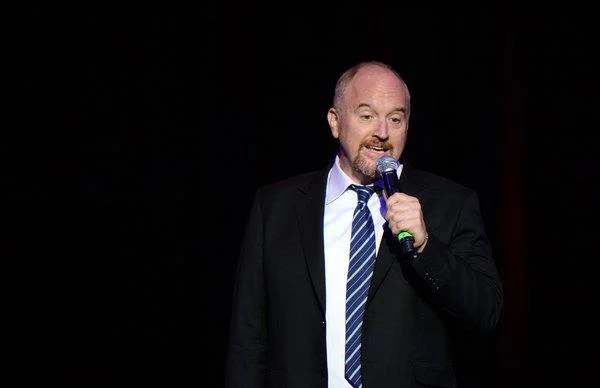
- The "Victim" Narrative: Comedian Louis CK’s return to the stage following his admitted history of sexual harassment provides a case study in power dynamics. Rather than reckoning with his past, CK utilized his platform to mock the transgender and non-binary communities. By framing himself as a victim of a "sensitive" culture, he inverted the power dynamic, positioning those who demand basic respect as the true aggressors.
- Survival Statistics: The groups most often targeted by anti-PC rhetoric—transgender individuals, people of color, and women—are statistically the most vulnerable to physical violence. According to the ACLU, transgender individuals face significantly higher rates of homicide and suicide. Dismissing their requests for gender-affirming language as "PC excess" ignores the reality that for these groups, language is often a precursor to, or an extension of, physical safety.
Official Responses and the Rhetoric of "Free Speech"
The defense of "free speech" has become the primary shield for those accused of bigotry. However, a professional analysis of this rhetoric reveals that it is rarely used to protect the speech of the marginalized. Instead, it is used to protect the right of the powerful to say "awful, dehumanizing ideas" without social consequence.
When public figures are called out for racist, homophobic, or misogynistic "jokes," the immediate response is often a cry of censorship. Yet, true free speech includes the right of the audience to push back, to critique, and to refuse to accept bigotry as a norm. The current movement for inclusivity is, in fact, an expansion of the public square. It allows for voices that were previously relegated to the margins to enter the national conversation. When those voices say, "that demeans me" or "that hurts me," they are not censoring—they are participating in the democratic process.
Implications: The High Cost of Dismissal
The systematic dismissal of these concerns is not merely a linguistic disagreement; it has concrete, life-altering implications. We live in an era where:
- Maternal Mortality Rates: Pro-choice advocates and medical professionals speaking out about the crisis of rising maternal death rates are often dismissed as "radical," even as the crisis disproportionately affects women of color.
- Police Violence: Black Lives Matter activists, who speak with urgency about the systemic failures of the criminal justice system, are frequently labeled as "divisive" or "anti-police" by critics who refuse to engage with the statistical reality of state-sanctioned violence.
- The Erosion of Public Life: When we prioritize the comfort of the status quo over the safety of the marginalized, we create an environment where bigotry is normalized. This creates a barrier to entry for marginalized people to participate in public life, effectively stifling their ability to speak, vote, and lead.
Conclusion: A Necessary Shift in the Conversation
The debate over "political correctness" is at a crossroads. We can continue to view these cultural shifts as an annoying obstacle to "business as usual," or we can recognize them as a necessary maturation of our democracy.
The goal of this movement is not the destruction of speech, but the promotion of a more inclusive public square where the ability to speak is not contingent on one’s social status. It is incumbent upon media organizations, political institutions, and the general public to stop viewing demands for respect as "excessive" and start viewing them as essential.
If we truly value free speech, we must be as protective of the person calling out injustice as we are of the person expressing a controversial opinion. The era of "shut up and take it" is ending, and the resentment felt by those who are losing their monopoly on the microphone is not a sign of a dying culture, but of a growing one. We must move beyond the tired, reactionary labels of "PC culture" and instead focus on the substantive work of ensuring that all voices—especially those that have been silenced for generations—have the safety and the space to be heard.
The progress we see today is not a threat to free speech; it is its highest fulfillment. By acknowledging that words carry weight, we do not restrict our freedom; we sharpen our ability to build a society that is fundamentally more thoughtful, more respectful, and more just for all.

 Basiran

 Siti Muinah