

 Siti Muinah
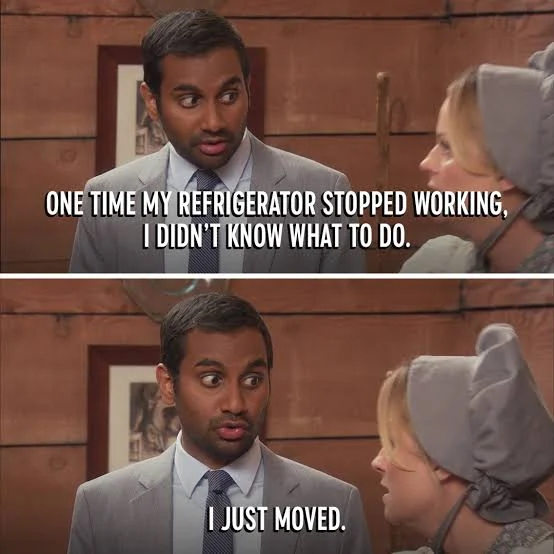
We often operate under the comforting illusion that we are the conscious architects of our own lives. We imagine our career trajectories, relationships, and daily habits are the results of calculated, deliberate choices. Yet, a closer inspection of the average adult experience reveals a starkly different reality: most of us are simply maintaining the status quo, trapped by the momentum of previous decisions. We took a job for a paycheck, stayed because the commute was tolerable, and eventually, that path became our destiny by default.
This phenomenon—the quiet resignation to circumstance—is a direct antithesis to what psychologists call "agency." Agency is the proactive capacity to influence one’s circumstances and act deliberately to achieve desired outcomes. While the concept sounds deceptively simple, it is a skill that eludes most, much like the "simple" advice to spend less than you earn or to prioritize physical health. When we observe high-agency individuals—those who seem to navigate obstacles with an almost magical ease—we often find ourselves questioning the rules of the game: "Wait, you’re actually allowed to do that?"
The Neuroscience of Learned Helplessness
The struggle to exert agency is not merely a failure of willpower; it is often a biological response to stress. In 1967, psychologists Martin Seligman and Steven Maier introduced the seminal theory of "learned helplessness," suggesting that individuals who face uncontrollable negative events eventually stop trying to escape them, even when the opportunity arises.
However, a 2016 retrospective study published in Nature Reviews Neuroscience forced a correction to this theory. The researchers discovered that the brain’s default response to chronic stress is not a learned helplessness, but rather a hardwired passivity. The brain does not naturally seek control; it must be taught that its actions carry weight. To unlock agency, the brain requires empirical proof that effort yields results. Without this feedback loop, the brain defaults to the path of least resistance, leading to the stagnation many of us characterize as "laziness."
Chronology: From Passive Observer to Active Participant
The journey toward high agency is not an overnight transformation; it is a systematic dismantling of ingrained habits.
- Phase 1: Accumulating Mastery Experiences: According to psychologist Albert Bandura, the path begins with "mastery experiences." These are small, observable tasks that hinge entirely on your own effort. By documenting how a specific action led to a specific improvement, you provide your brain with the evidence it needs to justify further exertion.
- Phase 2: Disproving "Fake Lessons": Over the course of our lives, we collect "fake lessons"—one-off failures that we codify into rigid rules for living. If a dinner party you hosted went poorly, you may have concluded you are socially inept. This is a statistical error known as "overfitting," where one narrow experience is used to justify a universal rule.
- Phase 3: The Turnaround CEO: When we are stuck, we often lack the objectivity to help ourselves. By adopting the persona of a turnaround CEO—someone hired to fix a failing company who has no emotional attachment to the past—we can strip away the shame and sunk-cost fallacies that keep us paralyzed.
- Phase 4: Paying the Embarrassment Tax: Real growth requires moving through periods of visible incompetence. By intentionally choosing to be "bad" at something new, we normalize the feeling of embarrassment and realize that the world rarely ends when we stumble.
Supporting Data: The "Batman Effect" and Behavioral Economics
The strategy of distancing oneself from personal failure is supported by compelling research, most notably the "Batman Effect." In studies involving children, those who were told to view their tasks from the perspective of a character like Batman demonstrated significantly higher levels of persistence than those who viewed the tasks through their own eyes. By shifting the perspective to an external persona, the individual reduces the emotional stakes of failure, allowing for greater focus on the mechanics of success.
Furthermore, the concept of "reverse impostor syndrome"—the observation that many people succeed despite having less expertise than the average person—reminds us that our self-imposed barriers are often imaginary. Data on regret also highlights a critical distinction: while people often fear the short-term consequences of acting (like professional rejection), long-term regret is almost exclusively driven by inaction. We lament the things we never attempted far more than the things we attempted and failed.
Expert Insights and Official Perspectives
In their collaborative work You Can Just Do Things, authors Cate Hall and Sasha Chapin argue that most limitations are social constructs. They suggest a radical thought experiment: imagine your current approach to a problem is legally prohibited. If you were forced to find a new path—not because you "can’t" do the old way, but because it’s "illegal"—you would immediately identify dozens of creative solutions, such as networking, pivoting industries, or acquiring new skills.
This perspective is echoed in the work of Martin Seligman, who emphasizes that agency is not an innate trait but a cultivated faculty. The "official" consensus in modern psychology is that individuals who feel a sense of control over their environment report higher levels of life satisfaction and better mental health outcomes. The "crisis" approach—intentionally creating artificial deadlines or stakes—is also a recognized tool in behavioral economics to bypass the brain’s natural tendency toward procrastination.
Implications: The Choice Between "Fine" and Fulfilled
The most profound implication of this research is that "being fine" is a dangerous state of existence. When we settle for a life that is "fine," we are essentially coasting on the momentum of previous, often unconscious, decisions. We are "driving" our lives while making engine noises, convincing ourselves that we are moving forward when we are merely rolling downhill.
The transition to a high-agency life requires confronting the "emotional immune system." When you attempt to change your circumstances, your mind will immediately protest, citing financial risks, social reputation, and past failures. These are not objective truths; they are defense mechanisms designed to protect you from the discomfort of the unknown.
Conclusion: The Cost of Inaction
If we continue to avoid the discomfort of agency, we eventually face the most painful realization of all: that we never truly tested the limits of our own potential. Doing nothing may protect you from the possibility of failure, but it simultaneously denies you the discovery of your own competence.
As we look toward the future, the goal is not to become a perfect version of ourselves, but to become an active version. By documenting our wins, challenging our "fake lessons," adopting a CEO-like mindset, and paying the "embarrassment tax," we can reclaim the narrative of our lives. The world does not reward those who wait for the perfect conditions; it rewards those who realize that the capacity to act is the only prerequisite for change. The question is no longer whether you are capable of achieving your goals, but whether you are willing to provide your brain with the evidence required to believe it.

 Reynand Wu

 Dwi Wanna