


 Sagoh
Sagoh
By Risalat Khan (The Sunrise Project) and Kenny Stancil (The Revolving Door Project)
If you have opened an insurance renewal notice in the last twelve months and felt your stomach drop, you are far from alone. For decades, the insurance industry has functioned as the bedrock of the modern financial safety net—a promise that, in the event of catastrophe, individuals, families, and businesses would be made whole. Today, that promise is fraying. From the suburbs of California to the coastlines of Florida, and from the floodplains of Spain to the storm-battered regions of Southeast Asia, the cost of protection is skyrocketing.
Insurance companies are quick to point to "natural" disasters and rising rebuilding costs as the culprits. While these factors are visible, they omit the most significant driver of this crisis: fossil fuel pollution. By continuing to underwrite new oil, gas, and coal projects and pouring premiums into carbon-intensive investments, the insurance industry is actively supercharging the very climate instability that is making their own products unaffordable. We call this the "pollution premium"—a hidden, escalating surcharge that every policyholder is now paying to subsidize the destruction of their own financial security.
The Anatomy of a Global Crisis: Main Facts
The global insurance landscape is currently undergoing a structural transformation driven by climate-linked volatility. In 2024, global economic losses from extreme weather events—including tropical cyclones, catastrophic flooding, and wildfires—reached an staggering USD 368 billion. This figure comfortably exceeds the 21st-century average, signaling that we have entered a new era of climate-driven fiscal instability.
Crucially, this is not merely a financial problem for corporations; it is a human rights crisis. Of that $368 billion in damage, only $145 billion was insured. This "protection gap" of $223 billion represents families losing their homes without compensation, small businesses shuttering permanently, and government budgets being drained to provide emergency relief.
The human toll is devastating. Typhoon Yagi, which devastated parts of China and Southeast Asia, resulted in 816 deaths and $12.9 billion in losses. Hurricane Helene, a monster storm that carved a path through the U.S., Mexico, and Cuba, claimed 243 lives and caused $75 billion in damages. In Spain, flash floods in Valencia killed 231 people and left $16.1 billion in destruction. In all these instances, the majority of the losses remained uninsured, forcing the most vulnerable to bear the brunt of the recovery.
A Brief Chronology of Climate Negligence
The current crisis was not an unpredictable "act of God." It was a predicted, modeled, and ignored consequence of industrial activity.
- 1970s–1980s: Scientists at fossil fuel giants like ExxonMobil accurately predicted the warming trend caused by their products. Rather than pivoting, the industry launched campaigns to sow doubt regarding climate science. Simultaneously, reinsurers like Munich Re began warning the industry as early as 1973 that climate change would eventually threaten the viability of insurance markets.
- 2015–2020: As extreme weather events increased in frequency and severity, insurers began to notice a trend in their loss ratios. However, instead of divesting from fossil fuels, many firms continued to provide the essential insurance coverage required for new pipelines, coal mines, and drilling platforms to operate.
- 2021: The International Energy Agency (IEA) stated clearly that no new fossil fuel projects could be approved if the world intended to limit warming to 1.5°C. Despite this, the insurance industry largely ignored the warning, continuing to facilitate the expansion of carbon-heavy infrastructure.
- 2024–2025: The "pollution premium" reached a tipping point. With premiums rising by double digits globally and insurers exiting "high-risk" markets, the intersection of fossil fuel dependence and financial insecurity has become a primary driver of the cost-of-living crisis.
Supporting Data: The Rising Tide of Costs
The data confirms that climate change is no longer a peripheral risk; it is a central factor in insurance pricing. Estimates suggest that over a third of all weather-related insured losses since 2000—totaling roughly $600 billion—are directly attributable to climate change. Over the past decade, the "climate share" of total losses has risen from 31% to 38%, growing at a rate of 6.5% per year.
This growth trajectory is outpacing the growth of the overall insurance market. In the United States, homeowner insurance premiums spiked by 29% between January 2021 and January 2026, while auto insurance rose by 25%. These increases are now a significant component of national inflation metrics.
Internationally, the burden is even more pronounced. France, facing the reality of climate-related property damage, increased its mandatory natural catastrophe surcharge from 12% to 20% in 2025. In northern Australia, premiums climbed more than 130% in real terms between 2007 and 2022. In low- and middle-income countries, the situation is dire: in Africa, less than 0.5% of climate-related losses are covered by insurance. For these regions, a single major climate disaster can wipe out an entire year’s GDP.
Official Responses and Industry Retreat
Insurance companies are responding to these risks in two ways: raising prices and abandoning markets. In the U.S., nearly two million home insurance policies were not renewed between 2018 and 2023. Major carriers, including Allstate, State Farm, AIG, and Farmers, have restricted or halted the sale of new policies in California, Florida, and over a dozen other states.
When private insurers exit, the state often becomes the "insurer of last resort." In the U.S., these emergency backup programs now cover more than $1 trillion worth of property. This creates a moral hazard: the public is effectively forced to subsidize the risks that private insurers deem too volatile to handle, all while those same private insurers continue to invest in the fossil fuel companies creating the risk.
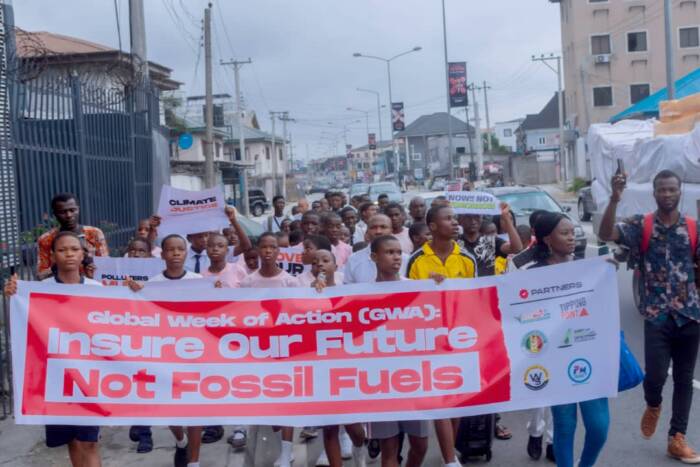
The industry’s defense—that they are simply pricing risk—is increasingly viewed as disingenuous. By underwriting the fossil fuel industry, they are essentially the architects of the risk they are now refusing to insure.
The Implications: A Systemic Failure
The implications of this trajectory are profound. First, we are witnessing the erosion of the middle-class safety net. When insurance becomes unaffordable or unavailable, the ability to build wealth through homeownership—the primary vehicle for intergenerational stability—is destroyed.
Second, the "pollution premium" is creating a feedback loop of inequality. Households are paying higher premiums to insurance companies, which then use that capital to finance the fossil fuel projects that exacerbate the disasters that necessitate the premiums in the first place.
Finally, the political implications are destabilizing. As the private sector retreats, the fiscal burden falls onto taxpayers. We are currently seeing a model where fossil fuel corporations enjoy record profits while the public pays for the fallout of the climate crisis through inflated insurance bills and government bailouts.
The Path Forward: Breaking the Cycle
We do not have to accept this reality. The solution requires a three-pronged approach centered on accountability and transition:
1. Make Polluters Pay
The costs of climate change must be shifted from the victims to the perpetrators. Legislation like New York’s Climate Change Superfund Act represents a vital step forward, aiming to collect $75 billion from major oil and gas companies to fund climate resilience. Polling indicates that 71% of U.S. voters and 80% of global respondents support holding these companies financially responsible for the damages they have caused.
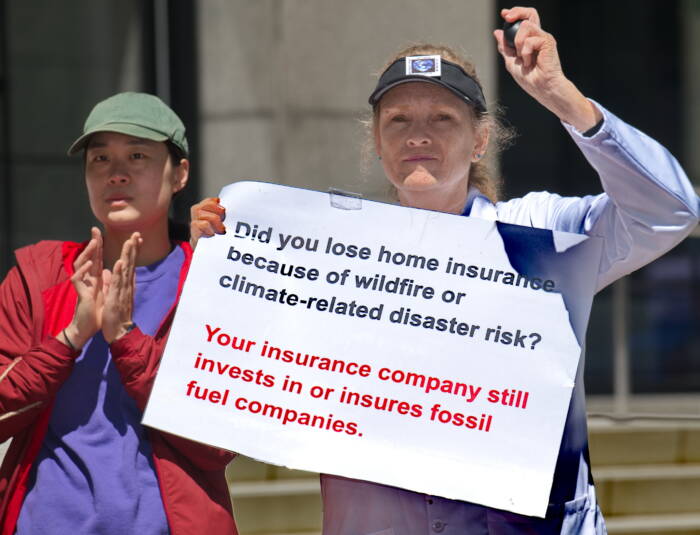
2. Accelerate the Renewable Transition
Renewable energy is now consistently cheaper than fossil fuels. In 2024, 91% of newly built renewable capacity was more cost-effective than the cheapest fossil fuel alternatives. By aggressively shifting capital toward clean energy, we can decouple our economy from the volatility of oil and gas, thereby reducing the systemic risks that insurers are currently failing to manage.
3. Build Climate Resilience
Investment in infrastructure—such as "Fortified" wind-resistant homes—can drastically reduce the frequency and severity of insurance claims. In Alabama, wind-resistant standards resulted in 55% to 74% fewer claims following major storms. However, resilience without decarbonization is futile. We cannot build our way out of a climate that continues to heat up; we must address the root cause.
The insurance industry stands at a crossroads. They can continue to hide behind the "pollution premium," offloading their climate liabilities onto the public, or they can pivot to become an ally in the climate fight. In the 1990s, health insurers sued Big Tobacco to recover the costs of smoking-related illnesses. Today, the insurance industry has both the data and the leverage to hold the fossil fuel industry accountable. If they fail to do so, our political representatives must act to force them—and the polluters they protect—to pay their fair share. The era of the pollution premium must end; a sustainable, equitable future depends on it.

 Rifan Muazin
 Layla Zulfa