


 Siti Muinah
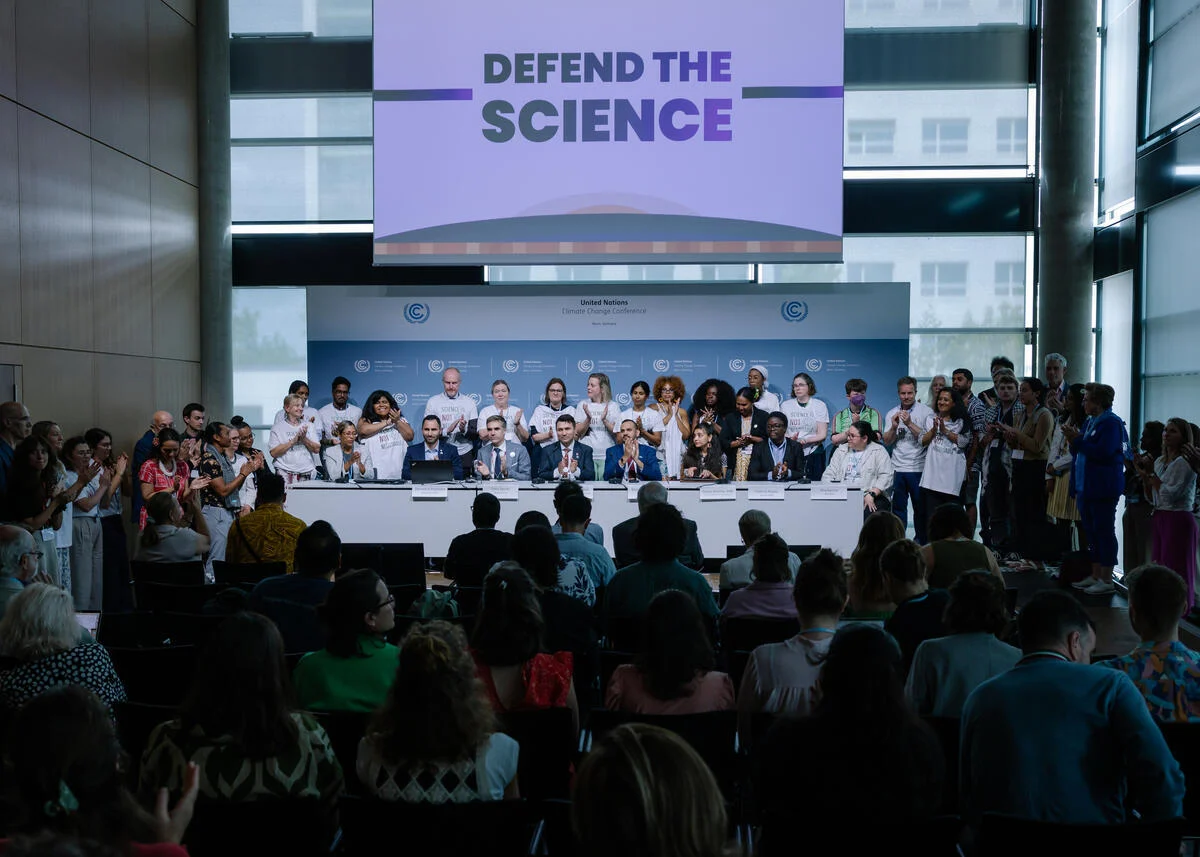
Bonn, Germany – As the international community gathers for the 64th Session of the Subsidiary Body for Scientific and Technological Advice (SBSTA64), the Intergovernmental Panel on Climate Change (IPCC) has provided a comprehensive roadmap for its ongoing Seventh Assessment Cycle. With the climate crisis accelerating and global temperatures flirting with the 1.5°C threshold, the world’s leading scientific body is recalibrating its approach to data, adaptation, and inclusivity.
Speaking at the 18th Research Dialogue, the Chair of the IPCC underscored that the organization is not merely a recorder of climate history, but a facilitator of global climate intelligence. As the cycle enters its third year, the IPCC is shifting toward more robust, community-driven methodologies while grappling with the logistical challenges of a global scientific effort.
The Chronology of Progress: A Roadmap to 2027
The Seventh Assessment Cycle is entering a critical implementation phase. With the scientific scope for all planned reports now finalized and the teams of lead authors selected, the IPCC is moving from the planning stage to the production of high-stakes climate assessments.
Key Milestones and Upcoming Deliverables:
- The 2027 Special Report on Climate Change and Cities: Currently in the Second Order Draft phase, this report is nearing a pivotal approval plenary scheduled for early 2027. The government and expert review process is slated to conclude in the first week of July 2026.
- Methodology Reports: Two critical reports on greenhouse gas accounting are in progress. The "Short-Lived Climate Forcers" report is moving toward a Second Order Draft review in September 2026, while the report on "Carbon Dioxide Removal Technologies and Carbon Capture Utilisation and Storage" held its first lead author meeting in April, with follow-up sessions scheduled for August.
- Working Group Progress: Across all three Working Groups, the "First Order Drafts" are under development. Despite geopolitical travel restrictions affecting the Middle East, which necessitated a virtual meeting for Working Group III, the momentum remains steady.
The IPCC Chair emphasized that a definitive decision regarding the overarching timelines for the Seventh Assessment Report (AR7) is pending. Consultations are currently underway with member governments, with a consensus-driven decision expected at the October 2026 Plenary. This clarity is not merely bureaucratic; it is essential for the over 1,000 scientists worldwide who volunteer their expertise and require predictable timelines to manage their professional and private lives.
Scientific Methodology: Redefining the "Scenario"
A significant portion of the IPCC’s address was dedicated to clearing up common misconceptions regarding climate scenarios. The Chair was emphatic: "There are no IPCC Scenarios. There are only published scenarios assessed by the IPCC."
Moving Beyond the "Single Database"
In a departure from past cycles, the IPCC is moving away from the creation of a single, endorsed "scenarios database." Instead, it is adopting a more decentralized, inclusive approach by assessing multiple "community databases." This shift aims to enhance the diversity of inputs, ensuring that the Seventh Assessment reflects a broader range of socio-economic and technological possibilities.
CMIP 7 and the Narrowing of Ranges
The IPCC will lean heavily on the CMIP 7 Assessment Fast Track. Notably, the range of emissions covered in these models is shifting. The "upper end" of emission scenarios is increasingly viewed as implausible due to the rapid global expansion of clean energy technologies. Conversely, the "lower end" of some previous trajectories has become inconsistent with current emission trends.
However, the Chair cautioned that while the emissions range may be narrowing, the temperature response range remains wide due to inherent uncertainties in the physical climate system. The IPCC stressed the necessity of distinguishing between emission scenarios and warming scenarios—a distinction that often eludes public discourse.
The Imperative of Adaptation: Measuring the Unmeasurable
Perhaps the most significant pivot in the Seventh Assessment Cycle is the institutional focus on adaptation. As the 1.5°C threshold looms, the IPCC is acknowledging that mitigation alone is insufficient.
A New Strategic Emphasis
The Seventh Assessment will feature a significantly expanded focus on adaptation, with three dedicated chapters in the Working Group II report. For the first time, the IPCC will formally address "responses to losses and damages" and the role of climate finance in building resilience.
Updating Technical Guidelines
The IPCC is currently undertaking the monumental task of updating its 1994 Technical Guidelines on assessing impacts and adaptation. Historically, adaptation has lacked the rigorous, standardized metrics that mitigation enjoys. The updated guidelines will emphasize:
- Indicators and Metrics: Developing concrete tools to measure the efficacy of adaptation efforts.
- Transformational Adaptation: Moving beyond incremental changes to structural, system-wide resilience.
- Monitoring and Evaluation: Creating a framework to track progress, performance, and the uptake of adaptation strategies in real-time.
Engaging Diverse Knowledge Systems
The IPCC is formally broadening its scope to integrate Indigenous knowledge alongside Western scientific methodologies. A landmark workshop, "Engaging Diverse Knowledge Systems," has yielded a suite of recommendations aimed at creating a more equitable scientific process.
These recommendations focus on:
- Expert Selection: Improving the nomination and inclusion of Indigenous knowledge holders.
- Knowledge Discovery: Establishing formal mechanisms to identify and assess non-traditional data sources.
- Capacity Building: Fostering partnerships that respect the intellectual sovereignty of Indigenous practitioners.
While these recommendations have yet to be formally endorsed by the full Panel, they represent a significant cultural shift within the IPCC. The findings will be presented in a dedicated side event at the SBSTA64, marking a milestone in the effort to make climate science more representative of those most affected by its consequences.
Implications: The Road Ahead
The Seventh Assessment Cycle represents a transition into a more complex, nuanced era of climate science. By moving toward community-led databases, focusing on the "nuts and bolts" of adaptation metrics, and formally engaging with Indigenous knowledge, the IPCC is attempting to provide a more practical and inclusive foundation for global policy.
Scientific Integrity vs. Political Reality
The tension remains palpable: as the IPCC moves to refine its models and methodologies, policymakers are under increasing pressure to implement radical decarbonization. The success of the Seventh Assessment will be measured not just by the accuracy of its data, but by its ability to provide clear, actionable insights in a world where the window for effective climate action is narrowing.
The upcoming plenary in October 2026 will serve as the next major checkpoint. If the member states can reach a consensus on the timelines and the, at times, sensitive integration of diverse knowledge systems, the IPCC will be well-positioned to deliver a report that is not only scientifically rigorous but politically resonant.
As the Chair of the IPCC concluded in Bonn, the scientific community is ready. The challenge now lies in ensuring that the findings of the Seventh Assessment are not just archived, but translated into the global policy shifts required to safeguard the planet’s future. The world waits for 2027, but the work—the painstaking, meticulous, and vital work of the IPCC—is happening right now.

 Nana Wu
 Laily UPN