


 Basiran
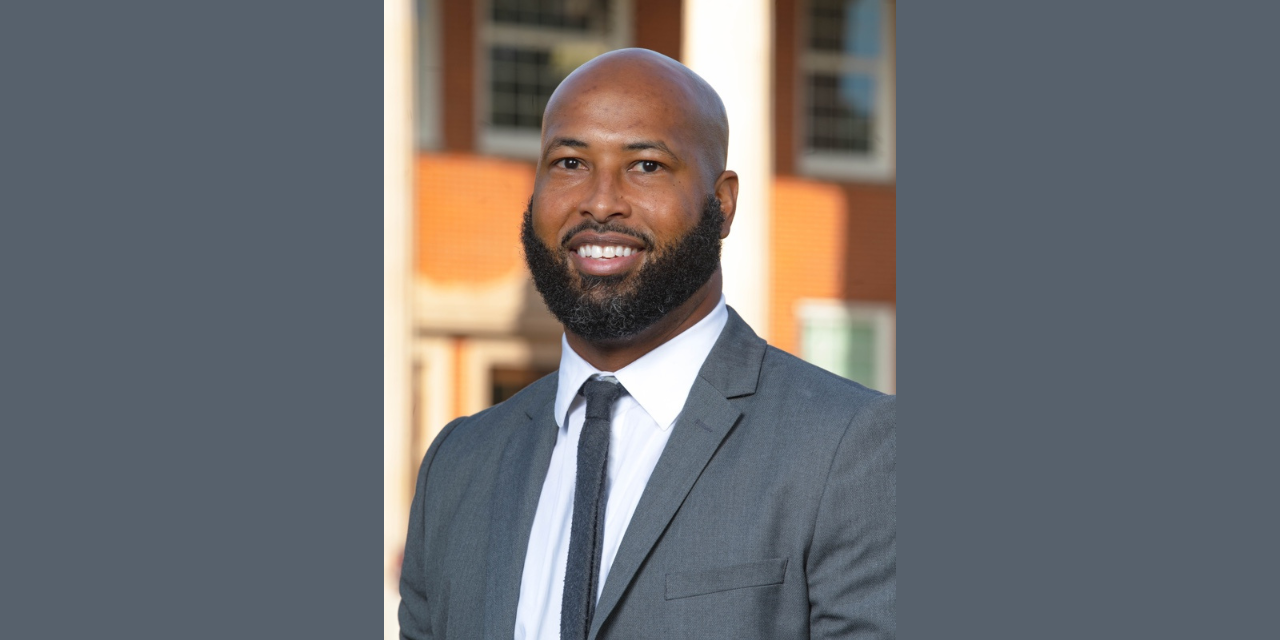
In the vibrant hallways of Beaumont Middle School in Portland, Oregon, a quiet revolution is taking place—one centered on the intersection of rigorous academic standards and radical empathy. Bryan Butcher Jr., a seventh-grade math teacher, has been named the 2025 Oregon Teacher of the Year, an honor that recognizes not only his pedagogical prowess but his unwavering commitment to cultivating a culture of belief within his classroom.
For Butcher, a Portland native who navigated the local public school system himself, the accolade is a testament to the idea that teaching is far more than the delivery of content. It is, he argues, an art form—a dynamic, iterative process of building relationships that empower students to transcend their anxieties and embrace the "academic risk" of learning. As he prepares to serve as the keynote speaker at the 2026 Educators Rising National Conference, Butcher offers a blueprint for what it means to lead from the front of the classroom.
The Path to the Podium: A Professional Chronology
Bryan Butcher’s journey to becoming the state’s top educator was not marked by a sudden epiphany, but rather a slow, deliberate convergence of skill and passion.
Following his graduation from the prestigious Morehouse College, Butcher joined Teach for America, an experience that plunged him into the realities of the American education system. His early career at the Excellence Boys Charter School served as a crucible for his teaching philosophy, forcing him to adapt quickly to the high-stakes environment of urban education.
"I was never the person who woke up and declared, ‘I’m going to be a teacher,’" Butcher reflects. "Instead, I found myself repeatedly pulled toward youth work." From coaching Little League teams during his high school years to officiating games and tutoring at community centers, Butcher’s life was defined by mentorship long before he held a teaching license.
Twelve years ago, he made the decision to return to his hometown of Portland. This homecoming proved pivotal; by anchoring himself in the community he grew up in, Butcher was able to bridge the gap between abstract mathematical concepts and the lived realities of his students. Today, as the 2025 Oregon Teacher of the Year, he stands as a symbol of the profound impact that homegrown educators can have on the next generation.
Deconstructing Math Anxiety: A Relational Approach
One of the most pervasive challenges in modern middle school education is "math anxiety"—a psychological barrier that prevents students from engaging with quantitative subjects. Butcher tackles this not with more worksheets, but with radical familiarity.
"When we see math in the movies or look at the complexities of the stock market, it feels intimidating," Butcher explains. "But math at its foundation is about relationship—it’s about how one thing impacts another."
To lower the stakes and raise the engagement, Butcher employs a strategy of contextualization. By bringing items from the local "corner store" into the classroom, he transforms a daunting linear equation into a practical puzzle. "I’ll ask them, ‘How much are those bags of chips? How much is the candy? Okay, what if I wanted to buy enough for five people, eight people, or the whole school? Now let’s create an equation that allows me to do that.’"
By grounding the abstract in the tangible, Butcher creates a "sturdy platform" for his students. He believes that once a student feels comfortable with the context of a problem, they are significantly more willing to take the intellectual leap required to solve it. Humor and "realness," he notes, are not distractions; they are the lubricants that keep the engine of curiosity running.
Leadership in the Classroom: Defining the Educator’s Role
In the broader discourse of education reform, "leadership" is often associated with administrative roles—principals, superintendents, or policy makers. Butcher challenges this narrow definition, asserting that leadership is inherent in the act of teaching itself.
"You are a leader the moment you walk into your classroom," Butcher says, recalling his own baptism by fire as a first-year teacher. "I remember facing 26 students and realizing, ‘Whoa, this is real.’"
For Butcher, true leadership is measured by consistency and expectation. He argues that early-career educators often underestimate their own influence. By setting high standards and, crucially, showing students the specific pathways to reach those standards, a teacher creates a culture of "buy-in." When students perceive that their teacher has a genuine, unwavering belief in their potential, they are often willing to "stretch" beyond their perceived limitations. This, he maintains, is the purest form of pedagogical leadership.
The Art of Reflection: Advice for the Next Generation
The transition from a novice teacher to a master educator is fraught with burnout, self-doubt, and exhaustion. Butcher is candid about his own early struggles, noting that during his first year, he frequently considered quitting. The pace was relentless, and the emotional toll of trying to reach every student felt, at times, like "being in a time warp."
To survive and eventually thrive, Butcher turned to the practice of journaling. He describes it as a grounding mechanism—a way to capture the "good," the "better," the "smile-worthy," and the "remember-for-next-time."
The Butcher Protocol for Professional Growth:
- Reflective Journaling: By writing daily for the first month and a half, Butcher trained himself to process his experiences rather than merely enduring them. It transformed his perspective from one of passive victimhood to active agency.
- Radical Receptivity to Feedback: He advises new teachers to strip the ego out of criticism. "Don’t personalize it," he warns. "Think about how you can work through it."
- Peer Observation: "Go watch other teachers," he encourages. By observing peers, new educators can see different styles of classroom management and content delivery.
- Celebrating the Small Wins: In an industry prone to self-criticism, Butcher emphasizes the importance of documenting what does go well. "We see what didn’t go well, but we also need to pay attention to what does."
"I like to think of teaching as an art form," Butcher concludes. "And art is never done."
Implications for the Future of Oregon Schools
The recognition of Bryan Butcher Jr. as the 2025 Oregon Teacher of the Year comes at a critical juncture for the state’s education system. As districts across the country grapple with declining teacher retention rates and student disengagement, Butcher’s focus on the "human side" of instruction offers a compelling alternative to standardized, data-heavy reform models.
His upcoming keynote at the 2026 Educators Rising National Conference will serve as a platform to scale these insights. By advocating for a model of teaching that prioritizes emotional safety, transparent expectations, and consistent self-reflection, Butcher is effectively creating a roadmap for a more sustainable, human-centric profession.
Ultimately, the impact of a teacher like Butcher is not easily captured in standardized test scores. It is measured in the "stretch" of a student who once feared math, in the confidence of a colleague who learned to accept feedback, and in the ripple effect of a school culture that treats every classroom as a site of profound, creative, and necessary leadership. As he continues his work at Beaumont Middle School, Butcher remains a reminder that the most sophisticated technology in any school building is the relationship between the teacher and the taught.

 Raul Delapena Setiawan
 Laily UPN