




 Raul Delapena Setiawan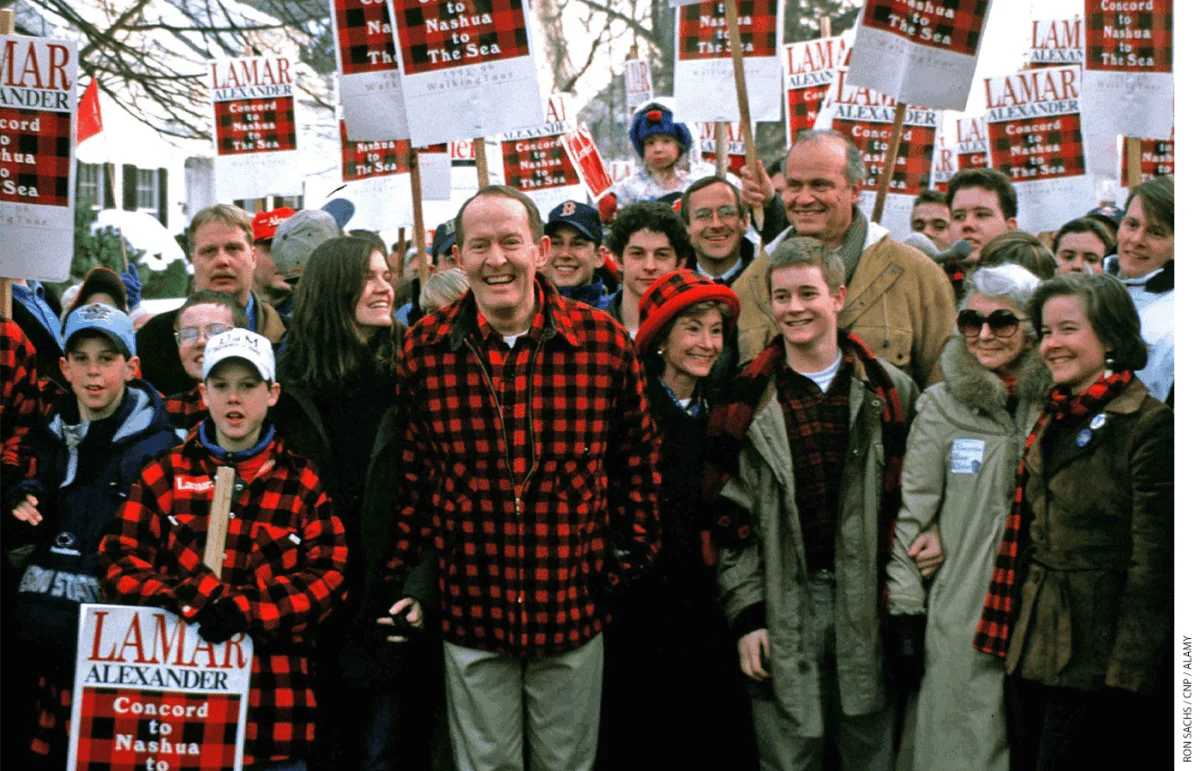
In an era of political polarization defined by rigid partisan manifestos—where Marxism, post-liberalism, and supply-side orthodoxy serve as the North Stars of governance—Lamar Alexander’s new memoir, The Education of a Senator: From JFK to Trump, offers a jarring, refreshing departure. Most modern political books are structured around a throughline of theory; they posit a world and seek to remake it through the application of specific, often unyielding, ideological principles. Alexander’s work, by contrast, is almost entirely ideology-free.
This absence of a grand "ism" is both the book’s greatest virtue and its most poignant vulnerability. It reflects the life of a public servant who, throughout a career spanning from the Nixon White House to the halls of the U.S. Senate, prioritized results over rhetoric, and pragmatism over purity.
Chronology of a Public Life
To understand the trajectory of Lamar Alexander is to trace the evolution of American governance itself. Born in 1940, Alexander came of age in the post-war, Eisenhower-Nixon-Ford era—a period that lacked the rigid, hyper-partisan "factory settings" of the post-Reagan Republican Party.
- The Early Years (1940–1970): Raised in rural Tennessee, Alexander was the quintessential "talented striver." His mother’s early advice—"An exceptional IQ is not going to do you much good if you can’t get along with other people"—became the bedrock of his career.
- The Rise to Power (1970–1978): After stints as a congressional and White House aide, Alexander’s ambition propelled him toward the governor’s mansion. His 1978 victory, following an earlier unsuccessful attempt, marked the beginning of his true impact on the American landscape.
- The Gubernatorial Era (1979–1987): As Governor of Tennessee, Alexander proved that governance could be a collaborative, community-focused endeavor. He wooed foreign automakers, modernized infrastructure, and pioneered education reforms.
- The Federal Stage (1991–1993; 2003–2021): Serving as U.S. Secretary of Education under George H.W. Bush and later as a three-term U.S. Senator, Alexander shifted his focus to the national stage, culminating in his influential tenure as chair of the Senate’s Health, Education, Labor, and Pensions (HELP) Committee.
Supporting Data: The Case for Pragmatism
Alexander’s record, particularly in education, serves as a testament to the power of incremental, results-oriented policy. Long before "accountability" became a buzzword in American schools, Alexander was laying the groundwork for systemic reform.
His gubernatorial record includes:
- Performance-based compensation: Decades before the "Race to the Top" initiatives, Alexander fought for teacher-evaluation reforms and performance pay.
- Technological Integration: As a visionary early adopter, he championed the integration of computers into classrooms during the early 1980s.
- Institutional Reform: As U.S. Secretary of Education, he introduced state-level data for the "Nation’s Report Card," creating a standard of transparency that forced states to reckon with their educational shortcomings.
His most notable success, the "Homecoming ’86" initiative, demonstrated a non-ideological approach to civic health. Rather than leaning on federal mandates, the program encouraged Tennessee towns to reclaim their histories and invite former residents home. It was a strategy rooted in community cohesion rather than partisan victory, achieving what modern legislative agendas often fail to do: fostering a sense of shared purpose among a disparate citizenry.
The Cost of Non-Ideology
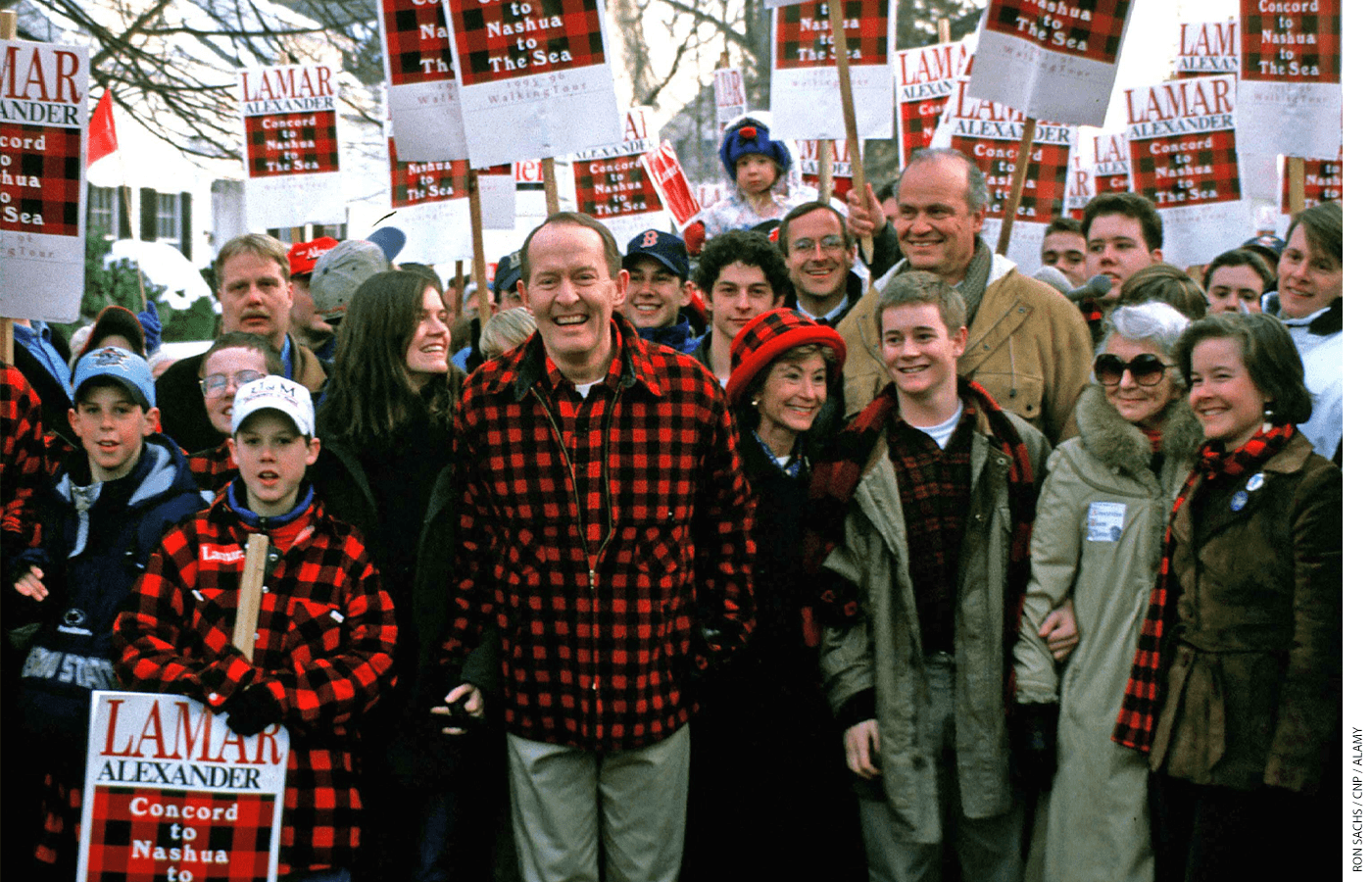
Alexander’s memoir does not shy away from the friction created by his lack of a rigid ideological framework. His failed bids for the presidency in 1996 and 2000 serve as the book’s most bitter chapters.
During these campaigns, Alexander’s greatest assets—his understated demeanor, his preference for consensus, and his refusal to toe the party line—became liabilities in a national primary. He was branded "Liberal Lamar" and a "moderate," labels he detested but could not shake in a party increasingly defined by its commitment to intellectual purity.
In the book, Alexander recalls a conversation with Pat Buchanan, his former colleague from the Nixon White House, who bluntly diagnosed his political malaise: "Your trouble is that you’re not an ideologue." This assessment hangs over the memoir, providing a rare, candid glimpse into the psyche of a man who believed in the nobility of public service but found that the modern electorate demanded a performance of conviction that he was unwilling—or perhaps unable—to simulate.
Official Responses and Reflections
Alexander’s reflections on his contemporaries are sharp, often bordering on the acerbic. He views his own failed presidential ambitions through the lens of missed opportunities, particularly regarding the administrations of George H.W. Bush, Bill Clinton, and George W. Bush.
His critique of the elder Bush’s post-Gulf War strategy is particularly telling: he argues that the administration failed to capitalize on its massive popularity to pivot to a domestic, education-focused agenda. Regarding George W. Bush, his comments are pointed, describing the 43rd president as someone "born on third base," and dismissing the intellectual depth of the Obama administration as "haughty."
These moments of bitterness are tempered, however, by the book’s final section, where Alexander details his work as chair of the HELP Committee. Here, the reader is granted a "fly on the wall" perspective of high-stakes negotiations. His anecdotes about colleagues—even those across the aisle—are generous, reflecting a deep, abiding respect for the legislative process. He paints a portrait of the Senate as a place where, despite the toxicity of the modern era, work can still be done if individuals prioritize the institution over the individual.
Implications for the Future of Governance
The implications of Alexander’s memoir are profound for the current American political landscape. His career represents a lost archetype: the "consummate legislator." His retirement from the Senate did not just mark the departure of a senior member; it signaled the shrinking space for those who seek common ground in a zero-sum political environment.
If modern American politics is a battle of theories, Alexander’s life is a reminder of the practical limitations of that approach. His successes were not won on the battlefield of grand, sweeping legislation that fundamentally altered the human condition; they were won in committee rooms, through local initiatives, and by building coalitions that bridged the divide between business, education, and government.
As we look toward the future, the questions raised by The Education of a Senator are urgent: Can a democracy survive if it abandons the "pragmatic center"? Can we find leaders who, like Alexander, prioritize community over ideology, even when it costs them the highest offices in the land?
Alexander’s story is not one of a hero who saved the republic, nor is it a tragic tale of a man who lost his way. It is the story of a talented, diligent, and occasionally frustrated public servant who recognized that the most important work of government is rarely found in the shouting match of national politics, but in the quiet, persistent effort to make local institutions work better for the people they serve.
In concluding his memoir with an account of the January 6 riots, Alexander leaves the reader with a sobering contrast to his own life’s work. The transition from his folksy, "country lawyer" beginnings to the existential threat of the modern political climate serves as a powerful warning. The nation, he suggests, is losing the capacity for the very consensus-building that made his own career possible. For those who believe that governing is a craft rather than a crusade, Lamar Alexander’s memoir is an essential, if sobering, autopsy of the way we once did things—and perhaps, a blueprint for how we might, one day, return to them.


 Laily UPN