
 Reynand Wu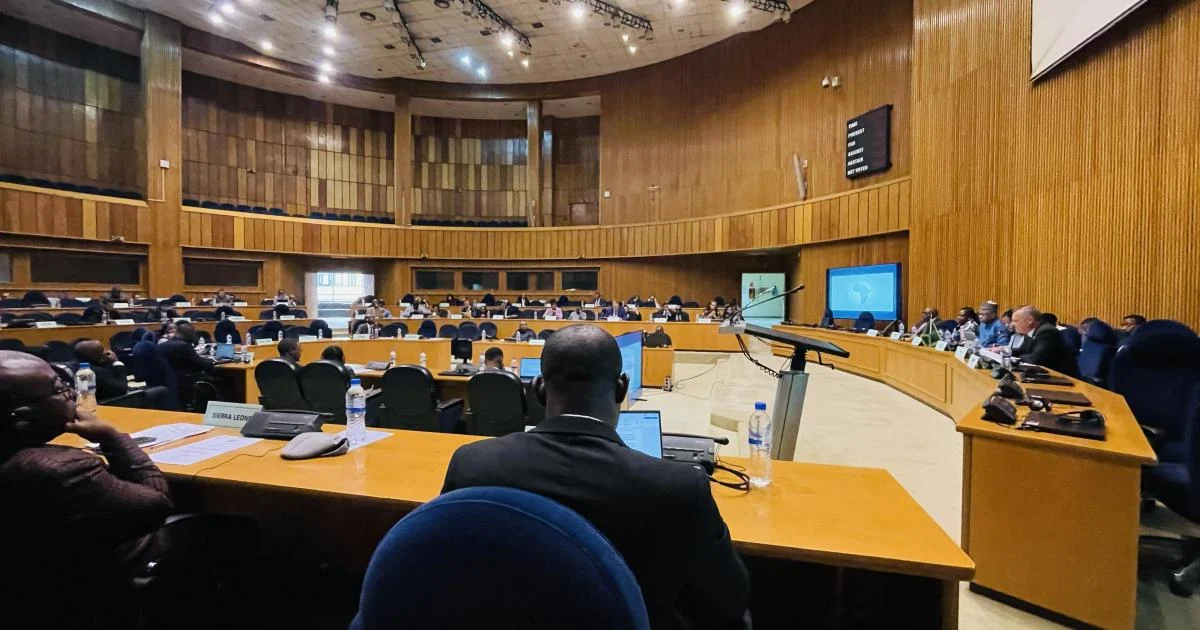
Introduction: The Erosion of the Rules of War
With more than 130 armed conflicts currently simmering or actively raging across the globe, the international community stands at a precarious crossroads. A significant proportion of these hostilities are concentrated within the African continent, creating a humanitarian landscape defined by displacement, systemic instability, and the tragic loss of civilian life. As the mechanisms designed to protect the vulnerable face unprecedented strain, the need for robust, unwavering advocacy for International Humanitarian Law (IHL) has never been more urgent.
In this volatile climate, the International Committee of the Red Cross (ICRC) has issued a clarion call to African leaders and the international community to reaffirm their commitment to the foundational rules of war. Speaking at the 1350th sitting of the African Union (AU) Peace and Security Council (PSC), Bruce Biber, the ICRC Head of Delegation to the AU, urged a fundamental shift: moving from passive observation to active integration of IHL into the bedrock of national and regional policy.
The 1350th Sitting: A Platform for Change
On June 2, 2026, the AU Peace and Security Council convened an Open Session focused on the critical triad of internally displaced persons (IDPs), refugees, and humanitarian assistance in Africa. The PSC, serving as the African Union’s primary decision-making organ for conflict prevention, management, and resolution, provided the necessary stage for this high-level dialogue.
These open sessions are more than mere administrative meetings; they are vital forums where member states, regional blocs, humanitarian organizations, and international partners coalesce to forge collective responses to the continent’s most pressing security challenges. It was within this context that the ICRC, acting in its capacity as the premier guardian of the Geneva Conventions, was invited to brief the council. The objective was clear: to refocus the discourse on the protection of civilians and the absolute necessity of adhering to IHL during armed conflict.
The Blurring Lines of Modern Warfare
During his briefing, Mr. Biber painted a sobering picture of contemporary battlefield realities. He noted with alarm that the traditional distinction between military objectives and civilian infrastructure has become dangerously porous.
"The distinction between military objectives and vital infrastructure, combatants and non-combatants, is becoming increasingly blurred," Biber stated. This erosion of boundaries has led to a catastrophic spike in attacks on schools, health facilities, and critical water supply systems—infrastructure that is indispensable to the survival of civilian populations.
The implications of this trend are multifaceted. Beyond the immediate destruction of physical assets, Biber highlighted the mounting obstacles to humanitarian access. Aid workers, who serve as the last line of defense for millions, are increasingly targeted or obstructed. Perhaps most damning is the fact that these atrocities are often committed in full view of the international community, yet the response remains disproportionately muted.
A Cultural Imperative: IHL and African Values
One of the most compelling aspects of the ICRC’s appeal is the assertion that IHL is not an alien, Western-imposed framework, but one that is fundamentally aligned with African traditions and moral values. By framing IHL as a universal language of human dignity, Biber sought to bridge the gap between abstract international legal norms and the lived realities of African communities.
"Respect for International Humanitarian Law not only reduces human suffering and saves lives; it also preserves civilian property and essential infrastructure," Biber emphasized. He urged Africa, as a continent that bears a disproportionate burden of modern conflict, to seize the mantle of leadership in global IHL advocacy. By championing these laws, African nations can assert their influence in shaping a global order that prioritizes human security over tactical military gain.
The Global IHL Initiative: A Strategic Framework
Recognizing that rhetoric must be backed by structural reform, the ICRC has introduced the "Global IHL Initiative." Launched in September 2024, this collaborative effort includes partners such as Brazil, China, France, Jordan, Kazakhstan, and South Africa.
Seven Pillars of Progress
The initiative is designed to revitalize political commitment through seven targeted workstreams, each addressing a specific friction point in the application of the law. These streams focus on:
- Strengthening legal frameworks to ensure national compliance.
- Improving humanitarian access in contested territories.
- Enhancing the protection of healthcare in conflict zones.
- Addressing the impact of urban warfare on civilian populations.
- Mitigating the risks of emerging technologies and cyber warfare.
- Promoting accountability for violations of the laws of war.
- Fostering a culture of compliance among non-state armed groups.
To date, 111 countries have joined the initiative, including 24 African states. This widespread participation underscores a growing realization that the current degradation of the rules of war affects every nation, regardless of geography or economic status.
The Proposed AU Declaration: Strengthening the Normative Anchor
Central to the discussions at the 1350th PSC sitting was the proposal for an "AU Declaration on Strengthening Respect for IHL." This document is envisioned as a mechanism to reinforce the African Union’s existing policy frameworks, providing a more robust anchor for the enforcement of humanitarian standards.
If adopted, the declaration would serve several vital functions:
- Normative Consolidation: It would solidify IHL as a non-negotiable component of the AU’s peace and security architecture.
- Practical Implementation: It would provide a roadmap for AU member states to integrate IHL into their national military doctrines and legal systems.
- Diplomatic Signaling: It would send a unified, powerful message to the international community that the African continent remains committed to the rule of law, even in the heat of conflict.
The Human Cost of Inaction
The urgency of this mission is underscored by the tragic reality that the rules of war are currently under their most intense pressure since the aftermath of the Second World War. Mr. Biber’s warning during the PSC session was stark and unambiguous: "The human cost of inaction is too high. Without rules, wars between combatants are transformed into wars against civilians."
This transformation represents a total collapse of the moral and legal order. When combatants no longer fear legal repercussions for targeting non-combatants, the entire premise of the "rule of law in wartime" evaporates. The result is not merely a temporary escalation of violence, but a long-term erosion of the foundations required to rebuild societies once the fighting eventually stops.
Chronology of Advocacy
- September 2024: The ICRC, in partnership with a diverse coalition of nations (including South Africa), launches the Global IHL Initiative to revitalize international commitment to the laws of war.
- Late 2024–Early 2026: Continued diplomatic engagement sees 111 nations, including nearly a quarter of African states, pledge their support to the initiative’s goals.
- June 2, 2026: The 1350th sitting of the AU Peace and Security Council takes place, focusing on humanitarian assistance and the protection of vulnerable populations.
- June 2, 2026 (Briefing): The ICRC formally introduces the proposal for an AU Declaration on Strengthening Respect for IHL to the PSC, urging immediate consideration.
- Future Outlook: The momentum generated by these efforts is slated to culminate at an upcoming High-Level Conference in Jordan, which will serve as a global focal point for the initiative.
Implications: The Path Forward
The implications for the African Union and its member states are profound. By taking a leading role in the adoption of the proposed IHL declaration, the AU has the opportunity to set a global benchmark. As the international community prepares for the High-Level Conference in Jordan, the steps taken by the PSC will be closely watched as a bellwether for the future of humanitarian advocacy.
Success will require more than the signing of documents; it will require a sustained commitment to training, legal oversight, and the promotion of a culture of compliance within national militaries. It demands that the protection of civilians be treated not as a secondary concern, but as a primary strategic objective.
Conclusion: A Call for Moral Courage
The call issued at the 1350th PSC sitting is a reminder that the laws of war were not created for times of peace, but specifically for the darkest moments of human conflict. They exist to prevent the total abandonment of humanity.
As Bruce Biber noted, the preservation of civilian property, health facilities, and the lives of the innocent is the true measure of a nation’s commitment to the rule of law. The challenge now lies with the member states of the African Union to transform this call into concrete action. In a world where the lines of conflict have blurred, the necessity of reinforcing those lines—through law, through policy, and through moral courage—has never been clearer. The future of global stability, and the lives of millions of civilians, depend on the choices made in the halls of the African Union today.

 Nana Muazin
 Pevita Pearce