

 Basiran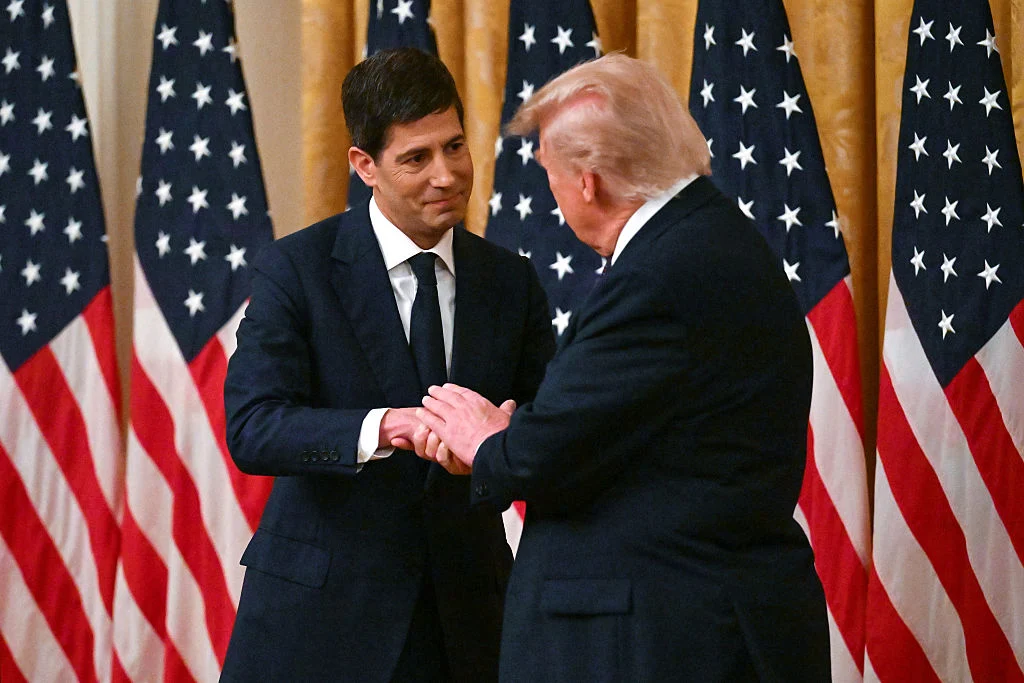
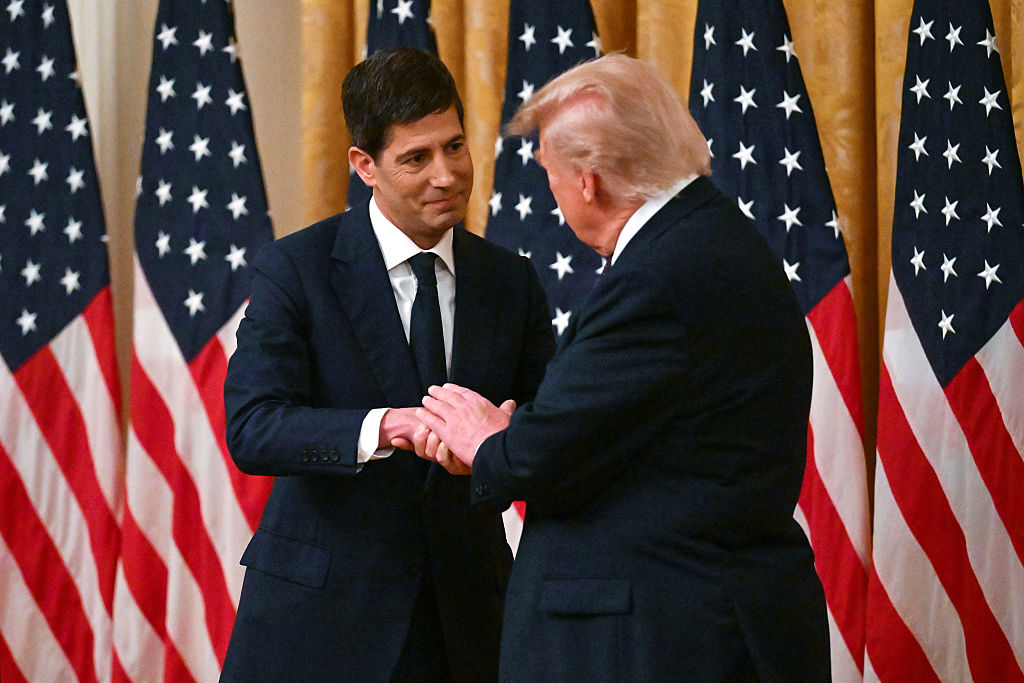
Kevin Warsh’s ascension to the Chair of the Federal Reserve marks one of the most intriguing pivots in modern central banking history. When he first entered the Fed ecosystem, his tenure was characterized by a relatively thin résumé that prompted skepticism among institutional observers. Today, as he presides over his first press conference as Chair, he does so with a thick, battle-tested curriculum vitae—yet that very experience has ignited a new, more profound set of questions.
The central tension of his leadership is not just his past, but his evolution. Having spent over a decade as a vocal critic of Fed policy—frequently warning of inflationary ghosts that failed to materialize—Warsh now finds himself at the helm of the institution he once scrutinized. The question consuming Wall Street and the halls of academia is simple: Which Kevin Warsh will lead the Federal Open Market Committee (FOMC)? Is it the "Past Kevin Warsh" (PKW), the steadfast hawk of the 2010s, or the "New Kevin Warsh" (NKW), the technology-forward strategist who sees AI as a catalyst for a paradigm shift in monetary policy?
A Chronology of a Policy Pivot
To understand the stakes of the current moment, one must look at the trajectory of Warsh’s economic philosophy. The "PKW" era was defined by an insistence that the Fed’s post-2008 accommodative stance was dangerously inflationary. During a period now widely recognized by historians and economists as a time when the central bank struggled to generate enough inflation, Warsh championed a hawkish orthodoxy. He frequently doubled down on the dangers of price surges even as the data—ranging from stagnant wage growth to persistent output gaps—suggested that the economy was, in fact, starving for stimulus.
However, the period between the post-COVID-19 inflation spike and 2026 served as a crucible for his views. Emerging from this volatility, the "New Kevin Warsh" has materialized with a perspective that borders on the polar opposite of his earlier tenure. NKW posits that the rapid integration of artificial intelligence into the broader economy could trigger a massive, sustained upswell in productivity. For NKW, this is not merely a theoretical observation; it is a policy imperative. He argues that if productivity growth accelerates, the Fed not only has the luxury of adopting a more accommodative policy stance but may actually be required to preemptively lower interest rates to accommodate that non-inflationary growth.
The Mechanics of the Neutral Rate
At the heart of the debate over Warsh’s future path lies the "neutral rate of interest," or *r**. For decades, the neutral rate was the lodestar of monetary policy. It represents the theoretical interest rate that balances the economy when it is operating at full potential with stable inflation.
In the late 20th century, the Fed’s primary focus was taming inflation by adjusting nominal rates. Economists rely on the identity $i = r + pi$, where $i$ is the federal funds rate, $pi$ is inflation, and $r$ is the "real" interest rate. The real rate is the true lever of economic stimulus; if the Fed wants to steer the economy, it must ensure that $r$ is set at a level that accounts for expected inflation.
The failure of PKW and many of his contemporaries during the 2010s was a fundamental misreading of the trend in *r**. Throughout the early 21st century, the global neutral rate of interest experienced a persistent, long-term decline. This "secular stagnation" meant that the interest rate environment was naturally trending lower. By ignoring this structural reality, inflation hawks consistently advocated for monetary tightening that, had it been implemented as requested, would likely have triggered significant economic hardship.
The lesson here is profound: a policy that is "wrong" in one era because of an ignored downward trend in *r** could be "correct" in another if the underlying drivers of the economy—like demographics, fiscal policy, and AI-driven productivity—begin to shift that equilibrium once more.
Supporting Data and Macroeconomic Shifts
The argument for a lower-rate environment under Warsh is not based on mere speculation about his character; it is rooted in the evolving macroeconomic landscape. New research into *r** suggests that the factors which suppressed rates for years—such as aging demographics and high global savings rates—remain relevant. However, the introduction of AI adds a new variable.
If AI leads to a significant increase in capital deepening and labor efficiency, the supply-side of the economy could expand significantly. In such a scenario, the "natural" rate of interest that prevents the economy from overheating might fluctuate. Current estimates of *r** are admittedly speculative, but they provide a more rigorous, data-driven framework than the broad, often ideological rhetoric that characterized the early 2010s.
Warsh’s recent pivot suggests he is beginning to utilize this *r** framework to bridge the gap between his past hawkishness and his current dovish leanings. By framing his calls for lower interest rates through the lens of a changing neutral rate, he provides a technical, justifiable rationale for policy changes that might otherwise be dismissed as purely political or reactive.
Official Responses and Internal Dynamics
The effectiveness of this new strategy depends entirely on the FOMC. Warsh’s success as Chair will be measured by his ability to convince his colleagues—some of whom are institutional veterans with long memories of his previous critiques—that his new perspective is rooted in objective economic reality rather than a political repositioning.
There is, however, a significant hurdle: Warsh’s stated preference for "less communication and forward guidance." While he likely views this as a way to maintain flexibility and avoid the "groupthink" he famously criticized at the Hoover Institution, it creates a risk in the eyes of the market. Forward guidance has been a vital tool for the Fed to anchor expectations. By pulling back, Warsh may inadvertently increase market volatility, making it harder to build the consensus needed to implement a coherent policy of lower rates.
If he is to succeed, Warsh must navigate the delicate balance of being a transformative leader while maintaining the credibility of the institution. His colleagues will be looking for a synthesis: an acknowledgement of why his previous hawkishness was ill-suited for the post-2008 environment, coupled with a transparent, data-driven justification for why the *r** framework demands a different approach today.
Implications for the Global Economy
The implications of a shift toward lower interest rates under a Warsh-led Fed are vast. If the US central bank, the world’s most influential, begins to systematically target a lower neutral rate based on AI-driven productivity gains, it will force a repricing of assets globally.
- Capital Markets: Investors will need to adjust their expectations for a "higher for longer" environment. If Warsh successfully argues for a lower *r**, the yield curve may flatten, potentially easing the cost of borrowing for long-term capital investments.
- Fiscal Policy: A lower interest rate environment would provide more breathing room for fiscal policymakers, though it could also exacerbate concerns about public debt sustainability if the productivity gains from AI do not materialize as quickly as predicted.
- Institutional Credibility: Perhaps most importantly, the Fed’s ability to pivot without losing its reputation for independence is at stake. The market is hypersensitive to political influence; if Warsh’s policy moves are seen as mere alignment with specific political factions rather than a response to *r** trends, inflation expectations could become unanchored.
Conclusion: The Path Ahead for FKW
"Future Kevin Warsh" (FKW) represents a blank slate for many observers, but the path he walks is well-trodden by the ghosts of his predecessors. To move forward, he must do more than simply embrace the new technology of AI; he must embrace a new philosophy of communication and analytical rigor.
If he is to successfully lower rates without inviting accusations of political interference or triggering inflationary shocks, he must address his past. A transparent critique of his own previous failures—specifically his misunderstanding of the downward trajectory of the neutral rate during the 2010s—would be a powerful gesture of intellectual humility. It would signal to the FOMC and to the public that his current policy advocacy is not an ideological flip-flop, but an evolution born of rigorous, data-driven reflection.
Ultimately, the Fed Chair is not just a policymaker; they are a communicator of economic reality. Whether Warsh can convince the world that his metamorphosis is a genuine response to a changing economic landscape will determine not only his legacy but the stability of the American economy for the remainder of the decade. The tools of the neutral rate framework are at his disposal; how he uses them will decide whether he is remembered as a contrarian who finally found his footing, or a leader who led the economy into a new, unpredictable chapter.


 Asep Darmawan