

 Lina Irawan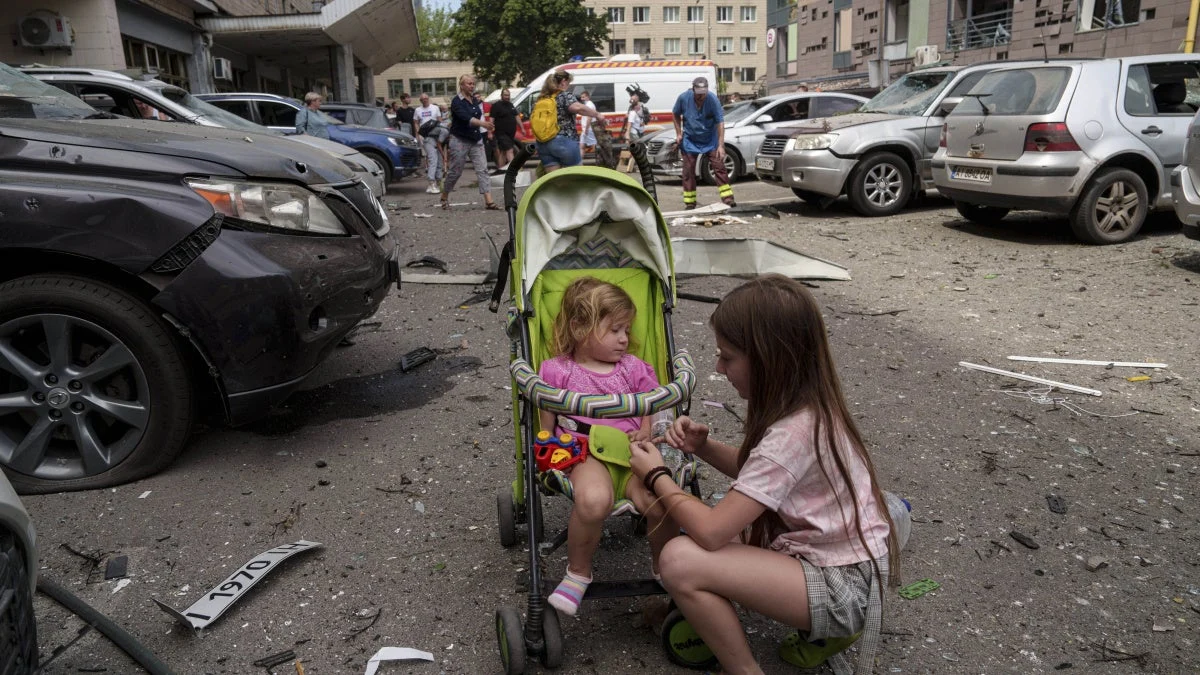
As the international community moves toward the potential adoption of a landmark treaty to prevent and punish crimes against humanity, a pivotal debate has emerged: how to ensure that the most vulnerable victims—children—are not merely an afterthought, but a central focus of international justice.
Currently, while specific international frameworks exist to prosecute war crimes and genocide, there is a glaring vacuum in international law regarding crimes against humanity. Crimes against humanity—defined as widespread or systematic attacks directed against any civilian population, including murder, torture, enslavement, and sexual violence—remain without a dedicated, standalone international treaty. The proposed convention aims to close this gap. However, advocates and a growing number of states argue that any such treaty will be fundamentally incomplete if it fails to explicitly address the unique harms inflicted upon children.
The Current Legal Landscape: A Staring Point of Invisibility
The foundational draft articles for the proposed treaty currently reference children only in the preamble and within the narrow context of enslavement. For human rights organizations, including a broad coalition of civil society groups, this is insufficient.
Crimes against humanity, by their nature, involve the most heinous acts imaginable. Whether it is the forced displacement of families, the systematic recruitment of child soldiers, or the sexual exploitation of minors during periods of unrest, children are frequently the primary targets of these atrocities. By failing to explicitly recognize the specific ways in which these crimes impact children, international law risks perpetuating a cycle of impunity where the victimization of minors is viewed as collateral damage rather than a distinct, prosecutable offense.
Chronology of the Diplomatic Effort
The push to amend the draft treaty has gained significant momentum in recent months as the formal proposal window has opened to member states.
- Initial Drafting Phase: The International Law Commission (ILC) finalized the draft articles for the Prevention and Punishment of Crimes Against Humanity, providing a base for what is intended to be a global standard-setting document.
- The Advocacy Surge: Recognizing that the draft was "child-blind," a coalition of civil society organizations—led by groups like Human Rights Watch—began mobilizing to provide legal analysis and draft language to integrate children’s rights into the core text of the treaty.
- Recent Weeks: Countries began submitting formal proposals for amendments to the United Nations. This phase has seen an influx of cross-regional support, with nations from the Global South and North alike calling for stronger language on child protections.
- The 18-Month Horizon: With the formal negotiations scheduled to take place in roughly 18 months, the current period serves as a "pre-negotiation" phase, where the strength and diversity of these proposals will set the tone for the final plenary discussions.
Supporting Data and The Need for Explicit Protections
The arguments for incorporating children’s rights into the treaty are not merely moral; they are grounded in the practical realities of legal proceedings. Children face unique barriers when interacting with justice systems. They are often subject to trauma-induced memory loss, fear of reprisal, and a lack of access to child-sensitive legal procedures.
The Case for Procedural Justice
Proposals submitted by various member states emphasize two specific areas: access to justice and reparation procedures. In many post-conflict societies, the legal system is built by adults, for adults. Children are frequently excluded from witness protection programs, and their testimony is often viewed with skepticism or deemed inadmissible due to a lack of specialized training among investigators and judges.
By mandating that state parties adopt "child-sensitive" procedures, the treaty would compel nations to:
- Ensure Safe Testimony: Implement infrastructure for children to testify without re-traumatization, including the use of video-link technology and the presence of support persons.
- Tailored Reparations: Establish compensation funds and rehabilitation programs that account for the long-term developmental impact of trauma on a child, rather than simple financial settlements.
Official Responses and Cross-Regional Cooperation
Perhaps the most encouraging development in this process is the diversity of the countries championing these amendments. The push is not coming exclusively from Western powers; it is being led by nations with firsthand experience of the horrors of systemic violence.
The Perspective of Liberia and Colombia
Countries such as Liberia and Colombia have emerged as key voices in this discourse. Having navigated the arduous process of post-conflict reconstruction and the implementation of truth and reconciliation commissions, these nations bring a pragmatic perspective to the table. They argue that if a treaty is to be effective in preventing future atrocities, it must reflect the reality of how crimes against humanity actually unfold on the ground.
In these contexts, children are not just victims; they are the primary demographic targeted for recruitment as soldiers or victims of sexual violence. Therefore, a treaty that does not provide a robust framework for prosecuting those who prey on children is essentially ignoring the most common tactical element of modern systematic violence.
Implications for International Law
The implications of this treaty, if successfully amended to include child-specific protections, are profound.
1. Aligning with Existing Human Rights Norms
For decades, international law has evolved to treat children as distinct subjects of rights rather than mere extensions of their parents. From the Convention on the Rights of the Child to the specialized protocols on child soldiers, the international community has developed a sophisticated understanding of child protection. This new treaty would serve as the "missing link," ensuring that the principles already established in human rights law are effectively integrated into the realm of international criminal law.
2. A Deterrent Effect
By explicitly defining crimes against children as a cornerstone of the broader definition of crimes against humanity, the treaty would raise the political and legal stakes for regimes or armed groups that utilize children as a tool of war. It creates a clearer pathway for the International Criminal Court (ICC) and national jurisdictions to prosecute crimes that were previously categorized under broader, more difficult-to-prove labels.
3. Setting a Global Standard
The success of these amendments would send a signal to domestic legal systems worldwide. By ratifying a treaty that demands child-centric justice, countries are essentially committing to reforming their own internal judicial processes. This creates a ripple effect, potentially improving the quality of justice for children even in cases that do not reach the level of a crime against humanity.
Conclusion: A Singular Opportunity
As the 18-month countdown to the formal negotiations begins, the international community stands at a crossroads. The current draft of the treaty is a solid technical document, but it lacks the human dimension necessary to address the most vulnerable populations affected by systematic state or group-sponsored violence.
The proposals put forward by the civil society coalition and supported by a diverse group of nations provide a comprehensive roadmap for reform. These proposals offer a way to move beyond the preamble and into the operative clauses, ensuring that the protection of children is not just an aspiration, but a legal requirement.
The forthcoming conference represents a singular opportunity to align international criminal law with the moral and human rights standards of the 21st century. It is an opportunity for the world to declare that the systematic targeting of children is not just a tragedy, but a crime that will be met with the full force of international justice. For delegates preparing for the upcoming negotiations, the message from the global community is clear: the time to secure the future of child protection is now, and the mechanism is a robust, inclusive, and child-sensitive international treaty.


 Ali Ikhwan
 Siti Muinah