

 Ali Ikhwan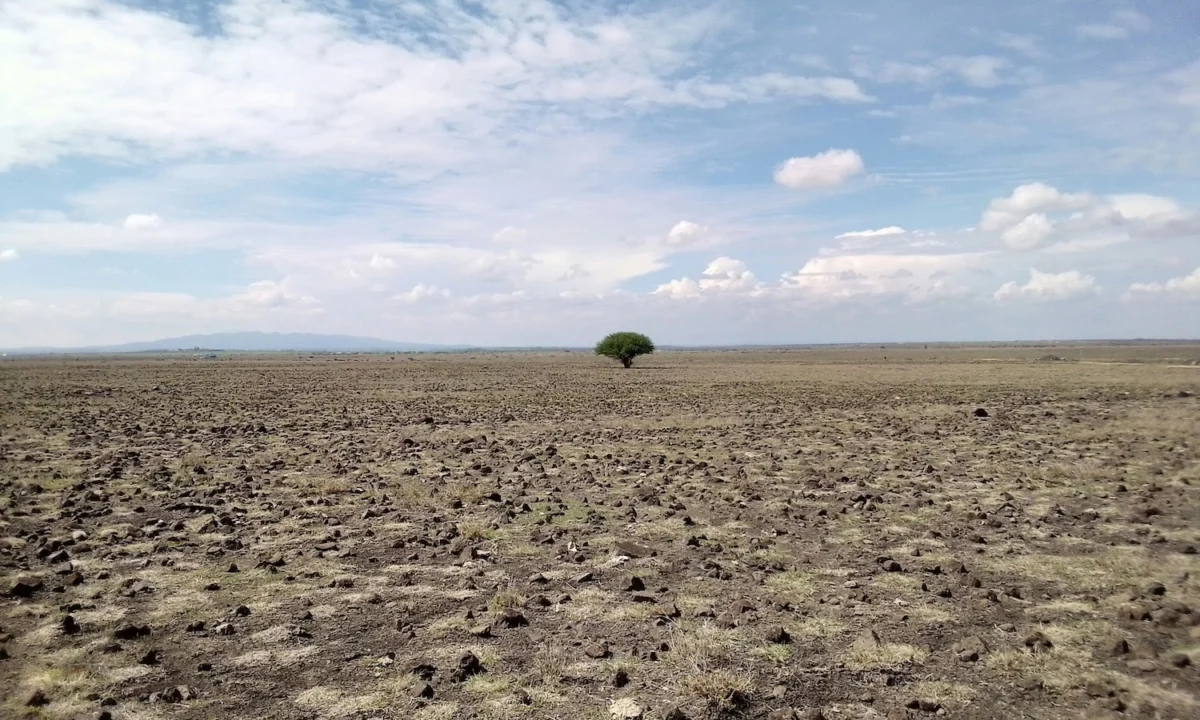
Each week, Food Tank surveys the global landscape to curate stories that define our relationship with food. From the looming shadow of climate patterns to the microscopic breakthroughs in crop resilience, the following report explores the intersection of survival, innovation, and industry transition.
I. The Climate Conundrum: El Niño’s Return and the Hunger Threat
Main Facts
The U.S. National Oceanic and Atmospheric Administration (NOAA) has officially confirmed that El Niño is underway. This natural climate phenomenon, characterized by the warming of the ocean surface in the central and eastern Pacific, recurs every two to seven years. However, current meteorological models suggest this event may be among the most intense on record.
Chronology and Implications
The onset of El Niño is not merely a meteorological anomaly; it is an agricultural disruptor. The U.N. Food and Agriculture Organization (FAO) has flagged a high probability of severe agricultural drought in the Sahel, Southern Africa, South and Southeast Asia, Central America’s “Dry Corridor,” and the Caribbean.
The implications are dire. Mohamed Adow, Director of Power Shift Africa, notes that for millions, this cycle translates to “failed rains, dying crops, rising food prices, and families pushed to the edge yet again.” The situation is exacerbated by global instability; combined with the ongoing impacts of the war in Iran, the convergence of geopolitical conflict and climate volatility could potentially fuel a hunger crisis affecting more than 100 million people. Meanwhile, regions like western South America brace for catastrophic flooding, while Northeast Africa faces “weather whiplash”—the rapid, jarring oscillation between extreme drought and deluge.
II. Botanical Resilience: A Genetic Breakthrough for Rice
The Discovery
In a major victory for global food security, researchers from the International Rice Research Institute (IRRI) and Japan’s National Agriculture and Food Research Organization (NARO) have identified a gene capable of shielding rice from extreme heat. Rice, the foundational staple for over half the world’s population, is notoriously sensitive to temperature spikes during its flowering stage.
Supporting Data and Scientific Mechanism
The gene, identified as EMF3, functions as a biological clock adjustment. It shifts the rice plant’s flowering period to the early morning hours when temperatures remain moderate. By “escaping the heat,” the plant preserves its grain formation process, preventing the yield declines that have plagued tropical and subtropical farming in recent years.
Dr. Ishimaru of NARO characterizes the discovery as a shift in strategy for crop survival. “We can spend hot days in air-conditioned rooms, but rice plants must survive field heat,” he stated. “With EMF3, they ‘wake up’ early to avoid heat stress, showing that sometimes, being an early riser is key.” As seed breeders integrate this trait into popular rice varieties, the discovery provides a scalable, nature-based solution to heat stress.
III. The Decline of the Small-Scale Dairy Farmer
Industry Status
The landscape of dairy farming in Great Britain has reached a grim milestone: the number of active dairy producers has plummeted below 7,000 for the first time in recorded history. The Agriculture and Horticulture Development Board (AHDB) estimates that only 6,850 producers remain, reflecting a 15 percent contraction over the last five years.
Official Responses and Economic Pressures
The exodus of farmers is driven by a volatile cocktail of economic forces: razor-thin margins, falling milk prices, and the relentless rise of production costs. This consolidation has forced a shift toward “factory-style” dairy farming. The Guardian recently highlighted this trend, reporting that many farmers feel forced to “go big” or exit the industry entirely.
This is not a localized phenomenon. U.S. Department of Agriculture data reveals a more staggering trend: the number of dairy farms in the United States has fallen by 95 percent since the 1970s. The sentiment, according to the AHDB, is “largely negative,” and while milk prices have shown recent signs of stabilization, industry experts argue that significant structural reforms are required to restore confidence and prevent further loss of agricultural heritage.
IV. Rethinking Land Use for Biodiversity and Economic Gain
The Science of Smarter Land Use
A landmark study published in the journal Science has challenged the long-held assumption that climate action and biodiversity conservation are inherently expensive. By analyzing land-use practices across 146 countries, researchers demonstrated that optimized management is not only environmentally necessary but economically feasible.
Implications for Policy
Lead author Stephen Polasky emphasizes that the goal of the study is to dismantle the narrative of "bankruptcy through conservation." The research suggests that strategic land reallocation—such as targeted reforestation in highly productive areas combined with crop intensification in low-yield regions—can yield immense gains.
Becky Chaplin-Kramer, Global Biodiversity Lead Scientist at WWF-US, asserts that this evidence proves there is no longer a necessary trade-off between nature protection and agricultural output. The study aims to provide a blueprint for organizations to secure investment, proving that modernizing land management is a path to economic stability rather than a financial burden.
V. Empowerment and Agroecology: The AERAS Project
Project Overview
The transition to sustainable food systems requires more than just policy; it requires boots-on-the-ground support. The Rural Advisory and Agroecology Project (AERAS), launched by the Inter-American Institute for Cooperation on Agriculture (IICA), has reached a significant milestone by empowering over 10,000 farmers across Latin America and Africa in just two years.
Supporting Data and Future Roadmap
The initiative focuses on technical training for livestock and crop production, including coffee, cocoa, and tropical roots. Farmers are learning to reduce chemical dependency, restore soil health, and diversify income streams—all critical elements for surviving the aforementioned climate shifts.
IICA’s collaborative model involves a diverse coalition of stakeholders, including the Latin American Network of Rural Extension Services (RELASER) and the Global Forum for Rural Advisory Services (GFRAS). During a recent strategy meeting in Costa Rica, these stakeholders began mapping the future of the project. Oswaldo Páez Aponte, a consultant for the initiative, emphasized the necessity of institutionalization: “The most significant thing is to ensure that these agroecological practices do not remain on paper but gain traction in the organizations that are providing extension and consultancy services in rural areas.”
Conclusion: The Path Forward
The convergence of these stories paints a complex portrait of our global food future. We are currently witnessing a period of "climate whiplash," where traditional farming methods are under direct assault from erratic weather. Yet, the rapid deployment of genetic breakthroughs, such as the EMF3 rice gene, and the scaling of agroecological practices through projects like AERAS, suggest that we have the tools to adapt.
However, the systemic decline of the small-scale farmer—the backbone of rural economies in Britain and the U.S.—serves as a warning. Without a fundamental shift in how we value labor, prioritize biodiversity, and subsidize sustainable land use, the technological gains we make in the laboratory may be outpaced by the socio-economic collapse of our farming communities.
As we move forward, the intersection of science, policy, and grassroots empowerment must be synchronized. Whether through the smarter use of our land or the support of farmers transitioning to climate-resilient models, the mission is clear: we must build a food system that does not just withstand the next El Niño, but thrives in spite of it.
Articles like the one you just read are made possible through the generosity of Food Tank members. Can we please count on you to be part of our growing movement? Become a member today by clicking here.
Photo courtesy of Lazarus Okuku, Unsplash

 Rifan Muazin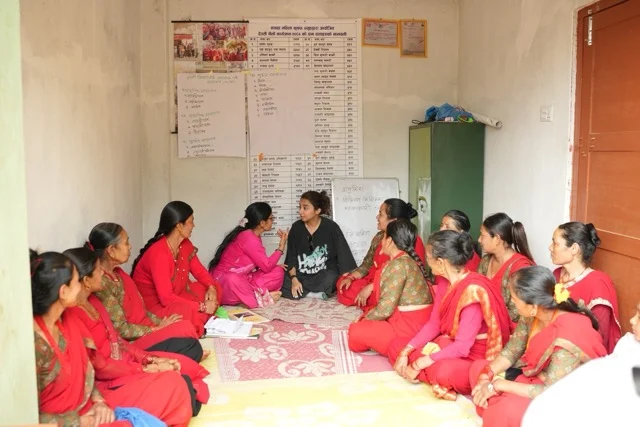
 Jia Lissa