



 Sagoh
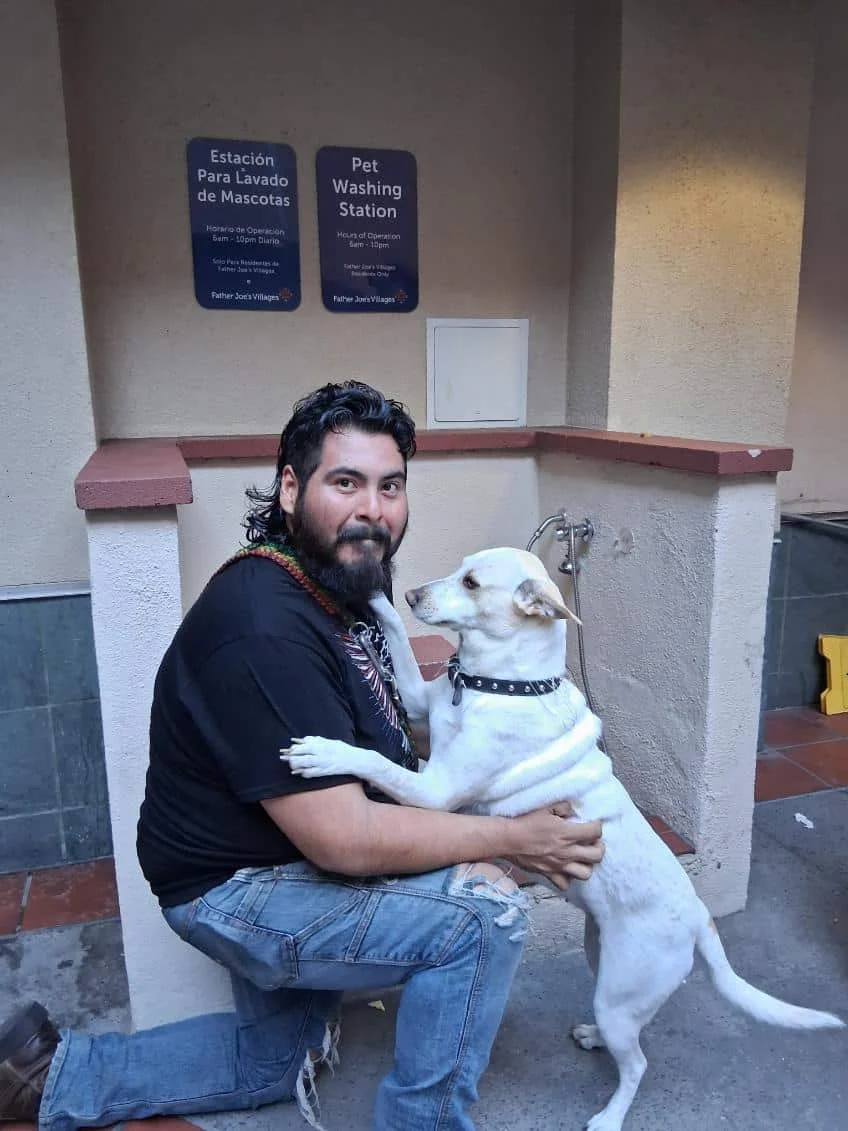
For the millions of Americans experiencing homelessness, the path to stability is often fraught with impossible choices. Among the most gut-wrenching is the ultimatum presented by many public and private support systems: surrender your pet, or go without shelter. For those who view their companion animals as the only consistent source of love, safety, and identity in a world that has otherwise pushed them to the margins, this is not a choice—it is an abandonment of their family.
New evidence, however, is suggesting that the traditional “no-pets” policy in emergency shelters is not just a barrier to care; it is a major obstacle to solving homelessness. Organizations like Father Joe’s Villages in San Diego are proving that when we welcome the whole family—including the four-legged members—we see better outcomes, higher engagement, and a more humane approach to crisis intervention.
The Human-Animal Bond in Crisis
To understand why someone would choose to sleep on a sidewalk rather than in a warm bed, one must first understand the role a pet plays in the life of an unhoused individual. For many, a dog or cat is more than a pet; they are a lifeline.
Data from the ASPCA and various social research institutions highlights that approximately 12 percent of the unhoused population are accompanied by animals. In an environment defined by social isolation and the erosion of traditional community networks, pets provide a critical sense of purpose. They are companions who do not judge, guards who provide a thin veil of protection against the dangers of the night, and catalysts for positive behavior.
Research has consistently shown that pet ownership among the homeless population is correlated with lower rates of depression, reduced feelings of loneliness, and even a decrease in substance use. When an individual has a living creature dependent on them for food, water, and care, it fosters a sense of responsibility and routine that can serve as a psychological anchor during the most turbulent periods of their lives.
A Systemic Failure: The 3 Percent Reality
Despite the overwhelming evidence of the benefits of human-animal bonds, the shelter system remains stubbornly antiquated. Currently, only about 3 percent of homeless shelters across the United States are pet-friendly.
This statistic reveals a massive gap in service delivery. A survey conducted by the National Alliance to End Homelessness found that 22 percent of unhoused pet owners explicitly avoided shelters specifically because those facilities did not permit animals. By maintaining restrictive policies, the shelter system is effectively turning away nearly a quarter of its potential clients, forcing them to remain on the streets and out of reach of the very programs—job training, medical care, and housing navigation—designed to help them transition into permanent stability.

Chronology of a Shift: The Father Joe’s Model
The pivot toward co-sheltering at Father Joe’s Villages did not happen overnight. For a decade, the organization worked extensively with service animals and emotional support animals (ESAs). This period of observation allowed staff to witness firsthand the transformative power of the human-animal connection.
- Pre-2020: The organization gains institutional expertise by navigating the requirements for service animals and ESAs, learning how to manage logistics, hygiene, and resident safety.
- 2020: Recognizing the persistent barrier to entry for pet owners, the organization officially expands its policy to allow companion animals in its general shelter programs.
- 2020–2025: A five-year period of intensive data collection begins. During this time, the shelter serves nearly 500 households with animals, documenting the impact on housing retention and mental health.
- Present Day: The program serves as a national benchmark, demonstrating that co-sheltering is not only possible but sustainable with the right community partnerships.
Supporting Data: By the Numbers
The impact of this policy shift is quantifiable. Between 2020 and 2025, Father Joe’s Villages served 500 animal-owning households. Of these, 57 percent were registered service or emotional support animals, while the remaining 43 percent were traditional companion pets.
The most compelling data point, however, comes from the residents themselves: 100 percent of pet-owning clients reported that having their animal with them made it significantly easier to work toward leaving homelessness behind. By removing the fear of separation, the shelter created a environment of trust. Residents were no longer forced to prioritize their animal’s safety over their own progress; they could finally pursue employment and housing while knowing their companion was secure.
The Mechanics of Co-Sheltering
Critics of pet-friendly shelters often cite hygiene, noise, and potential conflicts between residents as primary concerns. However, the experience at Father Joe’s suggests these are manageable challenges that require only modest operational adjustments.
Infrastructure and Logistics
Implementing a pet policy does not require building a new facility. It requires small, intentional modifications:
- Bedside Crates: Providing crates allows pets to remain close to their owners, preventing separation anxiety and ensuring the animal has a secure “den” while the owner is away.
- Zoning: By designating specific areas for pet owners and creating separate zones for individuals with severe allergies, shelters can maintain a safe environment for all residents.
- Partnerships: Collaborating with local veterinary clinics allows for on-site preventive care, spaying/neutering, and behavioral assessments, ensuring that the animals remain healthy and socialized.
The Role of Responsibility
Co-sheltering is not a "free-for-all." It is a partnership based on clear expectations. Residents are expected to adhere to shelter policies, including keeping their pets under control and ensuring they are cared for. The shelter acts as a facilitator, providing the necessary supplies—harnesses, leashes, and food—and referring owners to training classes when behavior issues arise. This empowers the owner, reinforcing their role as a capable caretaker even while they are in transition.
Perspectives from the Ground
For the individuals living through this experience, the difference is profound.

Anthony, a resident accompanied by his dog, Mr. Beens, describes the presence of his companion as a "blessing." For Anthony, the stress of homelessness was mitigated by the companionship of his dog, which provided the emotional stability needed to focus on his long-term goals.
Similarly, Shannon, who resides at the facility with her two cats, Mittens and Little Bit, emphasizes the peace of mind that comes with the policy. "Staying in the shelter allows me to save money so we can move into permanent housing," she says, noting that the ability to keep her cats with her removed the primary obstacle to her accepting shelter in the first place.
Nicolas, who relies on his dog, BMO, for comfort, notes that the stability of the shelter allows him to look toward the future. "Having my dog with me allows me to remain focused on achieving my goals instead of worrying about the safety of my pet," he explains.
Implications for Policy and Future Care
The success of these programs carries significant implications for the national conversation on homelessness. If the goal is to end homelessness for good, we must create pathways that people can actually use.
A Call for National Standards
The "3 percent" figure is a moral indictment of our current service infrastructure. As communities across the country grapple with the rising costs and complexities of homelessness, they must stop viewing pets as a "luxury" or a "complication" and start viewing them as an essential component of an individual’s support system.
Recommendations for Shelter Providers:
- Start Small: Providers do not need to overhaul their entire operation. Pilot programs can start with a handful of spots and expand as staff gain experience.
- Leverage Community Assets: Local animal shelters, veterinary schools, and non-profit groups are often eager to provide support, whether in the form of vaccinations or donated supplies.
- Adopt a Housing-First Mentality: Policies should be designed to reduce barriers. If a rule prevents a person from accessing services, it should be rigorously questioned and, if possible, discarded.
Conclusion: A Path Toward Wholeness
The mission to end homelessness is not merely about providing four walls and a roof; it is about restoring dignity and acknowledging the humanity of those we serve. For many, part of that humanity is their bond with an animal.
When we integrate companion animals into our shelter models, we are doing more than just being "pet-friendly." We are acknowledging that an individual’s support system is not a liability, but an asset. By welcoming the whole family, we are one step closer to a world in which every person—and their loyal companion—has a secure, stable, and permanent place to call home. The journey off the streets is difficult enough; it is time we stop asking people to walk that path alone.


 Siti Muinah

 Reynand Wu