


 Laily UPN
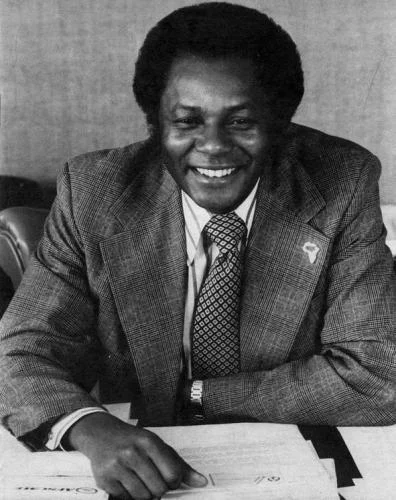
The global labor movement and the American civil rights struggle are mourning the loss of one of their most formidable architects. William “Bill” Lucy, a visionary leader whose seven-decade career bridged the gap between the picket line and the halls of international power, passed away in Washington, D.C., at the age of 90.
As a secretary-treasurer of the American Federation of State, County and Municipal Employees (AFSCME) for nearly 40 years, Lucy was more than a union official; he was a bridge-builder who understood that economic justice and racial equality were inextricably linked. His death marks the end of an era for the labor movement, but his legacy remains embedded in the institutions he helped build and the countless lives he touched across the globe.
The Main Facts: A Life Defined by Purpose
William Lucy’s career was defined by a singular, unwavering commitment to the dignity of the working class. Born in the mid-20th century, he emerged during a time when the American labor movement was often exclusionary. Lucy, however, was determined to ensure that Black workers were not only included but elevated to positions of leadership.
His passing has triggered an outpouring of tributes from the highest echelons of the civil rights community. Janai Nelson, President and Director-Counsel of the Legal Defense Fund (LDF), led the remembrances, describing Lucy as an “ardent champion for labor, civil, and human rights.”
“Over more than seven decades, Mr. Lucy was a fearless and transformative leader on the frontlines of the labor and civil rights movements,” Nelson stated. “He untiringly advanced initiatives to uplift vulnerable communities and advocate for justice, equity, and freedom.”
Chronology of a Movement Leader
To understand the scope of William Lucy’s impact, one must look at the timeline of his activism, which reads like a history of 20th-century progress.
The Memphis Turning Point (1968)
Long before he became a household name in labor circles, Lucy was on the ground in Memphis, Tennessee. During the 1968 sanitation workers’ strike, he worked alongside Dr. Martin Luther King Jr. to demand fair wages and safer working conditions for Black sanitation workers. This period was a crucible for Lucy, cementing his belief that the union movement was the most potent vehicle for civil rights in the United States.
The Coalition of Black Trade Unionists (1972)
Recognizing that mainstream labor unions often sidelined the specific needs of Black employees, Lucy co-founded the Coalition of Black Trade Unionists (CBTU) in 1972. This organization served as a vital advocacy arm, ensuring that the labor movement remained true to its promise of equity.
The Fight Against Apartheid (1984)
Lucy’s vision extended far beyond American borders. In 1984, he co-founded the Free South Africa Movement (FSAM). This was not merely a symbolic gesture; the FSAM became the primary force in the United States for pressuring the federal government to impose sanctions against the apartheid regime in South Africa. His work here showcased his ability to organize across international lines, turning a local labor issue into a global human rights imperative.
Global Leadership (PSI)
Lucy’s stature was solidified when he became the first African American president of Public Services International (PSI). In this role, he brought the lessons of the American labor movement to the global stage, advocating for public sector workers in developing nations and fostering international solidarity.
Supporting Data: The Magnitude of the AFSCME Era
For nearly four decades, William Lucy served as the secretary-treasurer of AFSCME, the largest public employee union in the United States. His tenure was characterized by massive growth and strategic influence.
- Membership Expansion: Under his stewardship, AFSCME grew from a modest collective of public employees into a political powerhouse capable of influencing federal policy.
- Political Mobilization: Lucy was a master of political strategy. He understood that the collective bargaining power of unionized public workers was a defense against the erosion of the middle class. By integrating voter registration and community outreach into union activities, he ensured that AFSCME members were a deciding factor in elections across the country.
- Intersectional Advocacy: Lucy’s involvement with the Legal Defense Fund (LDF) was not tangential. He played a key role in LDF-led efforts to dismantle the remnants of Jim Crow and defend the rights of Black voters. He recognized that labor rights are meaningless without the legal protections afforded by the Civil Rights Act and the Voting Rights Act.
Official Responses: A Consensus of Respect
The reaction to Lucy’s death has been universal in its praise for his character and his strategic brilliance. The Legal Defense Fund (LDF), in its formal statement, highlighted his "selfless dedication in the relentless pursuit of equality and justice."
“As we reflect on Mr. Lucy’s life and his innumerable contributions to our nation and the world, we recognize his enduring legacy,” said Janai Nelson. “His dedication will continue to inspire and shape future generations.”
The sentiment among his peers is clear: Lucy was a leader who never sought the spotlight for himself, but rather for the movements he represented. He was known for a quiet, steady resolve—a characteristic that allowed him to navigate the often-fractious politics of the labor movement while keeping disparate groups focused on a unified goal.
Implications: A Legacy for Future Generations
The death of William Lucy comes at a time when the labor movement in the United States is seeing a resurgence, yet it faces challenges that mirror those of the 1960s. The implications of his life’s work are particularly relevant in today’s political climate.
The Inextricable Link Between Labor and Race
Lucy’s career serves as a historical corrective to the idea that labor issues and racial justice are separate spheres. By proving that the fight for a living wage for sanitation workers was, in fact, a fight for human dignity and civil rights, he provided a blueprint for contemporary organizers. Future movements for economic justice will continue to rely on the framework Lucy helped establish: that true equality requires both political power and economic security.
Global Solidarity
As global supply chains become more complex, Lucy’s work with the Free South Africa Movement and Public Services International provides a model for modern internationalism. He proved that local unions could exert influence on global human rights issues, a strategy that is increasingly vital in a connected world where corporate interests often transcend national borders.
The Role of Institutions
The LDF, as the nation’s first civil rights law organization, has long been a beneficiary of Lucy’s partnership. His life illustrates the necessity of collaboration between legal advocacy groups and organized labor. The ongoing struggle for political participation within Black communities—a cause Lucy championed—remains a pillar of the LDF’s current mission. As the organization notes, their work continues the legacy he helped shape: a relentless pursuit of the promise of equal rights.
Conclusion: An Enduring Blueprint
William “Bill” Lucy did not just work for the labor movement; he transformed it. He took the tools of collective bargaining and used them to dismantle the structures of systemic inequality. From the streets of Memphis to the global stage in Geneva, he was a tireless advocate for those whose voices were often suppressed.
As we remember his life, we are reminded that leaders like Lucy are not merely individuals, but catalysts for collective action. He leaves behind an institutionally robust labor movement and a legal advocacy landscape that is stronger because of his involvement. His life was a testament to the idea that one individual, fueled by a deep commitment to justice, can move the needle of history toward the arc of fairness.
His death is a profound loss, but his life serves as an enduring call to action. Whether through the advocacy of the Legal Defense Fund or the continued growth of the AFSCME, the foundations laid by William Lucy remain, providing a firm base upon which the next generation of civil and human rights leaders will build.
For those seeking to learn more about his contributions, the Legal Defense Fund has provided a comprehensive tribute, available via their official documentation. The Legal Defense Fund (LDF), founded in 1940, continues to operate as the nation’s first civil rights law organization, committed to the vision of equality that Bill Lucy spent his life advancing.


 Nana Muazin
 Raul Delapena Setiawan