




 Basiran
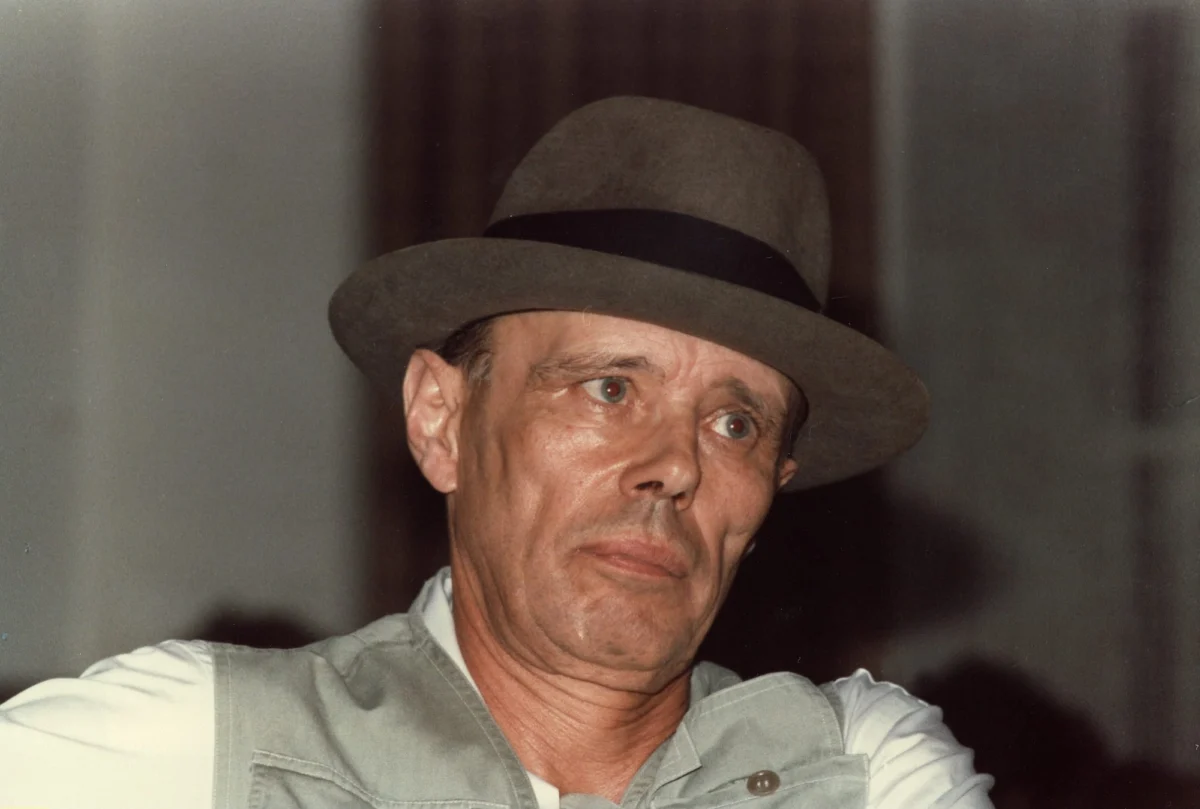
In a striking display of solidarity, more than 50 art galleries across Düsseldorf and Cologne have united to form a defensive front against what they describe as the cynical co-option of German cultural heritage by the far-right. The collective has signed a formal letter of protest condemning the local branch of the Alternative for Germany (AfD) party, accusing the organization of weaponizing the legacies of iconic postwar conceptual artist Joseph Beuys and renowned poet Heinrich Heine to promote an upcoming political event.
The controversy centers on an event titled “Cultural Policy From the Right,” scheduled for October 26 in Düsseldorf. The program, which includes a guided walking tour of the city’s prominent art institutions and a lecture by AfD Bundestag member Matthias Helferich, has ignited a firestorm within the German cultural sector. For many in the arts community, the AfD’s invocation of figures like Beuys—who spent his life championing social sculpture, environmentalism, and radical humanism—is not merely an appropriation; it is a profound distortion of their life’s work.
The Chronology of the Conflict
The tension began to simmer earlier this month when promotional materials for the AfD’s “Cultural Policy” tour surfaced. While the party’s official digital footprint—including the AfD Düsseldorf website—did not explicitly host the inflammatory references cited by the galleries, the local art community mobilized rapidly.
The galleries’ open letter, which has been disseminated widely across social media, serves as a direct challenge to the AfD’s narrative. The signatories, representing some of the most influential commercial and non-profit spaces in the Rhine-Ruhr region, argue that the AfD’s political platform—frequently characterized by anti-immigrant rhetoric and nationalist sentiment—is diametrically opposed to the spirit of the artists they are attempting to claim as ideological precursors.
This friction occurs against a backdrop of increasing polarization in German politics. The event is set to be headlined by Matthias Helferich, a figure whose presence alone acts as a lightning rod for controversy. Helferich, who has occupied a seat in the Bundestag since 2021, has long been a polarizing force, even within his own party. In 2025, he faced a high-profile expulsion attempt from the North Rhine-Westphalia branch of the AfD following the leak of private messages in which he referred to himself as “the friendly face of the Nazis” and expressed an aspiration to act as a “democratic Freisler.”
The reference to Roland Freisler, the notorious Nazi judge who presided over the People’s Court and oversaw the sentencing of thousands, including the members of the White Rose resistance, caused national outrage. While Helferich later dismissed these comments as “satire” directed at his left-wing critics, the damage to his reputation was severe. His expulsion, however, was overturned in June 2026 by an AfD party court, allowing him to maintain his parliamentary status and continue his aggressive advocacy for the party’s cultural agenda.
Understanding the Stakes: The Beuys Connection
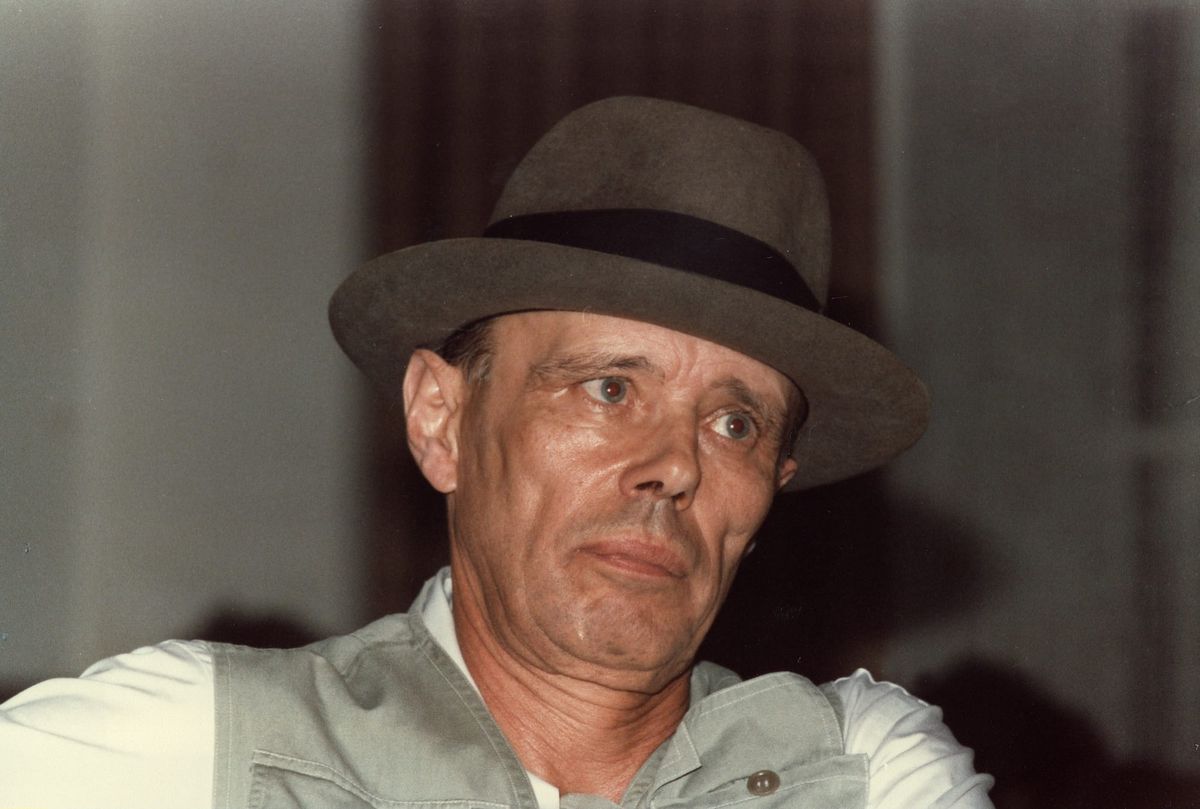
Joseph Beuys (1921–1986) remains one of the most significant figures in 20th-century art. A veteran of the Second World War, his work was deeply rooted in the concept of Soziale Plastik (Social Sculpture), the idea that every individual has the power to shape society through creative, democratic participation. Beuys was a founding member of the German Green Party and a vocal proponent of direct democracy and European integration.
For the AfD to invoke his name in the context of an event centered on “Cultural Policy From the Right” strikes many experts as an egregious act of historical revisionism. The irony is not lost on the gallery owners: Beuys’s work was fundamentally anti-authoritarian. By attempting to place him within a framework that advocates for national isolationism and the “remigration” of foreign nationals, the AfD is effectively stripping the artist’s work of its core moral and political intent.
The Role of Matthias Helferich
The inclusion of Matthias Helferich as the keynote speaker is perhaps the most contentious element of the event. Helferich’s political career has been marked by a series of incidents that have drawn condemnation from civil rights groups and political rivals alike.
Beyond his comments regarding Nazi-era figures, Helferich has been embroiled in controversies involving the dehumanization of migrants. In a widely reported incident involving an Instagram story, he featured a photograph of a rear-view mirror decoration accompanied by a caption that roughly translates to “get those creatures out,” appended with the hashtag #remigration. This term, which has become the centerpiece of the AfD’s migration policy, refers to the mass deportation of non-ethnic Germans, including those who have lived in the country for generations.
The fact that a politician who openly champions such policies is conducting a “cultural tour” of Düsseldorf—a city known for its diverse, international art market—has been viewed as a provocation by the local creative community. The galleries see this not as an invitation to dialogue, but as an act of intimidation directed at the very institutions that sustain the city’s pluralistic identity.
Official Responses and the Letter of Solidarity
The joint letter signed by the 50-plus galleries is a rare show of unity in a sector that is often competitive. The document serves as a manifesto for the role of art in a democratic society.

“Düsseldorf is a city whose cultural identity is characterized by openness, internationality, plurality, and the free exchange of diverse perspectives,” the letter states. “Art emerges where boundaries are questioned and where people engage in dialogue regardless of origin, religion, skin color, gender, or political stance.”
The signatories emphasize that the arts community has a responsibility to protect the history of the artists it exhibits. By refusing to let the AfD frame their cultural programming, the galleries are asserting their independence and signaling that they will not provide a stage for ideologies that they believe threaten the foundations of their work.
Implications for German Cultural Policy
The controversy raises broader questions about the politicization of art in Germany. As the AfD continues to gain electoral ground, its strategy of “culture warring” has become increasingly sophisticated. By attempting to reclaim figures like Beuys or Heine—who lived in exile due to his own political persecution—the party seeks to soften its image and present itself as a defender of “true” German culture.
However, the resistance from the Düsseldorf and Cologne galleries suggests that this strategy may face significant pushback. The arts sector in Germany is heavily reliant on public funding, and there is a growing concern that if the AfD were to achieve more power, it would seek to leverage this funding to silence dissent or redirect resources toward nationalist projects.
This skirmish in Düsseldorf is likely a precursor to larger battles. As the AfD attempts to institutionalize its influence within the cultural sphere, the reaction from museums, galleries, and independent artists will be crucial. The events of October 26 will be watched closely, not just for the turnout or the content of the lecture, but as a test of the cultural sector’s resolve in the face of political encroachment.
Ultimately, the protest highlights a fundamental disconnect. While the AfD views culture as a tool for cementing national identity and defining “us vs. them,” the artistic community views it as a medium for transcending those very divisions. As the galleries have made clear, the legacy of Joseph Beuys belongs to the world, and they intend to ensure it remains that way.


 Rifan Muazin

 Neng Nana





