

 Jia Lissa

You have saved 847 posts to your "inspo" folder, yet you stare at a stuffed wardrobe and declare you have nothing to wear. This paradox—the abundance of digital inspiration paired with the persistent feeling of sartorial inadequacy—is the defining fashion crisis of the modern era. We have been conditioned to believe that personal style is a puzzle waiting to be solved by the right influencer, the perfect mood board, or the next viral trend cycle.
In reality, discovering your personal style does not require a stylist, a credit card, or another hour lost to the algorithmic rabbit hole. It requires exactly 20 minutes, a bit of honest introspection, and the courage to stop looking at what everyone else is wearing.
Why Your Pinterest Board Is Not Your Identity
The digital landscape is optimized for aspirational content, not reality. When you scroll through Instagram or Pinterest, you are not viewing a reflection of your own life; you are viewing a curated performance designed to trigger desire. Whether it is the stark, effortless aesthetic of Danish minimalism, the romanticized "French girl" look, or the whimsical "coastal grandmother" trend, these images are snapshots of a fantasy.

According to data from the Pew Research Center, roughly seven in ten American adults engage with social media platforms regularly. These platforms are engineered to surface content that keeps users scrolling, prioritizing visual high-impact imagery over practical, sustainable style. When you save a photo of a stranger’s wardrobe, you are engaging in a hobby—collecting digital imagery—which is fundamentally distinct from the act of personal styling. Style is an expression of identity; a mood board is merely a collection of external projections.
The Chronology of Style Confusion: From Influence to Imposter Syndrome
The journey to style confusion often follows a predictable timeline. It begins with the initial exposure to a trend on social media. Initially, the aesthetic feels fresh and exciting. Over the next few weeks, the algorithm reinforces this preference, bombarding the user with variations of the same look.
- The Inspiration Phase: You begin saving posts, convinced that this new "aesthetic" is the missing piece to your life.
- The Acquisition Phase: You purchase pieces that mimic the look, often ignoring your actual budget or lifestyle needs.
- The Disconnect: You wear the items, but they don’t "feel" right. They sit in your closet, serving as a reminder of an identity you haven’t quite managed to inhabit.
- The Cycle Continues: Feeling dissatisfied, you return to the app to find the "next" thing, repeating the cycle of consumption and frustration.
This cycle is fueled by the rapid pace of micro-trends, which are designed to make clothing obsolete almost as soon as it is purchased. To break this, one must move from passive consumption to active curation.

The Evidence-Based Audit: A Diagnostic Approach
Before buying another item, you must perform a cold, hard audit of your current collection. Do not start with your digital folders; start with your closet.
Pull out the last five outfits you wore that made you feel genuinely confident. We are not talking about "fine for a Tuesday" clothing; we are looking for the pieces that made you feel like the best version of yourself. Lay them out on your bed. Examine them. Do you see a pattern? Perhaps you gravitate toward structured blazers, or perhaps you exclusively reach for soft, oversized textures.
This is your current, unfiltered style. It is vastly more valuable than any Pinterest board because it is backed by empirical evidence: these are the clothes that actually function in your life.
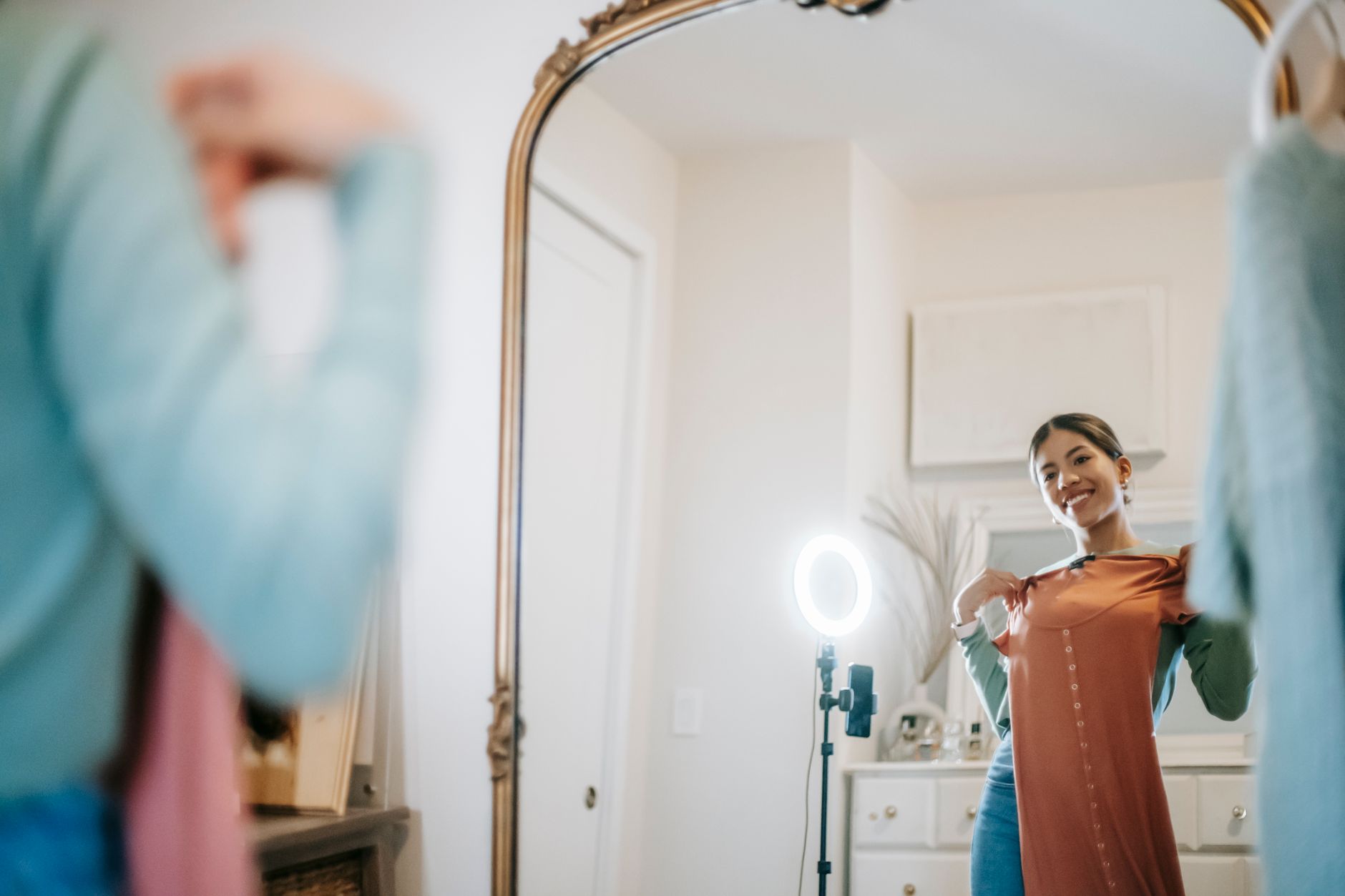
Conversely, examine the five most recent purchases that you rarely wear. What do they have in common? Often, these are "aspirational" buys—items that looked incredible on an influencer but didn’t account for your comfort, your daily activities, or your body’s needs. Identifying this gap is the most important step in ending your style confusion. As noted in landmark research on decision fatigue, the more choices we are exposed to, the worse our decisions become. By limiting your scope to your own proven preferences, you effectively strip away the "noise" that leads to bad shopping decisions.
Three Questions to Define Your Aesthetic Core
Style discovery should not be a complex, 50-point personality quiz. Instead, ask yourself three fundamental questions that cut through the noise:
1. What do you want people to feel when they see you?
Do you want to appear approachable, professional, creative, or perhaps intimidatingly cool? There is no "right" answer, but there is an "honest" one. Your clothing is a communication tool; identifying the message you wish to convey allows you to curate your wardrobe with intent rather than by accident.

2. What is your actual life?
Many people struggle because they dress for the life they imagine having, rather than the one they lead. If your week consists of remote work and local errands, a closet full of high-maintenance evening wear will only lead to stress. Your wardrobe should reflect your daily reality—your "Tuesday" is the most important day of your life.
3. What do you genuinely find comfortable?
Comfort is not a concession; it is a requirement. Psychological studies have consistently shown that our clothing influences our performance and cognitive function. If you are constantly tugging at a hemline or adjusting a collar, you are not projecting confidence—you are projecting discomfort.
The Four-Item Filter: A Practical Framework
Once you have answered these questions, you can build a permanent "filter" for your future shopping. Every new item must pass this four-part test:

- Core Colors: Identify two or three shades that dominate your "good-outfit" pile. A cohesive color palette makes getting dressed a matter of minutes rather than hours.
- Silhouettes: Limit yourself to two core silhouettes (e.g., one fitted, one relaxed). This provides visual consistency while allowing for variety through textures and layers.
- Signature Pieces: Every stylish person has an "anchor"—a specific type of shoe, a recurring accessory, or a reliable outer layer. This anchor simplifies the act of getting dressed.
- Fabric Shortlist: If you dislike the feeling of a fabric, you will never wear the garment, regardless of how "trendy" it is. Establish a list of fabrics that feel good on your skin and refuse to deviate from it.
The Implications of Mindful Dressing
The implications of adopting this system go beyond simply having a cleaner closet. When you stop chasing trends, you reclaim your autonomy. You stop participating in the endless, wasteful cycle of "fast fashion" and move toward a sustainable, personal system.
Moreover, there is a profound psychological benefit to feeling "at home" in your clothes. As the Mayo Clinic suggests, self-esteem and personal confidence are bolstered when our external presentation aligns with our internal sense of self. When your style is calibrated to your life, you stop thinking about your clothes by 9:00 a.m. You move through your day with a sense of ease that no trend-led outfit can provide.
Conclusion: Closing the App
The next time you are tempted to click "buy" on a midnight scrolling session, pause for 48 hours. If the item still fits your four-item filter after two days, it might be a worthy addition. If you have forgotten about it, you have successfully avoided an algorithmic trap.
Style is not something you "find" in a store or a feed; it is something you curate from the reality of your own experiences. It has been in your closet the whole time—it just needed you to pay attention. Stop scrolling, start auditing, and begin dressing for the person you actually are, not the person the internet tells you to be.


 Raul Delapena Setiawan

 Muslim




