



 Suro Senen
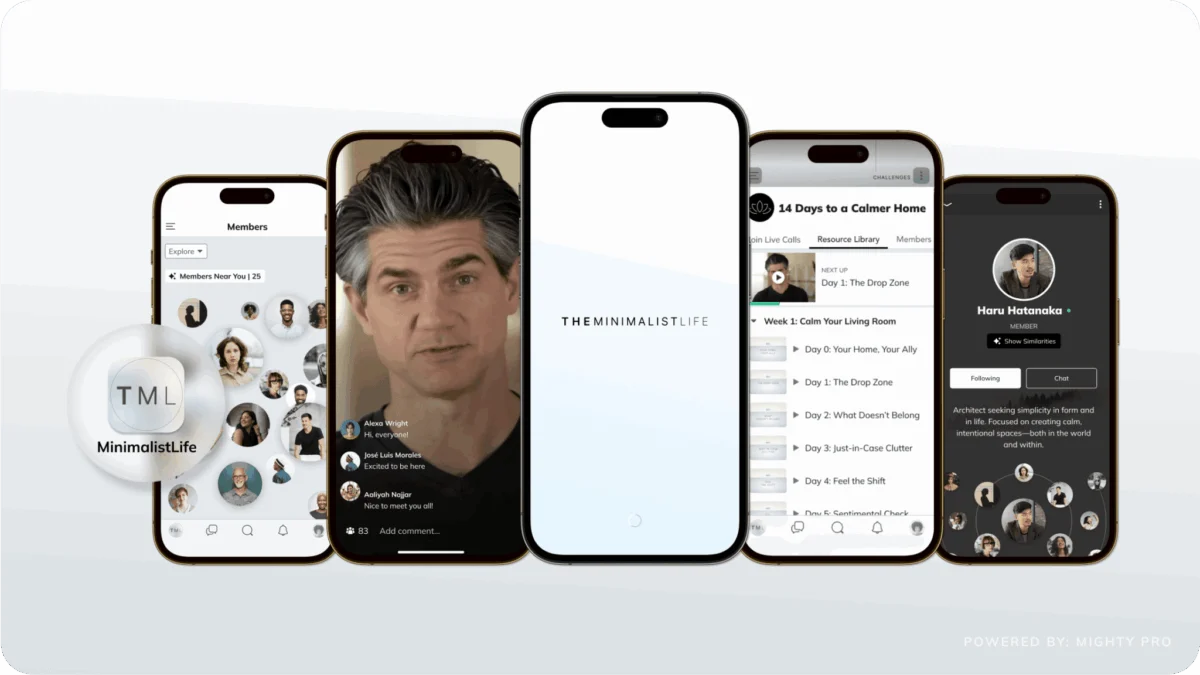
For nearly two decades, Joshua Becker has served as a primary voice in the global movement toward intentional living. Since the inception of his platform, Becoming Minimalist, he has evolved from a lone advocate for decluttering into a digital pillar for those seeking respite from consumerist culture. Today, Becker is announcing a strategic pivot in his mission: the launch of "The Minimalist Life," a private community platform designed to transition minimalism from a singular project into a sustainable, lifelong habit.
This shift marks a significant departure from his previous model, which relied heavily on static content—books, articles, and pre-recorded video courses—to a dynamic, interactive model centered on human connection and ongoing personal development.
The Chronology of a Movement: 17 Years of Becoming Minimalist
To understand the weight of this announcement, one must look at the trajectory of Becker’s work. His journey began seventeen years ago, born out of a desire to reclaim time and focus that he felt were being sacrificed on the altar of material maintenance.
- 2008–2015: The Foundational Years. Becker established the core tenets of his philosophy: owning less creates room for more. During this period, he produced hundreds of articles that synthesized the psychological benefits of a minimalist lifestyle, gaining traction as the global economic climate shifted toward a post-recession desire for simplicity.
- 2016–2022: Scaling the Message. As his audience grew, Becker pivoted toward structured education. His "Uncluttered Course" became a benchmark in the industry, helping over 90,000 individuals systematically clear their homes. Throughout this time, he authored several bestselling books and produced over 400 YouTube videos, creating a library of resources that defined the modern minimalist movement.
- 2023–2025: The Crisis of Sustainability. Despite the success of his digital offerings, a recurring pattern emerged in his community feedback. Users reported a "start-stop" cycle: the initial enthusiasm of decluttering would eventually wane, and without a framework for maintenance, they would revert to old habits.
This realization prompted a two-year period of reflection, culminating in the development of "The Minimalist Life," an initiative designed to provide the one thing static content cannot: community-led accountability.
Data and Demographics: Why Minimalism Remains Relevant
The demand for Becker’s new venture is supported by shifting trends in consumer behavior. Research into the "minimalist economy" suggests that while interest in decluttering remains high, the retention rate of the lifestyle is hindered by the ubiquity of modern marketing.
According to internal metrics provided by Becoming Minimalist, while 90,000+ individuals have completed the "Uncluttered" program, a substantial portion of that cohort expresses a desire for long-term guidance. The data suggests that minimalism is no longer seen as a one-time aesthetic choice but as a mental health necessity. In a world saturated with AI-generated content and hyper-targeted digital advertising, the audience is signaling a profound shift: they are moving away from "how-to" consumption and toward "who-with" support.
The Philosophy of "The Minimalist Life"
At the heart of the new platform is a fundamental redefinition of minimalism. For years, the movement was narrowly focused on physical possessions—clearing closets, donating clothes, and simplifying home décor. Becker’s new initiative aims to broaden this scope to what he terms "holistic minimalism."
Moving Beyond the Physical
The new community will address five critical pillars of a minimalist life:
- Financial Stewardship: Removing the clutter from one’s budget to focus on value-based spending.
- Schedule Optimization: Eliminating non-essential commitments that drain time and energy.
- Digital Hygiene: Managing the influx of information and digital noise that distracts from core life goals.
- Habitual Refinement: Replacing consumerist impulses with daily rhythms of intentionality.
- Relational Depth: Focusing on high-quality connections rather than the breadth of social obligations.
Becker notes that this is not merely an educational program. "This isn’t just another online course you complete and move on from," Becker stated in his announcement. "It’s about lasting, legitimate personal development and growth. It’s ongoing support that helps you build minimalism into your daily rhythm."
Official Response: Why Now?
When asked about the timing of this launch, Becker emphasized the role of human interaction in an increasingly automated world. "In an online world that is increasingly populated by AI-generated content, this community is about human interaction—with me and with others," he explained.

The decision to charge a founding membership fee—$18/month or $180/year—is a strategic move intended to foster a high-engagement environment. By creating a paid, private space, Becker aims to filter for members who are serious about long-term transformation rather than passive content consumption. This is a significant shift for a creator who has spent nearly two decades providing free, high-volume content, and it reflects the premium value he places on the "community-as-a-service" model.
Implications: A Shift in the Personal Development Industry
The launch of "The Minimalist Life" carries broader implications for the personal development and wellness industries.
1. The Death of the "One-Off" Course
For years, the gold standard for online creators has been the "evergreen" course—a set of videos and PDFs sold to as many people as possible. Becker’s move suggests that the market is becoming fatigued with this model. Consumers are now prioritizing integration over information. They are willing to pay for communities that provide the environment necessary to make changes stick.
2. The Rise of "Human-Centric" Platforms
As AI tools become capable of generating basic productivity tips and decluttering guides, the value of the "expert" is changing. The market is rewarding those who can foster real-time connection and accountability. Becker’s move to a community-based model acknowledges that, while an AI can tell you how to clean a room, it cannot provide the social validation and shared accountability required to maintain a minimalist life over a decade.
3. Sustainability of the Movement
By moving the conversation from "physical objects" to "intentional choices," Becker is attempting to future-proof his philosophy. If minimalism can successfully pivot from a decluttering trend to a holistic lifestyle framework, it ensures its relevance for the next generation of followers.
Conclusion: Joining the Journey
The launch of "The Minimalist Life" serves as a landmark event for the Becoming Minimalist community. As the doors open, the focus is squarely on the transition from consumption to embodiment.
For those who have followed Becker through his seventeen-year journey, this initiative offers a bridge between the philosophy of minimalism and the reality of daily life. By combining his historical expertise with a new, collaborative architecture, Becker is attempting to build something more durable than a blog or a book—he is attempting to build a culture of intentionality.
For prospective members, the path forward is clear: the clutter of the past has been cleared, and the next seventeen years are to be spent building something more meaningful in the space that remains.
Founding membership rates of $18 per month or $180 per year remain available through June 30th. Interested parties can learn more at the Becoming Minimalist website.


 Raul Delapena Setiawan

 Muslim




