



 Nana

The room falls into a sudden, heavy silence. It might be the sterile atmosphere of a hospital wing, the echoing acoustics of a chapel during a funeral, or perhaps the quiet solitude of a kitchen counter in the middle of a sleepless night. Someone begins to speak the opening words—"The Lord is my shepherd; I shall not want"—and even those who have not opened a Bible in decades find their lips moving in quiet synchronization with the ancient rhythm. In these moments of profound vulnerability, the human heart instinctively reaches for Psalm 23, seeking an anchor in the shifting tides of uncertainty.
Yet, there is a paradox inherent in its ubiquity: familiarity can rob poetry of its weight. When a passage is etched into the collective memory, its words often glide past the consciousness without truly taking root. However, a verse-by-verse examination of this ancient prayer reveals why it has remained the premier source of solace for the human experience, transcending cultural, temporal, and theological divides to address the fundamental anxieties of the soul.
The Core Identity of the Psalm
Psalm 23 is not merely a comforting poem; it is a declaration of radical trust, traditionally attributed to King David. It fundamentally reframes the nature of the Divine, shifting the image of God from that of an aloof monarch or a distant, judgmental deity to an attentive, personal Shepherd. This Shepherd provides sustenance, charts safe passage through treacherous terrain, stands guard in the darkest gorges, and ultimately welcomes the weary traveler home.
The theological gravity of the entire composition centers on five monosyllabic words: "For thou art with me."
The Biographical Context
The authenticity of the psalm is rooted in David’s own history. Long before he wore a crown or commanded armies, he spent his formative years in the rugged, unforgiving Judean wilderness, tending to flocks. It was there that he learned the brutal reality of survival: what a shepherd must risk, the vigilance required to protect a vulnerable flock, and the intimate bond that forms between the protector and the protected. The psalm is not a sanitized fairy tale; it is a raw, honest assessment of existence that acknowledges green pastures, steep valleys, and the presence of enemies, all held within a framework of divine custody.
Chronology of the Shepherd’s Journey
To understand the structural genius of Psalm 23, one must view it as a chronological walk through the life cycle. It is a progression that moves from the mundane to the miraculous:
- Green Pastures (Verses 1–3): A period of restoration, provision, and guidance where the Shepherd brings the weary back to a place of rest.
- The Valley (Verse 4): The pivot point. This represents the darkest place—the moments of crisis—where the presence of the Shepherd becomes most acute.
- The Table (Verse 5): A shift from the pastoral to the royal. Even amidst active threats, the Divine host provides honor and abundance.
- Home (Verse 6): The final destination, defined not by location, but by belonging and being pursued by divine mercy.
Supporting Data: The Anatomy of Provision
The opening declaration, "I shall not want," is frequently misinterpreted as a prosperity pledge—a promise that God will grant every casual desire. In a journalistic and theological context, however, it is better understood as a statement of absolute sufficiency. Because the Shepherd is attentive, the subject lacks nothing essential for life.
Restoration and Integrity
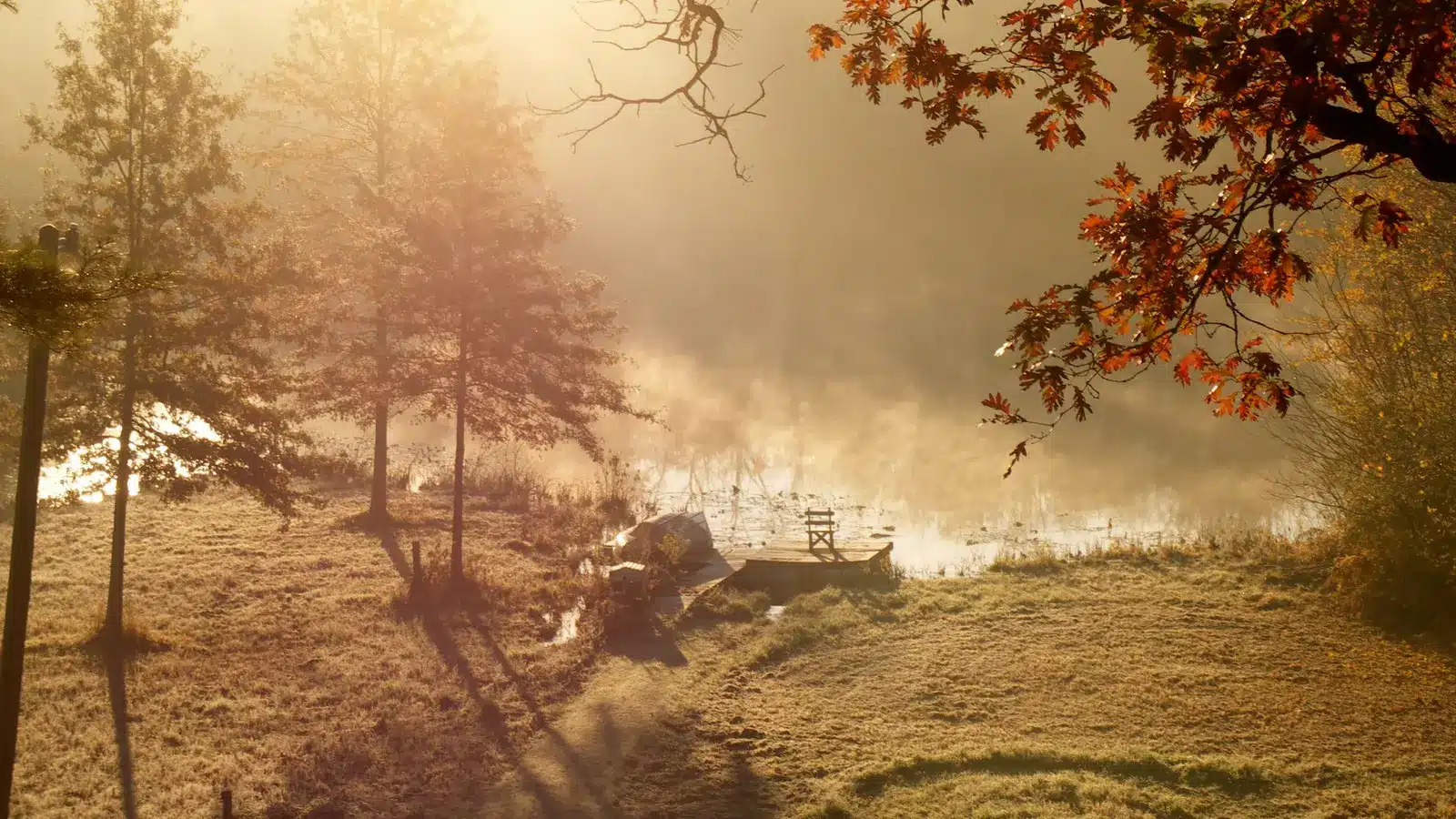
The imagery of the "still waters" and "green pastures" is not merely poetic filler; it addresses a biological reality. Sheep are skittish animals; they cannot graze, lie down, or rest if they are anxious, hungry, or threatened. The shepherd is the active agent who creates the environment necessary for restoration. As author Chad Bird notes, the Hebrew verb shuv, translated as "restore," carries the weight of retrieving something that has gone astray. It is an image of a shepherd physically tracking down a lost animal in the brush and carrying it back to safety.
Furthermore, the "paths of righteousness" serve a specific purpose: "for his name’s sake." This suggests that God’s guidance into a life of integrity is not a reward for our performance, but a reflection of His own unchanging character.
The Pivot of the Darkest Valley
Verse 4 represents the psychological and spiritual turning point of the text: "Yea, though I walk through the valley of the shadow of death, I will fear no evil: for thou art with me."
In the original Hebrew, the term tsalmaveth—often translated as "shadow of death"—functions as a poetic superlative for the deepest, most impenetrable darkness. Modern theological commentary notes that this transcends the physical act of dying. It encapsulates the full spectrum of human suffering: clinical depression, sudden bereavement, terminal diagnoses, and profound spiritual crises.
The Linguistic Shift
Crucially, the psalm transitions from third-person to second-person at this midpoint. In the safety of the green pastures, David speaks about God (He leads me, He restores me). But the moment he steps into the shadows, the language becomes direct and intimate: Thou art with me. This linguistic shift highlights a universal truth: in times of ease, God is a subject of praise; in times of darkness, God becomes a constant companion.
The Royal Host: Implications of the Table
In Verse 5, the metaphor shifts from the nomadic shepherd to the royal host: "Thou preparest a table before me in the presence of mine enemies."
In the context of the ancient Near East, hospitality was a sacred, ironclad contract. By inviting an individual to a table, a host was effectively offering them personal protection and honor. The most striking detail here is the setting: the banquet takes place while enemies watch from the perimeter. This carries a significant implication for modern readers: God does not wait for the "enemies"—be they financial, emotional, or circumstantial—to be defeated before offering His peace. The feast is set in the very heart of the tension.

The Divine Pursuit
The concluding verse offers a final, startling image: "Surely goodness and mercy shall follow me all the days of my life."
The English word "follow" is remarkably weak compared to the original Hebrew radaph. This is a verb of intensity, typically used to describe an army giving chase or a hunter in pursuit. David is asserting that goodness and mercy are not merely trailing behind him; they are actively hunting him down. This "hound of heaven" concept serves to reassure the reader that even in the "dark valleys" previously mentioned, divine love remains in pursuit.
Practical Applications for the Modern Era
Why does this ancient text continue to resonate in the 21st century?
- The Architecture of Grief: For those navigating loss, the psalm provides a narrative of survival. It does not ignore the "valley," but it promises that the valley is not the destination.
- The Antidote to Striving: In a culture characterized by burnout and the constant need for performance, the image of being "made" to lie down offers a necessary permission to rest.
- The Presence of the "Other": Whether through meditation, communal reading at funerals, or personal prayer, the psalm functions as a psychological mechanism to combat isolation. By naming the presence of the Shepherd, the individual is reminded that they are not alone in their internal or external crises.
Final Reflections
Psalm 23 remains an enduring piece of literature because it refuses to romanticize the human condition. It acknowledges that life involves steep descents, the presence of opposition, and the inevitability of mortality. However, it anchors these realities in a framework of unwavering care.
The promise of the psalm is not a life insulated from sorrow or free from the "valley." Its promise is far more resilient: a Shepherd who walks beside you through the gloom, a table prepared in the presence of struggle, and an identity defined by belonging to an eternal home. In every season of life—from the most sun-drenched pasture to the deepest, most shadowed gorge—the foundational truth remains, steady and unmoving: For thou art with me.


 Dwi Wanna

 Nana Wu