

 Nila Kartika Wati
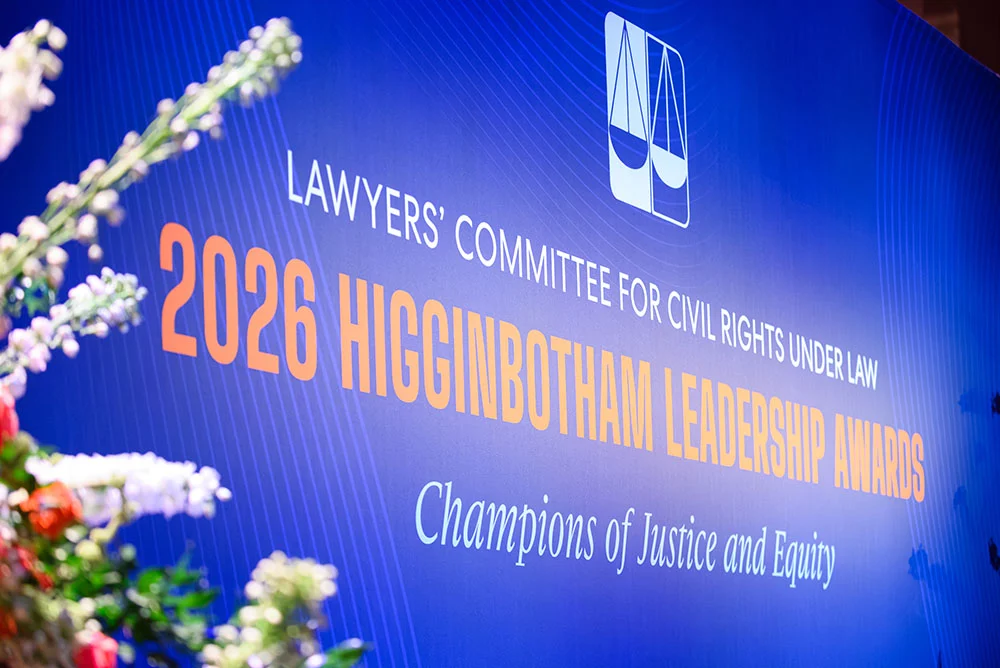
NEW YORK — Against the backdrop of an increasingly polarized political landscape and a precarious era for voting rights, the Lawyers’ Committee for Civil Rights Under Law convened its most influential voices on September 23, 2026. The prestigious Cipriani Wall Street served as the stage for the annual Higginbotham Leadership Awards Gala, an evening dedicated to celebrating the indomitable spirit of those who have dedicated their lives to dismantling systemic barriers and expanding the promise of American democracy for Black communities and people of color.
This year’s ceremony, marked by a palpable sense of urgency, underscored a critical mission: to honor the architects of modern civil rights advocacy while galvanizing a new generation of activists to defend the hard-won gains of the past.
The Main Facts: Honoring the Vanguard of Justice
The centerpiece of the 2026 gala was the recognition of individuals whose work has fundamentally shifted the discourse on racial equity and political representation. The Lawyers’ Committee, one of the nation’s preeminent civil rights legal organizations, bestowed its highest accolades upon those who have transformed the courtroom and the ballot box into arenas of progress.
The Robert F. Kennedy Justice Prize was awarded to Stacey Abrams, the trailblazing activist, author, and politician who shattered historical ceilings as the first Black woman to secure a gubernatorial nomination from a major political party in the United States. Abrams, long recognized as a preeminent figure in voting rights advocacy, was honored for her relentless efforts to dismantle voter suppression and for her national leadership in organizing grassroots movements that have fundamentally altered the landscape of electoral participation.
In a poignant turn of the evening, the Courageous Client Award was presented to Mamie Cunningham, representing the plaintiffs in the landmark litigation Mississippi State Conference of the NAACP v. Mississippi State Board of Election Commissioners. The award recognized the collective bravery of the plaintiffs, who took a stand against discriminatory election laws in Mississippi. Their legal battle, spearheaded by the Lawyers’ Committee, serves as a direct challenge to mechanisms that have historically diluted Black voting power, ensuring that minority communities maintain a fair opportunity to elect representatives who reflect their interests and values.
Chronology of a Movement: From Roots to Resistance
The 2026 Higginbotham Gala did not exist in a vacuum; it was the culmination of decades of strategic legal and political mobilization. To understand the gravity of the honors bestowed this year, one must look at the historical trajectory of the Lawyers’ Committee and the specific challenges that necessitated the recent litigation in Mississippi.
The Foundation of the Lawyers’ Committee
Founded in 1963 at the request of President John F. Kennedy, the Lawyers’ Committee for Civil Rights Under Law was established to mobilize the private bar to provide legal assistance to civil rights activists in the South. For over six decades, the organization has served as a bulwark against state-sponsored disenfranchisement, evolving from its roots in the Civil Rights Movement to addressing modern-day manifestations of inequality.
The Mississippi Challenge
The litigation at the heart of this year’s "Courageous Client Award" began in response to shifting electoral maps and administrative hurdles in Mississippi. Following years of demographic changes and subsequent legislative attempts to consolidate power in ways that marginalized Black voters, the NAACP, represented by the Lawyers’ Committee, initiated the lawsuit to restore electoral equity.
The timeline of this case reflects the "long game" of civil rights litigation:
- Initial Filing: Challenging the systemic dilution of the Black vote through redistricting and polling place accessibility.
- Discovery and Pre-Trial: A grueling phase where plaintiffs like Mamie Cunningham provided testimony, detailing the daily reality of navigating an electoral system designed to place hurdles in front of minority voters.
- 2026 Resolution: The legal momentum generated by these cases, and the ongoing public pressure exerted by activists, set the stage for this year’s gala, which served as both a victory lap and a rallying cry for the next phase of the struggle.
Supporting Data: The State of Voting Rights in America
The accolades provided to Abrams and the Mississippi plaintiffs are not merely symbolic; they are rooted in a statistical reality regarding the health of American democracy.
According to data compiled by the Lawyers’ Committee and affiliated civil rights organizations, the United States is currently experiencing a "re-trenchment" period. Since the Supreme Court’s 2013 decision in Shelby County v. Holder, which gutted the preclearance requirements of the Voting Rights Act of 1965, there has been a documented surge in restrictive voting legislation across the country.
- Voter Roll Purges: Jurisdictions with a history of discriminatory practices have seen a 15% increase in the frequency of voter roll purges in the last four years.
- Polling Place Consolidation: The number of active polling locations in predominantly Black precincts has faced continued pressure, increasing the travel distance for minority voters and contributing to longer wait times—a phenomenon often referred to as the "time tax" on democracy.
- The Abrams Impact: Data from organizations like Fair Fight Action—founded by Abrams—demonstrates that through sustained, data-driven voter education and legal intervention, voter turnout in historically suppressed communities can increase by upwards of 10% in high-stakes election cycles.
These figures illustrate that the work honored at the gala is not peripheral to the democratic process; it is central to maintaining the demographic representation that the Constitution intended.
Official Responses: Voices from the Frontlines
The leadership of the Lawyers’ Committee emphasized that these awards were intended to spotlight the human cost and the human triumph of civil rights work.
Damon Hewitt, President and Executive Director of the Lawyers’ Committee for Civil Rights Under Law, delivered a stirring address, noting, "The people we honored this year demonstrate what it means to meet a difficult moment with courage, persistence and an unwavering belief in our collective power."
Hewitt’s comments reflected a broader strategy: humanizing the legal fight. "Stacey Abrams has spent years expanding pathways for people to exercise their voice and power, while our courageous clients in Mississippi stood up for their communities and refused to accept a political system that diminished Black voting power," he added. "At a time when hard-won civil rights protections are under attack, their leadership reminds us that progress has never simply been given to us. It has always required people willing to stand up, fight back and build something better."
Shaylyn Cochran, Deputy Executive Director, highlighted the importance of coalition-building in the modern era. "This year’s gala was a celebration of the powerful civil rights coalition we’ve built, and it marked our re-commitment to fighting for the futures our communities deserve," Cochran stated. "Stacey Abrams and our Mississippi clients have worked tirelessly in pursuit of a fairer, truly representative democracy. They continue to shape the roadmap for protecting Black political power. We honor their contributions and will draw inspiration from their resolve as we face these ongoing challenges."
Implications: The Road Ahead for Civil Rights
The 2026 Higginbotham Leadership Awards Gala serves as a barometer for the current state of civil rights advocacy. The implications of the work being honored are profound and far-reaching.
A Legal Roadmap for the Future
The success of the Mississippi plaintiffs serves as a template for other states currently grappling with similar issues of gerrymandering and restrictive voting laws. By successfully leveraging federal litigation to force accountability, the Lawyers’ Committee is proving that the courtroom remains a vital, if not primary, tool for political reform.
Sustaining the Activist Pipeline
By honoring Stacey Abrams, the organization is signaling the importance of bridging the gap between electoral politics and legal advocacy. The message is clear: the fight for justice requires a multi-pronged approach involving activists on the ground, lawyers in the courtrooms, and leaders in the halls of government.
Preparing for Continued Backlash
The gala also acknowledged the harsh reality of the current political environment. With civil rights protections under intense scrutiny from conservative judicial bodies and state legislatures, the work of the Lawyers’ Committee is likely to face even greater hurdles in the coming years. The event functioned as a "re-commitment," acknowledging that while the victories are significant, the opposition is well-funded and strategically organized.
As the attendees departed Cipriani Wall Street, the prevailing sentiment was one of cautious optimism. The awards were not merely a look back at a job well done; they were a preparation for the next cycle of the struggle. For the Lawyers’ Committee, for Stacey Abrams, and for the clients who took a stand in Mississippi, the fight for a truly representative democracy is not an event that occurs once a year at a gala—it is a continuous, everyday commitment to the belief that, in the words of Damon Hewitt, "progress has never simply been given to us."
The 2026 Higginbotham Gala stands as a testament to that belief, providing the inspiration and the framework for the long, necessary road toward justice.

 Evan Lee Salim