




 Siti Muinah
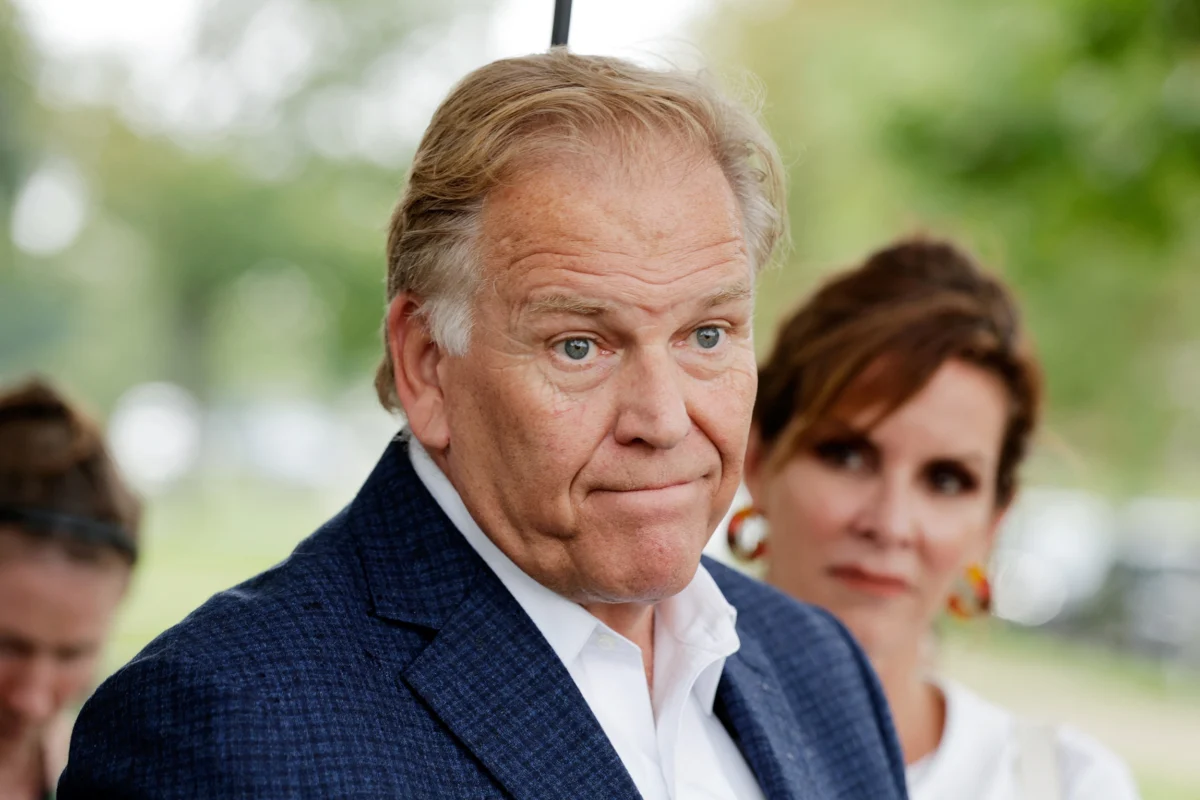
DETROIT, Michigan — As the 2026 midterm elections approach, the political discourse in Michigan has reached a fever pitch, with the economy serving as the central battleground. Amid this backdrop, newly surfaced audio recordings have cast a shadow over the campaign of Republican U.S. Senate candidate Mike Rogers. The former congressman and current contender finds himself embroiled in a controversy regarding his public dismissal of voter anxieties over the rising cost of living—a sentiment he has characterized as “Trump derangement.”
The comments have provided fuel for Democratic opponents, who argue that the millionaire candidate is fundamentally disconnected from the daily financial struggles of Michigan families. As voters grapple with a sustained period of inflation and the tangible impacts of federal trade policies, the debate over who is responsible for the current economic climate has become the defining issue of the cycle.
The Genesis of the Controversy: "Trump Derangement"
The friction stems from a series of radio appearances and private remarks made by Rogers earlier this year. In a January interview, Rogers sought to insulate the Trump administration from criticism regarding inflation. When the conversation turned to the palpable frustration of voters regarding the price of groceries, fuel, and essential household goods, Rogers pivoted toward a combative stance.
“They [Democrats] say, ‘Trump caused high prices’—people go nuts, they lose their mind. I do believe there is this Trump derangement,” Rogers stated.
This framing—labeling valid economic grievances as a psychological condition rather than a rational response to market conditions—has struck a nerve. By categorizing the concerns of the electorate as “derangement,” critics argue that Rogers is attempting to invalidate the lived experiences of thousands of Michiganders who are seeing their purchasing power erode.
The controversy deepened with the release of subsequent audio clips. In one instance, Rogers is heard mockingly dismissing public outcry over food inflation: “Oh my gosh, coffee went up,” he said. “You know, horror!”
When confronted by reporters regarding these statements, Rogers has largely refused to walk back the rhetoric. During a recent campaign stop, he dismissed inquiries about the remarks as “a couple of DNC talking points,” signaling a strategy of doubling down rather than attempting to bridge the gap with undecided voters who may be feeling the pinch.
Chronology of Economic Discontent
The trajectory of the current economic environment can be traced back to the implementation of aggressive protectionist policies. Following the return of Donald Trump to the White House, the administration initiated a series of sweeping tariffs aimed at various international trading partners. While the administration framed these measures as a strategy to bolster domestic manufacturing, the immediate downstream effect was an increase in the cost of imported raw materials and consumer goods.
- Early 2026: Implementation of new tariff schedules begins. Economists note a shift in supply chain costs.
- Spring 2026: Reports from major retail sectors indicate that the costs of imported components are being passed directly to the consumer.
- Summer 2026: Geopolitical tensions—specifically the Trump administration’s decision to engage in a kinetic conflict with Iran—lead to a surge in global oil prices. The impact on diesel, essential for trucking and logistics, begins to inflate the price of perishables and grocery staples.
- September 2026: Public polling confirms that inflation and affordability are the primary issues for Michigan voters, consistently outpacing concerns over social issues or foreign policy.
- October 2026: The New York Federal Reserve releases data suggesting that the trajectory of inflation had been on a downward slope prior to the 2026 tariff implementations, providing a counter-narrative to the administration’s claims that inflation was a legacy problem.
Supporting Data: The Cost of Living Crisis
The disconnect between the campaign rhetoric of Mike Rogers and the economic reality in Michigan is underscored by hard data. Recent studies have highlighted the state as being among those hit hardest by the current inflation cycle.
According to economic analysis, the average Michigan household is facing an estimated $5,600 increase in annual costs compared to previous cycles. This figure accounts for the combined weight of higher grocery bills, elevated utility costs stemming from fuel prices, and the rising cost of vehicle ownership.

Furthermore, a report published last week by the New York Federal Reserve provides a compelling look at the causal relationship between policy and price. The data suggests that many consumer goods were experiencing price stabilization before the administration’s new tariff array took effect. By placing duties on essential imports, the government effectively raised the floor for consumer pricing, negating the cooling effects the market had previously achieved.
Diesel prices, which serve as a bellwether for the economy, have remained elevated throughout the latter half of 2026. Because a significant portion of the U.S. food supply relies on diesel-powered trucking, the costs of transporting produce and staples from farm to table have cascaded into higher shelf prices. This phenomenon creates a "compounding effect" where the price of a gallon of fuel influences the price of a carton of milk, creating a persistent, sticky inflation that impacts low- and middle-income families most severely.
Official Responses and Political Fallout
The response from the Democratic camp has been swift and strategic. Abdul El-Sayed, the Democratic candidate for the Senate, has seized on the audio clips to frame Rogers as an out-of-touch elitist. El-Sayed’s campaign has utilized these recordings in targeted digital advertisements across Michigan, particularly in the working-class suburbs of Detroit and the industrial hubs of the state.
“When you mock the price of coffee, you are mocking the families who have to count every penny to make sure their children are fed,” an El-Sayed campaign surrogate stated in a recent press release. “Mike Rogers may find the cost of living a joke, but for the people of Michigan, it is the defining challenge of their lives.”
Conversely, the Rogers campaign has attempted to pivot the conversation back to the broader, more abstract arguments regarding deregulation and national security. By painting the criticism as partisan harassment, Rogers hopes to keep his base energized while ignoring the moderates who may be deterred by his perceived lack of empathy. However, political analysts warn that this strategy is high-risk in a swing state where the margins are razor-thin.
Implications for the 2026 Midterms
The political implications of this exchange are profound. With the latest aggregate polling data from FiftyPlusOne showing El-Sayed leading with 48.2 percent against Rogers’ 44.8 percent, the race is tightening. While a lead of less than four points is within the margin of error, the trend line suggests that the “affordability gap” is hurting the Republican ticket.
The primary concern for the GOP is not necessarily that voters blame the party for global economic trends, but that they feel the party is indifferent to their struggle. In a democracy, the perceived empathy of a candidate often outweighs the technical accuracy of their economic policy. By dismissing the concerns of the electorate as “derangement,” Rogers has inadvertently allowed his opponents to define his character.
As the election approaches, both campaigns are pouring millions of dollars into media buys that center on the economy. For Rogers, the task is to regain control of the narrative and convince the electorate that his economic vision provides a path to stability. For the Democrats, the task is to ensure that voters remember the "coffee" remark—a small, seemingly insignificant comment that has become a symbol of the broader debate over who truly understands the struggles of the American worker.
Ultimately, the Michigan Senate race will serve as a bellwether for whether the electorate prioritizes long-term ideological loyalty or short-term economic relief. If the current trajectory holds, the "Trump derangement" comment may go down as one of the most consequential unforced errors of the 2026 cycle.

 Rifan Muazin
 Ammar Sabilarrohman






