

 Dwi Wanna
Dhaka, Bangladesh – As the existential threat of climate change intensifies, a paradigm shift is underway in how the world approaches adaptation. While technological innovation, infrastructure development, and substantial financial investments remain critical components, a growing consensus highlights a profoundly valuable, yet often overlooked, resource: the deep, lived knowledge of those already navigating the front lines of a changing planet. This is the core philosophy driving the work of BRAC, one of the world’s largest development organizations, which is championing a "locally led" approach to climate resilience, placing the expertise of vulnerable communities at the heart of solution design.
For decades, BRAC has worked in tandem with communities in Bangladesh and other climate-vulnerable regions, accumulating invaluable insights. Their experience underscores a fundamental principle for the future of climate action: that adaptation solutions should not be passively received, but actively co-created. This approach recognizes that climate change, while a global phenomenon, manifests in intensely local ways, demanding context-specific strategies.
The Multifaceted Reality of Climate Change: A Localized Crisis
The global discourse on climate change often coalesces around broad technological solutions—renewable energy, resilient crops, advanced forecasting. These are undeniably crucial. However, they represent only one facet of a complex challenge. The lived experience of climate change is not uniform; it is a mosaic of distinct local realities.
In one community, the primary threat may be escalating floods, while in another, persistent drought dictates survival. A farmer in a coastal area might grapple with the insidious creep of saltwater intrusion, rendering land infertile, while a counterpart miles inland faces entirely different challenges, such as extreme heat or erratic rainfall patterns that disrupt established agricultural cycles. This inherent locality of impact necessitates a fundamentally different approach to adaptation compared to mitigation efforts, which often demand large-scale, coordinated global action. Adaptation, conversely, hinges on a granular understanding of specific, on-the-ground conditions.
This nuanced understanding requires asking critical questions: What crops are currently being cultivated? Where does the community source its water? What specific weather patterns are undergoing noticeable changes? What are the existing resource limitations? Which sources of information are trusted and utilized? Perhaps most crucially, what adaptive strategies have these communities already developed through years of experience?
BRAC’s Pioneering Approach: Bridging Local Knowledge and Scientific Insight
Md. Liakath Ali, Director of BRAC’s Climate Change Program, emphasizes the critical importance of these questions in designing effective and usable solutions. BRAC’s methodology strategically integrates community knowledge with the rigor of climate science, weather information, and practical, actionable tools. This fusion empowers farmers to make informed decisions, drawing upon both their lived experience and increasingly sophisticated climate data. The objective is not to supplant local wisdom with scientific pronouncements, but to amplify their combined power.
This integration is not merely theoretical. In Bangladesh, BRAC’s innovative "adaptation clinics" serve as tangible embodiments of this philosophy. These clinics act as vital conduits, bringing crucial climate information and agricultural guidance directly to the farmers who need it most. They provide accessible weather forecasts, timely agricultural advisories, and other practical information designed to directly influence day-to-day decision-making.
For smallholder farmers, possessing general knowledge about potential climate shifts is insufficient without answers to immediate, practical questions: Should planting commence now or be postponed? Is a period of heavy rainfall imminent? How should irrigation strategies be adjusted? Is a particular crop no longer viable given current environmental conditions?
This highlights a critical juncture where possessing climate data intersects with the ability to effectively utilize it. A sophisticated forecast, generated remotely, holds limited practical value if it never reaches the farmer in an understandable and actionable format. BRAC’s community-based model is specifically designed to bridge this gap, connecting climate information with individuals who possess an intrinsic understanding of the local agricultural context. This is a deceptively simple yet profoundly impactful idea: climate information gains significantly more utility when communities can interpret and apply it through the lens of their own accumulated experience.
Beyond Beneficiaries: Recognizing Farmers as Climate Experts
A pervasive tendency within international development circles is to frame individuals in climate-vulnerable regions primarily through the lens of their perceived deficits: a lack of financial resources, inadequate infrastructure, limited technological access, or insufficient material possessions. This framing, while often well-intentioned, can inadvertently obscure the wealth of knowledge and resilience that these communities already possess.

A farmer who has diligently cultivated the same land for decades often possesses an intuitive understanding of subtle shifts in rainfall patterns, soil health, or seasonal cycles—observations that might elude an outsider for considerably longer. Communities, through their collective experience, often possess an intimate understanding of which interventions are genuinely feasible, which are likely to be embraced, and which, despite appearing promising on paper, may falter in practical application.
This repository of local knowledge becomes particularly invaluable as historical weather patterns, once reliable indicators, become increasingly unpredictable. It is crucial to emphasize that locally led adaptation does not imply that communities are expected to surmount the immense challenges of climate change in isolation, without external support. On the contrary, governments, non-governmental organizations, scientific institutions, and funding bodies retain indispensable roles in providing financial resources, technological advancements, necessary infrastructure, and vital climate information.
The fundamental distinction lies in the deployment of these resources. Instead of arriving with pre-conceived solutions, organizations are encouraged to commence by understanding the problem as it is experienced by the communities themselves, and then collaboratively building solutions from that foundation.
Empowering Women Smallholder Farmers: A Key to Enhanced Resilience
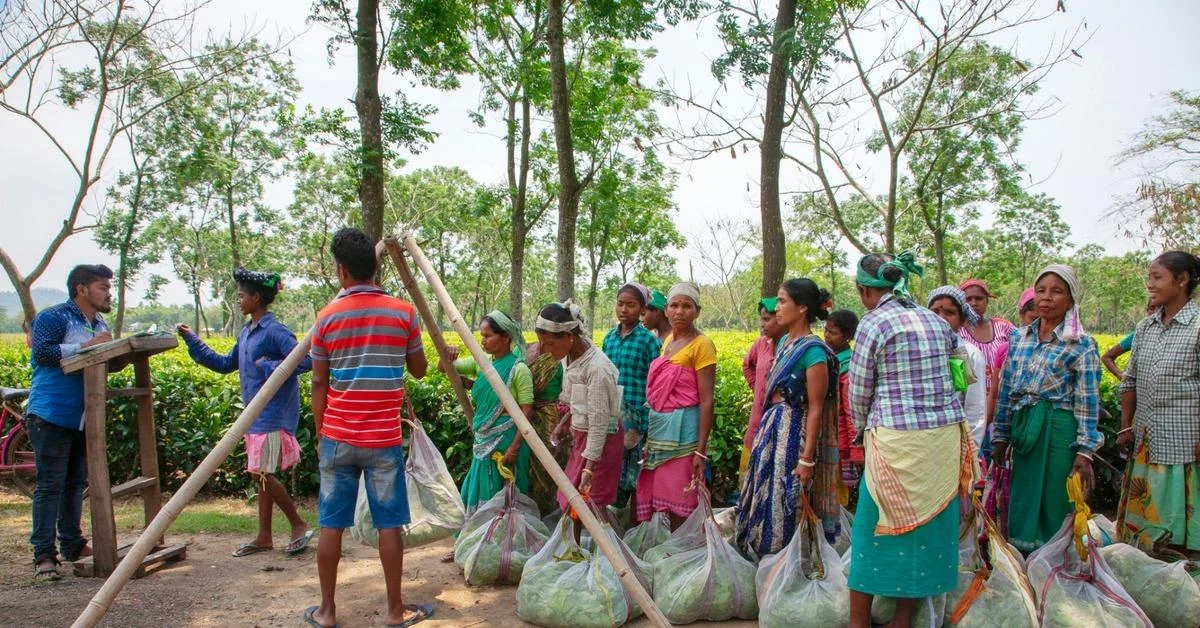
BRAC is currently undertaking an ambitious initiative to scale up its decades of community-based work, aiming to reach nearly two million women smallholder farmers. This endeavor specifically targets communities facing escalating climate risks, with a deliberate emphasis on women.
This focus on women is profoundly significant. In many of the world’s most climate-vulnerable regions, women are central to food production and maintaining household resilience. Despite their critical roles, they frequently encounter disproportionately limited access to financing, land ownership rights, agricultural extension services, appropriate technologies, and meaningful decision-making power. This disparity presents both a significant challenge and a substantial opportunity within the climate adaptation landscape.
When women farmers are provided with enhanced access to timely climate information, practical tools, and resources that genuinely reflect their local realities, these investments can yield benefits far beyond the productivity of an individual farm. They can profoundly influence household income, bolster food security, and enhance a community’s overall capacity to withstand future climate shocks.
Consequently, BRAC’s objective extends beyond the mere distribution of specific technologies or the imposition of a prescribed set of agricultural practices. The model is meticulously designed to fortify individuals’ inherent capacity to make informed decisions as climate conditions continue their inexorable evolution. This nuanced distinction is critical, as the complex and dynamic nature of climate change suggests that a static, one-size-fits-all "climate adaptation playbook" may never materialize.
The Future of Climate Solutions: Found Within Communities
The coming decades will necessitate substantial global investment in climate adaptation. While some of these investments will undoubtedly involve sophisticated technologies and large-scale infrastructure projects, truly effective adaptation may also depend on something far less technologically ostentatious: improved methods of active listening.
Local knowledge, while invaluable, cannot unilaterally replace the critical insights provided by climate science. Likewise, climate science, in its entirety, cannot fully encompass every nuanced reality faced by individual farmers, families, or entire villages. However, when these two crucial elements are brought into synergistic alignment, climate solutions can emerge that are not only more practical and responsive but also possess a greater potential for enduring impact.
This principle represents one of the most significant takeaways from BRAC’s extensive work. The individuals and communities residing on the front lines of climate change should not be relegated to the periphery of the adaptation process, passively awaiting externally delivered solutions. Instead, they should serve as the foundational starting point for all endeavors aimed at building resilience. Their voices, their knowledge, and their lived experiences are not merely data points; they are the essential bedrock upon which effective and equitable climate adaptation must be built.


 Nana Wu

 Asro






