



 Nana Muazin
The landscape of reproductive rights in the United States remains a volatile patchwork of legal protections and draconian restrictions. As the 2026 midterm elections approach, the national conversation has shifted from the immediate shock of the Dobbs decision to a sophisticated, state-by-state war of attrition. While the composition of the U.S. Senate and House of Representatives will dictate the legislative ceiling for federal policy, the immediate fate of millions of people rests on ballot initiatives in four key states: Missouri, Idaho, Virginia, and Nevada.
Beyond the ballot box, the shadow of a potential federal crackdown looms. Analysts suggest that the current administration may utilize administrative "backdoor" maneuvers—such as reviving the Comstock Act or directing the FDA to rescind approval for medication abortion—to bypass a divided Congress. Consequently, these state-level constitutional and statutory measures represent more than local policy; they are the final line of defense against a coordinated federal assault on reproductive healthcare.
Main Facts: The Four-State Battleground
In November 2026, voters in four distinct political climates will decide on the future of abortion access. The stakes vary from restoring lost rights to preemptively protecting existing ones against future legislative interference.
- Missouri (Amendment 3): A high-stakes attempt by conservative lawmakers to reverse a 2024 pro-choice victory. The amendment seeks to reinstate a near-total ban by tethering it to controversial bans on gender-affirming care.
- Idaho (Proposition 1): A grassroots effort to establish a "statutory right" to reproductive freedom in a state that has seen a catastrophic exodus of medical professionals following a 2022 total ban.
- Virginia (Question 1): A proactive measure to move abortion rights from a vulnerable legislative status to a permanent constitutional protection. Virginia currently serves as the primary reproductive healthcare hub for the American South.
- Nevada (Question 6): An initiative to codify the standards of Roe v. Wade into the state constitution, ensuring that fetal viability remains the legal threshold for state interference.
Chronology: From the Fall of Roe to the 2026 Counter-Offensive
The road to the 2026 midterms began on June 24, 2022, when the Supreme Court overturned Roe v. Wade, ending nearly 50 years of federal protection for abortion rights.
2022–2023: The Initial Shockwave
Immediately following the Dobbs decision, "trigger laws" went into effect across the country. Missouri became the first state to enact a total ban without exceptions for rape or incest. Idaho followed shortly after, leading to an immediate healthcare crisis. However, the political blowback was swift. In various states, voters consistently supported reproductive freedom when it appeared on the ballot.
2024: The Missouri Breakthrough
In a landmark 2024 election, Missouri voters approved a constitutional amendment to enshrine reproductive freedom. This was a historic moment: the first time a state with a total ban successfully overturned that ban via a direct vote of the people. Courts subsequently began striking down state-level restrictions, and providers prepared to resume services.
2025–2026: The Legislative Backlash and "Logrolling"
In response to the 2024 losses, anti-abortion legislators shifted tactics. Rather than attacking abortion rights directly, which had proven unpopular at the polls, they began "logrolling"—combining unpopular abortion bans with other polarizing issues, such as gender-affirming care for minors, to confuse the electorate and reclaim legal control over bodily autonomy.
Supporting Data: The Human and Healthcare Cost
The necessity of these ballot measures is underscored by the deteriorating healthcare conditions in states with restrictive laws.
Idaho’s Medical Exodus
Since Idaho’s total ban took effect in August 2022, the state’s healthcare infrastructure has neared a point of collapse. According to data from the Idaho Coalition for Safe Healthcare and subsequent studies, the state has lost approximately 35% of its practicing obstetricians. The impact is most acute in rural areas; at least three hospitals have completely shuttered their labor and delivery departments, citing the legal risks posed to doctors. In metropolitan areas like Boise, the patient-to-doctor ratio has skewed so dramatically that wait times for routine annual exams now stretch to nine months.
Virginia and Nevada as Regional Safe Havens
As neighboring states enacted bans, Virginia and Nevada became essential "islands" of access.
- Virginia: Between 2020 and 2025, the number of abortions performed in Virginia increased by 114%. This surge is largely attributed to patients traveling from Tennessee, West Virginia, and the Carolinas.
- Nevada: The state saw a 33.5% increase in abortion procedures in the first year following the Dobbs decision. Nevada currently serves as the primary destination for patients fleeing the healthcare vacuum in Idaho and Utah.
The Misleading Nature of Missouri’s Amendment 3
Missouri’s Amendment 3 is a strategic masterpiece of political obfuscation. It proposes a near-total ban (with narrow exceptions) while simultaneously banning gender-affirming care for minors—a service that is already illegal in the state. This redundancy suggests the amendment’s primary purpose is to use anti-transgender sentiment to trick voters into stripping away the abortion protections they just voted for two years ago.
Official Responses and Political Maneuvering
The political response to these initiatives highlights a deep divide in governance strategy.
The Republican Strategy: Strategic Delay and Administrative Action
At the federal level, the Trump administration and its allies have been accused of "strategic delay." Reports suggest that high-level advisors have counseled against a vocal push for a national abortion ban until after the 2026 midterms, fearing a repeat of the GOP’s underperformance in 2022 and 2024.
Instead, the focus has shifted to the FDA and the Comstock Act. By appointing loyalists to the FDA, the administration could theoretically re-categorize mifepristone (the abortion pill) as "unsafe," effectively banning more than 60% of abortions performed in the U.S. without a single vote in Congress. Missouri Attorney General Catherine Hanaway and other state GOP leaders have mirrored this approach, refusing to accept the 2024 referendum results and using litigation to stall the reopening of clinics.
The Democratic and Advocacy Response: Codification and Messaging
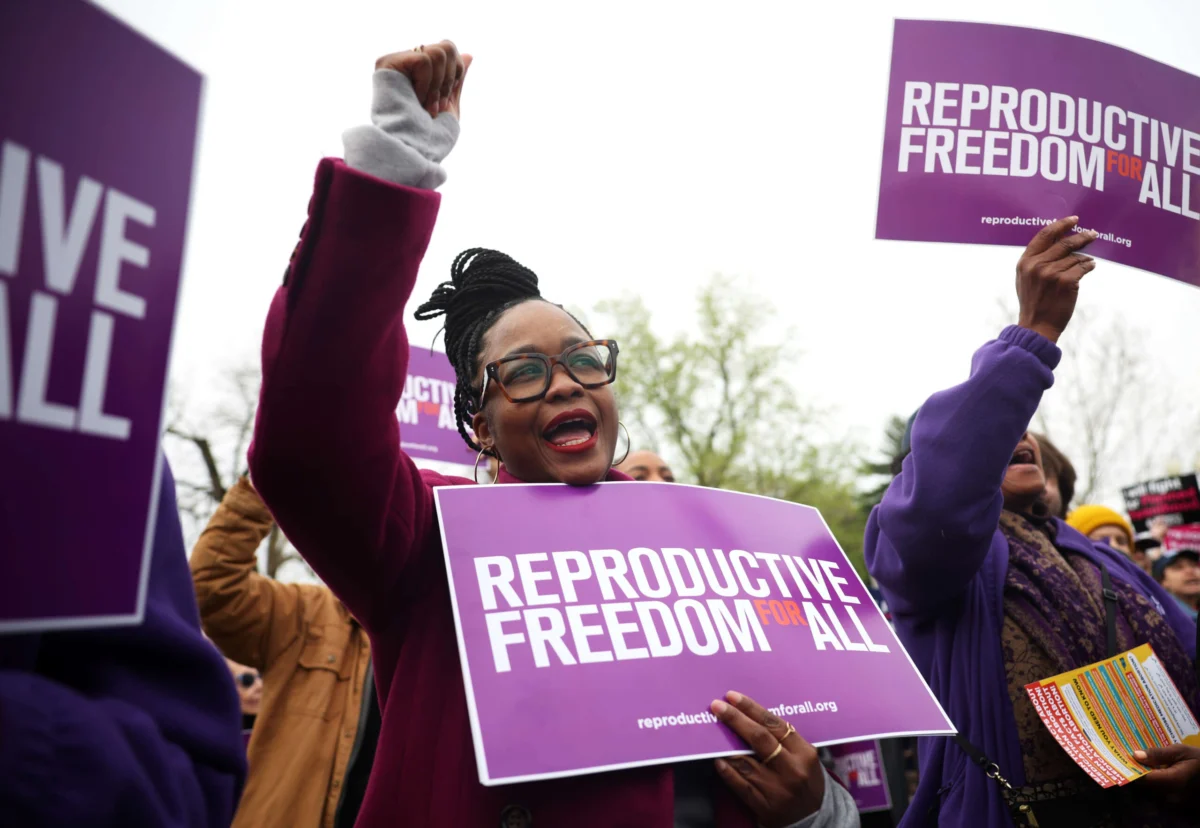
Advocacy groups like Nevadans for Reproductive Freedom and Reproductive Freedom for All are focusing on the concept of "codification." Their argument is that legislative majorities are fleeting, and only constitutional amendments can provide the permanence required for a stable healthcare system. They emphasize that these measures are not just about abortion, but about the broader right to privacy and the prevention of state overreach into personal medical decisions.
Implications: The Future of Federalism and Public Health
The outcome of the 2026 midterms will have profound implications for the future of the United States, extending far beyond the four states in question.
The Erosion of Direct Democracy
If Missouri’s Amendment 3 passes, it will provide a blueprint for how state legislatures can overturn the "will of the people." If a constitutional amendment passed by voters can be undone two years later through deceptive "logrolling" tactics, the power of the citizen referendum—a cornerstone of Western democracy—is significantly weakened.
The "Two-Tiered" Healthcare System
The success or failure of these measures will further cement a two-tiered healthcare system in America. In states like Nevada and Virginia, reproductive healthcare will likely remain integrated into standard medical practice. In states like Idaho, the continued ban will likely lead to further "maternal care deserts," where not only abortion but also prenatal care, emergency miscarriage management, and labor and delivery services become increasingly unavailable.
National Political Momentum
The 2026 midterms will serve as the ultimate "vibe check" for the 2028 presidential election. If pro-choice measures continue to win even in "red" states like Idaho or Missouri, it will signal to national candidates that reproductive freedom remains a winning issue. Conversely, if the anti-abortion counter-offensive succeeds, it will embolden federal lawmakers to pursue a national ban under the belief that the "pro-choice surge" has finally waned.
In conclusion, the 2026 midterm elections represent a critical juncture. For voters in Missouri, Idaho, Virginia, and Nevada, the ballot is not merely a choice between candidates, but a direct referendum on the autonomy of their own bodies. As the federal government maneuvers to potentially bypass the legislative process, these state-level battles are the most significant obstacles remaining in the path of a total national prohibition on reproductive healthcare.


 Nana Wu

 Asro






