


 Lina Irawan
This coverage is made possible through a partnership between Grist and WABE, Atlanta’s NPR station.
In a landmark decision that could reshape the future of the American electrical grid, the Georgia Public Service Commission (PSC) has officially sanctioned a novel partnership between Georgia Power and Google. The agreement, finalized last week, marks a significant shift in how large-scale industrial consumers—specifically the "hyperscale" data centers powering the artificial intelligence boom—interact with utility providers. Starting in 2028, Google will provide direct financial backing for upgrades to Georgia’s existing nuclear infrastructure, a move that promises to add 96 megawatts of carbon-free, baseload capacity to the state’s energy portfolio.
The Mechanics of the Deal: A New Subscription Model
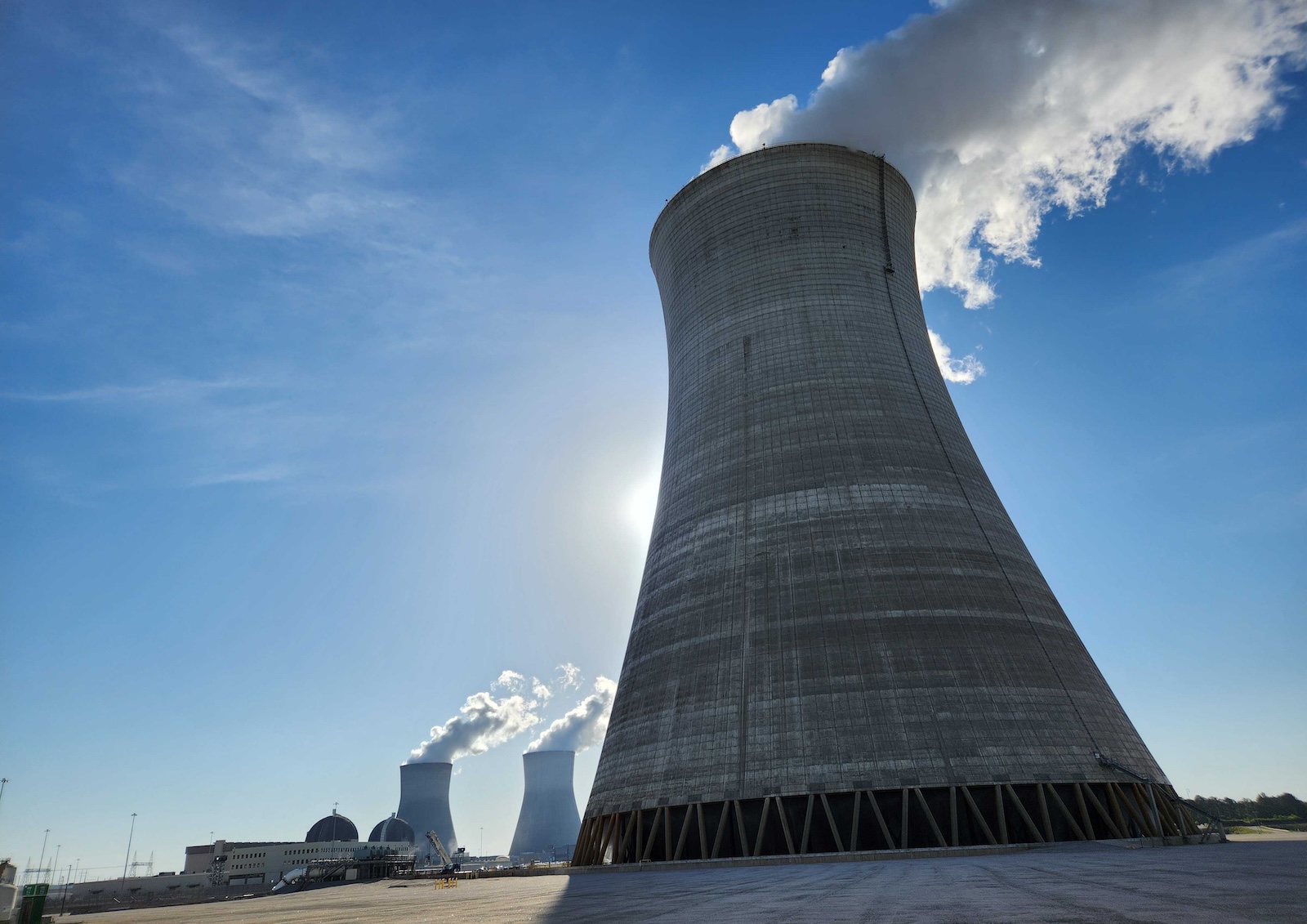
At the heart of this agreement is a specialized subscription program approved by the PSC. Under the terms of the deal, Google will pay a premium on its electricity bill, effectively subsidizing the capital-intensive upgrades required at Plant Vogtle and Plant Hatch. In return, the tech giant gains access to verifiable carbon-free energy credits, a vital component of its corporate goal to achieve 24/7 carbon-free energy by 2030.
For Georgia Power, the arrangement represents a strategic win. By offloading the financial risk of plant upgrades onto a private partner, the utility secures the capital necessary to modernize aging infrastructure without immediately placing the entire burden on the broader ratepayer base.
"So, around 100 megawatts of carbon-free energy, paid for by somebody else," PSC Commissioner Stan Wise remarked to staffers just moments before the final vote. "Why don’t you bring us some more of those deals?"
A Chronology of Nuclear Expansion in Georgia
The path to this partnership has been a multi-year effort to stabilize and expand Georgia’s energy capacity.
- The Vogtle Foundation: The story of Georgia’s nuclear resurgence begins with the multi-billion dollar expansion of Plant Vogtle. While the project faced significant delays and cost overruns, it remains a cornerstone of the state’s carbon-reduction strategy.
- The 2023 Regulatory Shift: Last year, state regulators granted initial approval for upgrades to the reactors at Plant Vogtle. However, the specific financial mechanisms—the "how" of the payment structure—remained an open question.
- The Plant Hatch Expansion: Following the success of the initial discussions, the commission recently extended the modernization initiative to include the older reactors at Plant Hatch.
- The Google Partnership (2024): With the regulatory framework for a "large-load" subscription program now in place, the deal with Google serves as the first major application of this policy. The upgrades are slated to come online by 2028, ensuring that the additional power hits the grid precisely as data center demand is expected to reach new peaks.
Supporting Data and Financial Projections
While the precise financial details of the contract remain proprietary, Georgia Power has characterized the deal as a net positive for all parties involved. According to the utility, the collaboration is projected to deliver approximately $900 million in benefits to customers over the lifespan of the units.
The deal adds 96 megawatts of nuclear capacity—a significant amount of power that, unlike solar or wind, operates regardless of weather conditions or time of day. This "firm" power is the "holy grail" for data center operators who require constant, uninterruptible electricity to maintain server uptime.
This trend is not isolated to Georgia. Last week, Google also announced a massive partnership with Constellation Energy to fund nuclear upgrades at reactors in Illinois, New Jersey, and Pennsylvania. That initiative is expected to add 890 megawatts to the PJM grid, the largest wholesale electricity market in the United States. Similarly, Amazon has secured a deal to increase capacity at a Constellation-owned nuclear facility in Maryland, signaling a broader industry-wide pivot toward nuclear energy as the preferred solution for the power-hungry AI revolution.
Official Responses: A Shared Vision for "Digital Infrastructure"
The corporate and regulatory sectors have lauded the deal as a model for public-private cooperation. Aaron Mitchell, senior vice president of strategic growth for Georgia Power, highlighted the alignment between load growth and public benefit.
"We appreciate Google’s continued leadership in this space and partnership in developing this program, which we see as the latest example of how large-load growth can benefit all electric customers," Mitchell stated.
Google, for its part, framed the deal as a necessary step for sustainable scaling. "This collaboration with Georgia Power ensures that digital infrastructure growth goes hand-in-hand with positive local impact," said Lucia Tian, director of advanced energy technologies for Google. "It helps deliver hundreds of millions of dollars in direct customer benefits and supports a more affordable, clean, and reliable energy system for all Georgia residents."
Implications for the National Grid
The broader context of this agreement is a desperate scramble by utilities across the United States to keep pace with an unprecedented surge in energy demand. As hyperscale data centers proliferate, many utilities have resorted to the "low-hanging fruit" of energy expansion: building new natural gas plants or extending the life of coal-fired facilities.
Priya Barua of the Corporate Energy Buyers Association (CEBA) suggests that the Google-Georgia Power deal provides a critical, non-fossil alternative. "A number of large energy customers are looking kind of across the board at what are all of the tools in the toolkit in order to actually support a reliable, affordable grid," Barua explained. "I do think we’re going to see a lot more of those types of innovations and thinking across the board."
The Speed Factor
One of the most compelling arguments for upgrading existing nuclear plants—rather than building new ones—is the timeline. A new nuclear facility can take decades from inception to commercial operation. In contrast, upgrading an existing plant typically takes roughly five years.
In a "relay race" to secure power capacity, speed is the deciding factor. As Katie Southworth of CEBA noted, these programs help manage the supply chain constraints currently plaguing the energy sector. With significant delays in the production of natural gas turbines and other components, the ability to squeeze more efficiency out of existing nuclear infrastructure provides a buffer that other, slower projects simply cannot match.
A Model for Future Deals?
If the Georgia experiment proves successful, it is likely to be replicated across the country. By creating a "lane" for large-scale energy users to fund clean-energy infrastructure, utilities can effectively subsidize the grid transition. This approach offers three distinct advantages:
- Direct Investment: Private capital flows directly into grid upgrades, reducing the reliance on rate hikes for residential customers.
- Reliability: The focus on nuclear energy provides a steady, emission-free base load that stabilizes the grid as more intermittent renewables (solar/wind) are added.
- Efficiency: Upgrading existing sites is more environmentally and economically efficient than clearing land for new, large-scale generation projects.
Conclusion
The Georgia Public Service Commission’s approval of the Georgia Power-Google partnership is more than a simple business contract; it is a blueprint for the future of the American energy landscape. As the digital economy continues to demand more power, the collaboration between tech giants and utilities demonstrates that the path to a cleaner, more reliable grid may be paved by those who consume the most energy.
Whether this "subscription" model can scale to meet the massive requirements of the next decade remains to be seen. However, by choosing to invest in the longevity of existing nuclear reactors, Google and Georgia Power have established a pragmatic, rapid-deployment framework that balances the urgent need for electricity with the essential mandate of carbon reduction. As other states and utilities watch this experiment closely, the "Georgia Model" may soon become the standard for powering the digital age.


 Asep Darmawan